Phasmophobia maps are the backbone of every investigation. No matter how good your ghost-hunting skills are, your success depends heavily on how well you understand the environment around you. From narrow hallways to sprawling outdoor zones, each map changes how evidence is gathered, how hunts play out, and how quickly things can go wrong.
For many players, medium maps in Phasmophobia represent the perfect balance. They are larger and more complex than small houses, but they don’t overwhelm teams like massive locations do. This makes them ideal for improving map awareness, teamwork, and investigation efficiency.
So what exactly defines a Phasmophobia map, and why do medium locations play such an important role in progression? This guide breaks everything down, starting with map sizes and moving into the specific medium maps that every investigator should master.
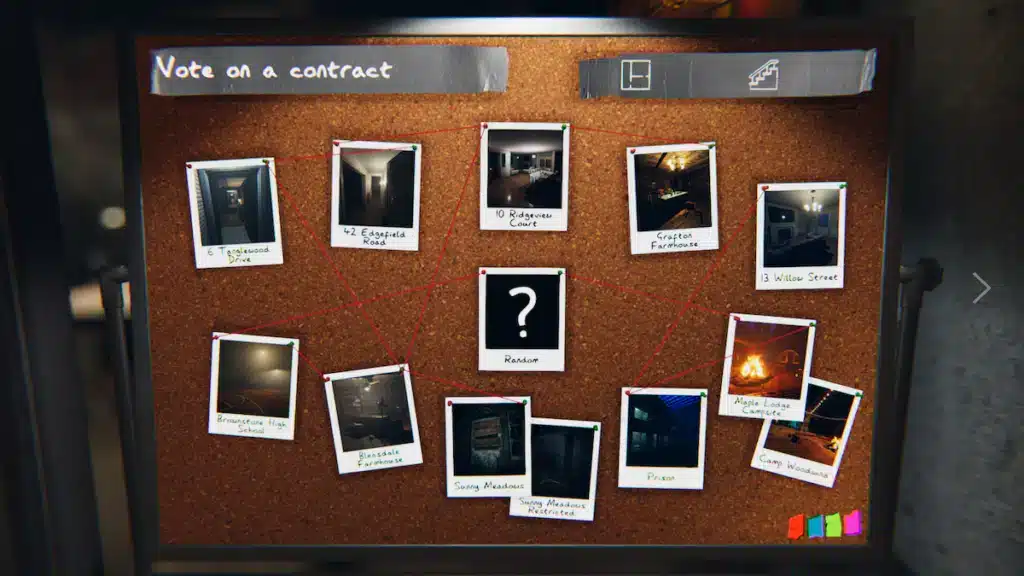
Understanding Phasmophobia Map Sizes
Before diving into individual locations, it’s important to understand how Phasmophobia categorizes its maps. Each map size directly affects difficulty, reward values, and investigation pacing.
Small, Medium, and Large Maps Explained
Phasmophobia maps are divided into three main categories:
- Small maps focus on fast investigations and tight spaces.
- Medium maps expand exploration while keeping investigations manageable.
- Large maps test endurance, communication, and advanced strategies.
Medium maps in Phasmophobia sit right in the middle. They offer more rooms, longer hunts, and more opportunities for ghost interaction without the extreme time investment required by large locations.
Why Medium Maps Matter for Progression
Medium maps phasmophobia players choose often become the training ground for advanced gameplay. These locations introduce:
- More complex room layouts
- Greater sound and line-of-sight challenges
- Increased reliance on teamwork and communication
For players moving beyond small houses, medium maps offer a noticeable jump in difficulty without being overwhelming.
Overview of Medium Maps in Phasmophobia
Each medium map phasmophobia offers a unique layout and investigation style. While they share a similar size category, the way they play can be completely different.
Maple Lodge Campsite
Maple Lodge Campsite is one of the most distinctive medium maps in Phasmophobia. Unlike traditional buildings, much of this location takes place outdoors.
Key characteristics include:
- Large open areas with limited cover
- Multiple tents and small structures
- Weather playing a major role in visibility and sound
Because of its open layout, Maple Lodge challenges players to rely more on sound cues and less on traditional room-based evidence gathering.
Prison
The Prison is a classic medium map that feels intimidating from the moment you step inside. Long corridors, identical cell blocks, and heavy doors can easily disorient teams.
What makes Prison unique:
- Long hallways that amplify footsteps
- Many similar rooms that slow ghost room identification
- High risk during hunts due to limited hiding options
This medium map phasmophobia veterans often recommend for learning safe routing and escape planning.
Bleasdale Farmhouse
Bleasdale Farmhouse blends the familiarity of a house with the complexity of a larger structure. It features multiple floors, a basement, and wide open rooms.
Highlights include:
- Vertical gameplay across floors
- Strong emphasis on sound tracking
- Balanced difficulty compared to other medium maps
Bleasdale is often considered one of the best medium maps phasmophobia players can use to practice advanced evidence setups.
Sunny Meadows Restricted
The Phasmophobia Sunny Meadows map is known for being massive, but the restricted version offers a medium-sized experience.
Sunny Meadows Restricted:
- Opens only a section of the full institution
- Retains the atmosphere and tension of the large map
- Allows faster investigations with fewer rooms
This version is ideal for players who want the feel of Sunny Meadows without committing to the full-scale challenge.
Point Hope
Point Hope is a vertical lighthouse map that stands out among medium maps in Phasmophobia.
What sets it apart:
- Linear, upward progression
- Tight staircases and narrow rooms
- High risk during hunts due to limited escape routes
Point Hope rewards players who understand vertical sound cues and efficient movement.
How Medium Maps Compare to Other Phasmophobia Maps
Medium maps phasmophobia investigations differ significantly from both small and large locations.
Compared to Small Maps
Medium maps:
- Take longer to locate the ghost room
- Increase hunt pressure
- Require better equipment coordination
However, they still allow mistakes without immediate failure, making them excellent learning environments.
Compared to Large Maps
Unlike large locations, medium maps:
- Reduce time spent walking between objectives
- Make hunts more predictable
- Allow teams to recover more easily from errors
This balance is why many experienced players prefer medium maps for consistent progression.
High School and Sunny Meadows: Important Context
Some players confuse certain locations when discussing map sizes.
Phasmophobia High School Map
The Phasmophobia high school map is often mentioned alongside medium maps, but it is officially classified as a large map. Its multiple floors, long corridors, and numerous rooms place it well beyond medium difficulty.
Understanding this distinction helps players choose the right map for their skill level.
Phasmophobia Sunny Meadows Map
The full Phasmophobia Sunny Meadows map is currently the largest location in the game. It features dozens of rooms, multiple wings, and extreme navigation challenges.
The restricted version exists specifically to offer a medium-scale alternative.
Why Mastering Medium Maps Improves Performance
Learning medium maps phasmophobia gameplay teaches essential skills:
- Efficient ghost room identification
- Safe hunt navigation
- Better team communication
These skills directly translate to success on large maps and higher difficulties.
Optimizing Your Phasmophobia Experience
Medium maps demand stable performance, especially during hunts when every second counts. Lag, packet loss, or unstable connections can easily lead to failed investigations.
ExitLag helps Phasmophobia players by:
- Reducing ping spikes during hunts
- Stabilizing voice and positional updates
- Improving overall connection reliability
By optimizing your connection, ExitLag ensures that medium maps remain challenging for the right reasons – not because of technical issues.
Understanding Phasmophobia maps, especially medium-sized locations, is a key step toward mastering the game. With the right preparation, strategy, and connection stability, these maps become the perfect training ground for any serious ghost hunter.
Advanced Strategies for Medium Maps in Phasmophobia
Medium maps in Phasmophobia introduce a level of complexity that separates casual investigations from consistent success. While these locations are still manageable, their expanded layouts and higher room counts make mistakes far more costly. Every decision – from equipment choice to movement timing – has a direct impact on survival and evidence efficiency.
Unlike small houses, medium maps force players to deal with misleading sound cues, temperature bleed, and increased ghost roaming. This makes structured investigations essential. Teams that rush setups or rely on single clues often waste time and trigger early hunts.
How Medium Maps Change Ghost Behavior Perception
Medium maps amplify uncertainty. Larger environments allow ghosts to roam further from their favorite room, creating false positives across nearby areas. EMF readings may spike in hallways, temperature drops can spread between rooms, and DOTS evidence may appear inconsistent if placed too early.
For this reason, medium maps phasmophobia gameplay rewards layered confirmation. Instead of trusting a single indicator, players should combine sound direction, temperature stabilization, and interaction timing before committing equipment. This approach dramatically reduces setup errors.
Optimal Team Roles on Medium Maps
Solo-style play becomes inefficient on medium maps. Teams that assign clear responsibilities progress faster and survive hunts more consistently.
A reliable role structure includes:
- Lead Investigator: Coordinates movement and confirms ghost area
- Evidence Runner: Transports and deploys tools efficiently
- Sound & Motion Tracker: Uses parabolic microphones and sensors
- Safety Controller: Manages sanity, smudge sticks, and escape routes
Clear role separation prevents chaos when hunts begin earlier than expected.
Medium Map–Specific Tactics
Each medium map in Phasmophobia requires its own strategy. Treating them all the same is a common reason investigations fail.
Maple Lodge Campsite – Outdoor Investigation Control
Maple Lodge Campsite is one of the most deceptive medium maps phasmophobia offers. Outdoor spaces weaken traditional tools and weather conditions interfere with sound and temperature readings.
Parabolic microphones outperform EMF readers early on, allowing teams to locate activity zones before committing equipment. During hunts, survival depends on knowing tents, cabins, and tree lines that break line of sight.
Prison – Corridor Control and Hunt Survival
The Prison map overwhelms unprepared teams with long corridors and repetitive layouts. The key to success is methodical clearing. Sweeping cell blocks in order prevents wasted backtracking.
During hunts, doors become vital tracking tools. Listening for interactions helps identify ghost movement, while pre-planned escape routes prevent deadly dead ends.
Bleasdale Farmhouse – Vertical Sound Mastery
Bleasdale Farmhouse introduces vertical complexity that challenges sound awareness. Ghost activity often bleeds between floors, misleading investigators.
Staircases are critical listening points. The basement is especially dangerous due to limited escape options, making correct DOTS and camera placement essential.
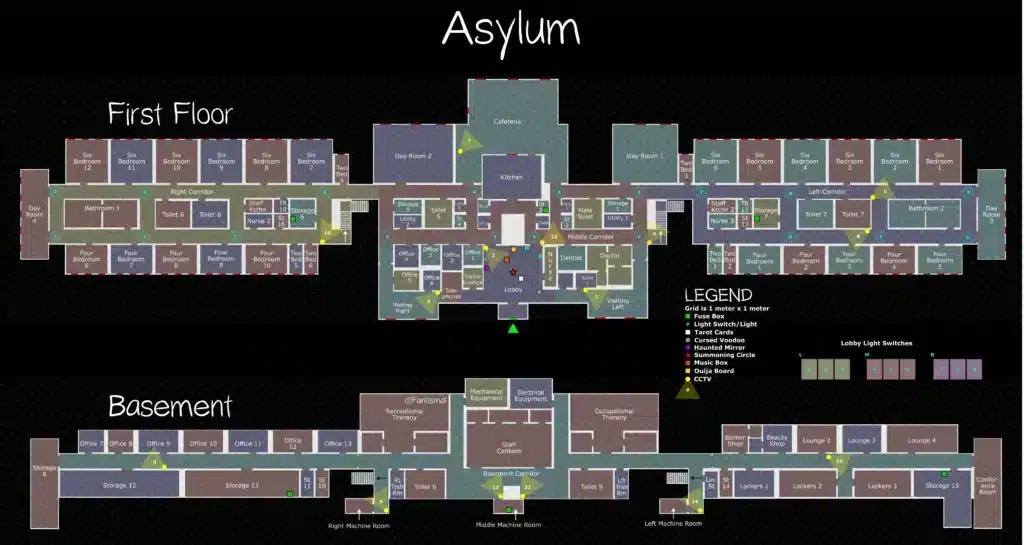
Sunny Meadows Restricted – Controlled Chaos
The Phasmophobia Sunny Meadows map is infamous for its size, but the restricted version condenses the experience into a medium-scale challenge. Although smaller, tension remains high.
Sanity drains faster in enclosed hallways, and ghosts feel more aggressive due to limited maneuvering space. This map is ideal for players preparing to transition into large locations.
Point Hope – Vertical Hunts and Escape Planning
Point Hope is one of the most punishing medium maps due to its vertical structure. Staircases quickly turn into death traps during hunts.
Success relies on pre-planned escape logic and precise smudge stick timing. Players must know which floors offer reliable hiding spots before investigations escalate.
Medium Maps vs Large Maps – Knowing When to Scale Up
Medium maps phasmophobia players choose serve as the best training ground for advanced gameplay. They teach evidence efficiency, hunt survival, and communication without the extreme time commitment of large maps.
Large locations like the Phasmophobia high school map and the full Phasmophobia Sunny Meadows map introduce longer hunts, higher room density, and greater punishment for mistakes. Mastering medium maps ensures a smoother transition.
Equipment Priorities on Medium Maps
Equipment selection is critical. Bringing too much early slows progress, while poor prioritization leads to failed investigations.
Early-phase priorities include:
- Temperature tools
- Parabolic microphones or sound sensors
- Flashlights and basic evidence items
Later phases benefit from DOTS projectors, cameras, and motion sensors once the ghost area is confirmed.
Medium Map Comparison Table
| Map | Environment | Difficulty | Recommended Team Size | Common Failure Points |
| Maple Lodge Campsite | Outdoor | Medium | 3–4 | Weather interference, poor cover |
| Prison | Indoor | Medium–High | 4 | Corridor traps, slow sweeps |
| Bleasdale Farmhouse | Indoor | Medium | 2–3 | Vertical sound confusion |
| Sunny Meadows Restricted | Indoor | Medium–High | 3–4 | Sanity drain, navigation |
| Point Hope | Vertical | High | 2–3 | Staircase traps |
Performance, Lag, and Investigation Consistency
Medium maps are especially sensitive to lag. Voice delays, positional desync, and delayed interactions can turn survivable hunts into instant failures.
ExitLag improves Phasmophobia multiplayer performance by stabilizing routing, reducing packet loss, and maintaining consistent connections during high-stress moments. On medium maps, this consistency is often the difference between completing objectives and losing the entire contract.
Closing Insights
Mastering medium maps phasmophobia gameplay accelerates progression, builds confidence, and prepares players for the game’s most demanding locations. With proper strategy, equipment prioritization, and connection stability, these maps become the foundation of professional-level investigations.
All game images used in this blog belong to Kinetic Games. They are used for informational/educational purposes only and do not imply endorsement or affiliation with the rights holders.
Got questions or want to connect with other players? Join the conversation at the ExitLag Forum!