PUBG cheats damage a battle royale built around positioning, recoil control, sound awareness, tactical decisions, and the uncertainty of facing dozens of other players. Unauthorized software and hardware can create unfair advantages, compromise accounts, expose devices to malware, and lead to permanent restrictions.
Connection instability can sometimes make legitimate eliminations look suspicious because delayed movement or uneven packet delivery changes what each player sees. The guide to fixing jitter in PUBG explains these network symptoms in more detail. Separating lag from PUBG cheats helps players report actual misconduct without confusing it with a connection problem.
PUBG cheats include unauthorized programs, manipulated hardware, scripts, exploits, and tools that reveal information or automate actions unavailable through normal gameplay. A PUBG cheat may affect aiming, recoil, movement, visibility, or input behavior, while advertisements for PUBG hacks often exaggerate their safety and ability to avoid detection.
This guide focuses on PUBG: Battlegrounds for PC and consoles. PUBG Mobile has its own client, anti-cheat systems, policies, and support channels, so information about one version should not automatically be applied to the other.
What are PUBG cheats and why are they dangerous?
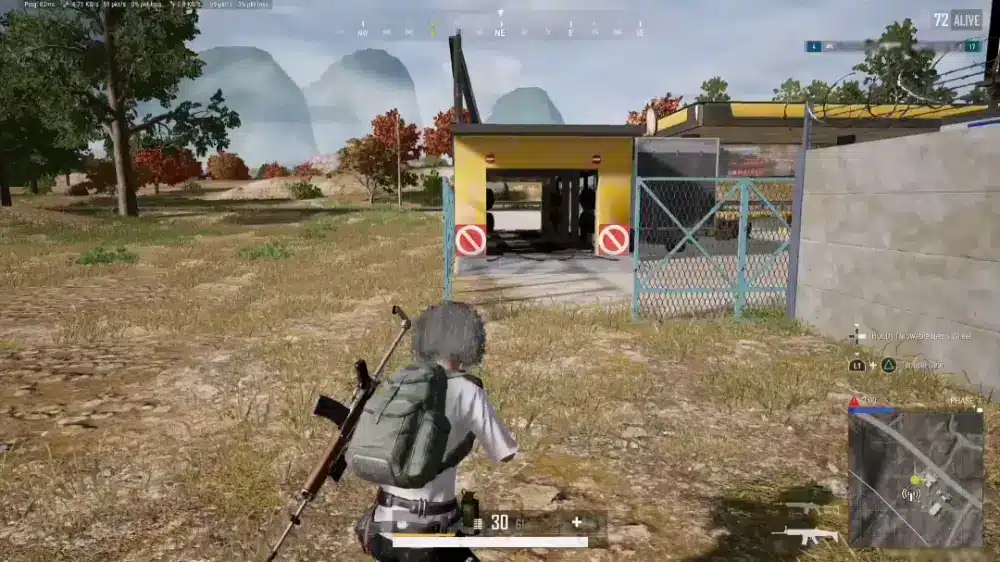
PUBG cheats are methods that provide an advantage outside the mechanics intended by KRAFTON. They can involve software running on the same computer, external hardware, manipulated input devices, altered game data, or abuse of an unintended vulnerability.
This article explains the risks and effects of these methods without providing downloads, setup instructions, configuration details, bypass techniques, or recommendations for cheat providers.
The exact technical form is less important than the result. If a program or device automates gameplay, exposes hidden data, modifies the client, or creates an advantage that ordinary players cannot obtain through approved settings, it may violate the rules.
Common categories of unauthorized advantages
The following categories describe how unfair tools can affect a match without explaining how to operate them.
| Category | Unfair effect | Why it harms the match |
| Aim automation | Assists or controls crosshair movement | Reduces the importance of mechanical skill |
| Recoil automation | Compensates for weapon recoil automatically | Creates accuracy without normal input control |
| Information tools | Reveal players, items, or data that should be hidden | Removes uncertainty and positioning strategy |
| Trigger automation | Fires under predetermined conditions | Produces reactions that are not fully controlled by the player |
| Movement manipulation | Alters movement or action timing | Creates behavior outside intended limitations |
| Unauthorized input devices | Convert or automate controller signals | Can provide recoil control or unintended input advantages |
| Exploit abuse | Repeatedly uses bugs for competitive gain | Turns unintended behavior into an unfair advantage |
A visible PUBG hack may produce obvious behavior, such as unnatural aim movement or impossible tracking. However, some tools are designed to appear subtle, making individual clips difficult to evaluate with certainty.
Information-based cheating can be especially hard to identify. A player may know your location because of footsteps, teammate communication, previous visual contact, vehicle sounds, broken windows, open doors, common rotations, or knowledge of the final circle.
Therefore, suspicion is a reason to submit a report, not proof that a player cheated. KRAFTON can review information that is unavailable to ordinary viewers.
Why downloading cheat software creates additional risks
Unauthorized programs are often distributed through private messages, social media videos, forums, file-sharing services, fake stores, and closed communities. Their sellers may claim that the software is private, external, undetected, artificial intelligence-powered, or protected against bans.
None of those labels proves that a program is safe or permitted.
Searches for terms such as OneStop Cheats or Sky Cheats may lead users toward third-party offers or discussions. A recognizable name, paid subscription, customer review, or polished website does not establish that a tool follows PUBG’s rules.
A supposed PUBG cheat may contain:
- password-stealing malware;
- remote-access software;
- cryptocurrency miners;
- browser-session stealers;
- payment fraud tools;
- hidden advertising software;
- files that disable security protections;
- components that remain after the visible program is removed.
Cheat developers also have an incentive to request administrator access, antivirus exclusions, driver installation, or security changes. Those permissions can provide extensive control over the device.
Players sometimes blame cheating when the real issue is unstable frame delivery or a local performance problem. The guide to diagnosing FPS drops in PUBG explains how hardware limits, drivers, background applications, temperatures, and graphics settings can create stuttering that has nothing to do with another player.
Can you get permanently banned for using PUBG cheats?
Yes. PUBG’s current Rules of Conduct allow strong penalties for unauthorized programs, manipulated hardware, client modification, major exploit abuse, abnormal gameplay, and related misconduct.
The maximum penalty for using, developing, advertising, trading, or distributing unauthorized programs and hardware devices is a permanent ban. Restrictions may also affect the hardware used to access the game.
Not every account restriction represents the same situation. PUBG can use temporary restrictions while investigating suspicious activity, permanent account bans for confirmed violations, hardware-related measures, and other penalties based on the conduct involved.
Account, hardware, and console penalties
A permanent ban can remove access to the account, progression, cosmetics, purchases, rankings, and other associated data. Creating another account does not guarantee that a player can simply return because anti-cheat enforcement may also examine devices, account relationships, or attempts to evade an earlier restriction.
PUBG’s rules also state that accounts associated with the same device or IP may face sanctions when multiple accounts were created or used to engage in misconduct. The exact action depends on KRAFTON’s investigation and enforcement criteria.
Console cheating has also received stricter treatment. As of June 30, 2026, confirmed use of abnormal input devices or other unfair hardware on Xbox and PlayStation can result in permanent account bans.
This includes signal-conversion devices that make mouse and keyboard input appear as controller input and unauthorized devices that provide advantages such as automated recoil control.
A hardware product is not automatically approved because it is sold through a major retailer. The relevant question is how the device interacts with the game and whether it provides an advantage prohibited by KRAFTON.
Can you be punished for playing with a cheater?
PUBG prohibits intentional teaming and receiving advantages by repeatedly or knowingly playing with someone who uses unauthorized programs or devices. A player who forms an abnormal team with a cheater may also face action.
Randomly being placed on the same team as a suspicious player is not the same as deliberately queueing with a known cheater. However, continuing to play with someone after they openly admit to cheating creates a different level of risk.
Avoid services that promise:
- guaranteed Rank gains;
- paid boosting with unusually high win rates;
- protected queues with cheat users;
- account piloting;
- instant progression through unauthorized tools;
- safe access to a private PUBG hack;
- replacement accounts after bans.
Do not assume that using a secondary account protects your main profile. Hardware and account-association measures can make the consequences broader than one disposable account.
Why no cheat provider can guarantee safety
Advertisements for PUBG hacks frequently use terms such as “undetected,” “stream-proof,” “private,” “slot-limited,” or “external.” These are marketing claims rather than guarantees.
A tool that was not detected yesterday may be detected after an anti-cheat update, a manual investigation, a server-side pattern review, or analysis of previously collected data. Enforcement can also occur after the software has already been removed.
Queries for OneStop Cheats and Sky Cheats should be approached with the same caution as any other branded search. This guide does not verify, recommend, or provide access to any third-party cheat service.
The legitimate route to better performance is to improve settings, hardware configuration, positioning, recoil practice, and decision-making. The guide to boosting FPS in PUBG safely covers legitimate performance adjustments without relying on unauthorized software.
How does PUBG detect cheats and suspicious behavior?
PUBG does not publicly disclose every detection method because detailed explanations could help cheat developers avoid them. Its public anti-cheat communication instead describes a layered strategy involving prevention, detection, investigations, account action, hardware measures, reports, and legal responses.
In its 2026 anti-cheat roadmap, PUBG identified DMA-based cheating, ban evasion, stolen accounts, abnormal console inputs, false-ban accuracy, and the protection of legitimate players as major priorities.
The company also said it permanently banned approximately 260,000 DMA-based cheaters during 2025. That figure applies specifically to one category and should not be interpreted as the exact number of all cheating cases.
Detection uses more than one signal
A report alone does not necessarily prove that a player cheated. Reports help direct attention toward suspicious accounts, but enforcement can also involve anti-cheat detections, abnormal gameplay patterns, client behavior, hardware signals, account relationships, and internal review.
Potential detection and prevention layers may include:
- monitoring prohibited interaction with the game client;
- identifying modified files or processes;
- detecting unauthorized hardware behavior;
- analyzing impossible or abnormal gameplay patterns;
- reviewing attempts to evade previous bans;
- investigating reports and submitted evidence;
- examining suspicious account access;
- preventing known cheats from operating;
- applying hardware-related re-entry restrictions.
PUBG’s 2026 roadmap also mentions plans for AI-assisted video review to improve pattern analysis. That does not mean an automated model independently decides every case. It is presented as one component of a larger enforcement process.
Anti-cheat teams may delay some actions rather than banning every detected account instantly. Immediate enforcement can reveal exactly which program update, feature, or behavior triggered detection, allowing developers to test modifications more quickly.
This delay does not prove that a reported PUBG cheat has been ignored. It may reflect investigation, evidence collection, a planned ban wave, or an effort to avoid exposing the detection method.
How can you distinguish cheating from skill or technical problems?
PUBG has a high mechanical ceiling. Experienced players understand recoil patterns, common peeking angles, map rotations, vehicle routes, compound layouts, sound distances, and the likely location of opponents based on the circle.
Death cams and replays are also reconstructions. They may not perfectly reproduce every animation, input, network update, or visual detail as it appeared to the other player in real time.
Possible legitimate explanations for a suspicious elimination include:
- the enemy heard footsteps or healing;
- a teammate provided information;
- you were previously seen entering the area;
- your weapon or vehicle made noise;
- the opponent pre-aimed a common position;
- the player used strong recoil control;
- the replay displayed movement imperfectly;
- packet loss caused delayed feedback;
- low FPS made the encounter appear less responsive;
- the shot involved luck.
None of this means cheating should be ignored. Repeated impossible tracking, abnormal movement, automated firing, or unexplained knowledge across several situations can justify a report.
However, avoid publicly identifying someone as a cheater based on one clip. Submit the evidence through the proper system and allow KRAFTON to investigate the suspected PUBG hack.
Players can use the official PUBG: Battlegrounds website to find legitimate game information, platform support, maps, events, and official service links. Unofficial installers or modified clients should be avoided regardless of what performance improvement they promise.
How do you report a cheater in PUBG?

The in-game reporting system is the recommended first option. It sends the report with match and player context that can help the anti-cheat team investigate the suspected violation.
The exact menu placement may change with platform or interface updates. In general, reporting is available through the death screen, spectator interface, replay, or match information associated with the relevant player.
Choose the category that most accurately describes the observed conduct. Do not select every category simply to make the report appear more serious.
What should you include in a report?
A useful report focuses on observable behavior rather than insults or speculation.
Relevant details may include:
- the approximate time or phase of the match;
- the suspected player’s in-game name;
- repeated unnatural aim movement;
- tracking through solid cover without available information;
- abnormal recoil behavior;
- impossible movement or action speed;
- use of an unintended exploit;
- admission of cheating through voice or text;
- repeated coordination with an opposing team.
When a text field is available, describe the pattern briefly. “Tracked three players through the building during the final two circles” is more useful than “obvious hacker.”
Replay footage can provide additional context, but remember that a replay is not always a perfect representation of real-time input. Record the relevant period before the replay expires or is replaced by newer matches.
PUBG Support can also receive reports when the in-game option is unavailable. Useful evidence may include the date, player name, type of suspected violation, screenshots, and video.
Do not contact the suspected player, threaten them, publish private information, or organize harassment. Reporting is an investigative request, not permission to retaliate.
What happens after reporting?
The anti-cheat team can examine the account and apply action when the available evidence supports a violation. PUBG also publishes weekly notices containing lists of permanently banned accounts with part of each nickname hidden.
You may receive an in-game notification when action is taken against someone you reported. The timing can vary because cases may involve automated detection, manual review, additional observation, or delayed enforcement.
Repeatedly submitting inaccurate reports does not make a case stronger. Report behavior that genuinely appears abnormal and allow the review system to assess it.
Players should also distinguish cheat reports from bug reports. Discovering an exploit does not provide permission to reproduce it for an advantage. PUBG’s rules instruct users to report vulnerabilities rather than exploit or distribute them.
Current anti-cheat announcements, weekly ban notices, patch information, and policy changes are published through the official PUBG news page. Checking recent announcements is safer than relying on an old video describing a ban policy that may have changed.
How can you protect your account from cheat-related bans?
Account theft can lead to serious consequences if another person uses unauthorized software after gaining access. KRAFTON has introduced additional recovery considerations for verified theft cases, but recovery is not automatic or guaranteed.
Protect the account before a problem occurs:
- use a unique password for Steam, PlayStation, Xbox, Epic Games, and KRAFTON ID;
- enable Steam Guard or the equivalent platform protection;
- set up PUBG’s available secondary password features;
- secure the connected email account;
- never share verification codes;
- avoid account-boosting services;
- do not buy or sell accounts;
- review unfamiliar login notifications;
- remove suspicious browser extensions;
- keep the operating system and security software updated.
Never allow a stranger to access the account to install skins, increase Rank, unlock rewards, optimize recoil, or test a PUBG cheat. Even when the other person controls the device remotely, the account owner may still face the resulting restriction.
If you suspect account theft, change the relevant passwords, secure the email account, terminate unfamiliar sessions, and contact official support. Do not pay someone claiming they can privately remove a ban or erase anti-cheat records.
How can ExitLag help with PUBG connection stability?
ExitLag is a network-route optimization tool. It does not detect PUBG cheats, remove cheaters, bypass anti-cheat systems, reverse account bans, modify recoil, improve aim, or provide hidden match information.
Its role is limited to network-related conditions. When traffic between the player and the PUBG server follows an unstable or inefficient route, ExitLag can help optimize that path and may improve connection consistency.
Results depend on the internet provider, region, destination server, congestion, and available routes. ExitLag cannot guarantee lower ping or remove every instance of packet loss.
When route optimization may be relevant
ExitLag may help when the problem involves:
- unstable latency;
- recurring jitter;
- packet loss;
- inconsistent routing;
- connection-related stuttering;
- disconnections caused by the route;
- large ping fluctuations between matches.
A more stable route can make movement and combat feedback feel more consistent. However, network optimization does not change PUBG’s weapon mechanics, matchmaking, damage values, server tick behavior, or anti-cheat decisions.
Before using any routing tool, test the local connection. Restart the modem and router, close downloads, compare Wi-Fi with Ethernet, check other devices, and confirm that PUBG is not experiencing a wider outage.
What ExitLag cannot fix
ExitLag is not designed to correct:
- low FPS caused by hardware;
- overheating;
- corrupted game files;
- broken graphics drivers;
- another player’s PUBG hack;
- unauthorized input devices;
- account restrictions;
- missing cosmetics;
- global server maintenance;
- mistakes in positioning or recoil control.
Use graphics troubleshooting for local performance, official support for account issues, the reporting system for suspected PUBG hacks, and ExitLag when the evidence points to network routing.
Frequently asked questions
The following answers cover common concerns about macros, cheat providers, false accusations, account theft, PUBG Mobile, and permanent bans.
A macro that automates recoil, firing, movement, or repeated gameplay actions can provide an unfair advantage and may be treated as unauthorized behavior.
The safest approach is not to use scripts, macros, or devices that automate competitive inputs. A program being available through legitimate software does not mean every script created with it is permitted.
This article does not verify or recommend OneStop Cheats, Sky Cheats, or any similarly branded third-party service.
Claims that a product is private, external, secure, or undetected do not prove that it is permitted by KRAFTON. Downloading unauthorized software can lead to bans, malware infections, account theft, or payment fraud.
Reports can trigger or support an investigation, but a report by itself does not establish that cheating occurred. PUBG reviews suspicious behavior and may combine reports with other anti-cheat information.
Legitimate players should still avoid unauthorized background programs, modified clients, scripts, and hardware configurations that may violate current rules.
Review the replay or death cam when available and consider legitimate information sources such as sound, teammate callouts, previous visual contact, and common angles.
Submit an in-game report when the behavior remains suspicious. Do not confront or harass the player.
No. Skilled players can control recoil through practice, attachments, stance, sensitivity settings, mouse movement, and burst length.
However, repeated automated-looking behavior across several situations may justify a report. KRAFTON has access to more complete information than a viewer watching one compressed clip.
The general warning against cheating applies, but PUBG Mobile uses separate systems, platforms, policies, and support processes.
Use PUBG Mobile’s official resources when reporting mobile players or checking whether a mobile application is permitted.
KRAFTON may review verified account-theft cases under its current recovery policy. The outcome depends on evidence, prior recovery history, security measures, and the circumstances of the case.
Recovery should not be assumed. Prevent theft by using platform authentication, a secondary password when available, and a secured email account.
No. ExitLag does not bypass, disable, or interfere with PUBG’s anti-cheat enforcement. It is intended for network-route optimization in supported online games.
A routing tool cannot make unauthorized software safe or remove a confirmed penalty.
Avoid unauthorized downloads, secure every account connected to the game, report genuinely suspicious behavior, and use official channels for policy updates. Try ExitLag when an unstable network route is affecting legitimate online play, but rely on practice, appropriate settings, and fair competition to improve. Refusing PUBG cheats protects your account, your device, and the integrity of every match.
All game images used in this article belong to their respective owners. They are used for informational and educational purposes only and do not imply endorsement or affiliation with the rights holders.
Got questions or want to connect with other players? Join the conversation at the ExitLag Forum!