
Climbing the competitive ladder in Rocket League requires more than just flashy mechanical skills or fast reflexes. Every competitive match pushes you closer to or further from your next milestone division. Understanding how the game structures its competitive tiers helps you map out a realistic path to improvement.
The Rocket League Ranks system divides millions of active players across distinct skill brackets. Whether you find yourself hard-stuck in the lower divisions or pushing toward elite tournament play, tracking your progress is essential. Knowing where you stand compared to the wider player base gives you a clear target for your next gaming session.
If you want to escape your current bracket, you must understand how Matchmaking Rating operates behind the scenes. Let us break down every single tier, division structure, and distribution percentage so you can start dominating your matches today.
Understanding The Rocket League Ranks And Division Structure
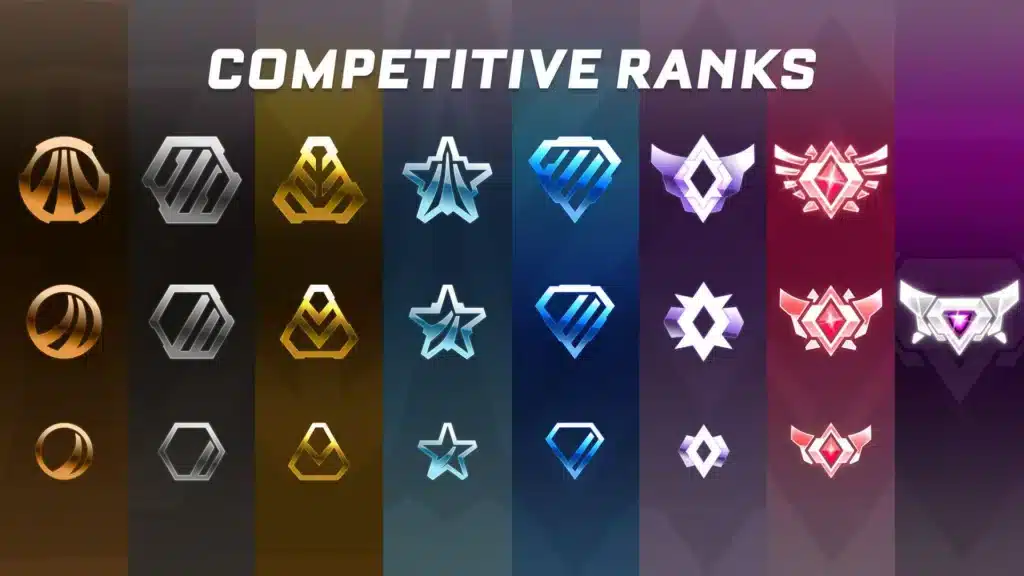
The competitive ecosystem is built on eight distinct major tiers that dictate your skill level. From humble beginnings in Bronze all the way to the prestigious pinnacle of Supersonic Legend, mastering these categories takes dedication.
Every tier except Supersonic Legend is split into three smaller sub-tiers: Division I, II, and III. Furthermore, each of those tiers contains four separate divisions, creating a deeply detailed progression path.
- Bronze to Champion Ranks: Each major rank features three tiers (I, III, III) with four internal divisions to clear before promoting.
- Grand Champion: The elite tier just below the absolute peak, also divided into three distinct sub-tiers.
- Supersonic Legend: The ultimate rank in the game featuring no divisions or tiers, reserved exclusively for the top leaderboard contenders.
How Matchmaking Rating Drives Your Rocket League Mmr Ranks
Your visible badge is only half the story when evaluating your competitive standing. Behind the scenes, a hidden numerical value called Matchmaking Rating determines who you play against.
Every single playlist tracks your performance independently. Therefore, your Rocket League Mmr Ranks in 3v3 Standard might look completely different from your 2v2 Doubles or 1v1 Duel standing. Winning matches increases your MMR, while losses subtract points based on the relative skill of your opponents.
Exploring The Rocket League Rank Distribution Across Playlists
Knowing where the average player sits helps you contextualize your personal achievements. Most of the active player base clusters tightly around the center of the competitive bell curve.
- Bronze and Silver: These brackets house beginners and players learning core camera settings and basic ball control.
- Gold and Platinum: The most populated zone in the entire game, holding the vast majority of casual and semi-competitive competitors.
- Diamond and Champion: High-level territory where advanced aerial mechanics, positioning discipline, and rotation consistency become mandatory.
- Grand Champion and Supersonic Legend: Representing the absolute top percentage of players globally, commanding near-flawless mechanical execution.
| Rank Tier | Sub-Tiers | Approximate 3v3 MMR Range | Player Distribution Share |
| Gold | I, II, III | 512 – 767 | ~24% |
| Platinum | I, II, III | 768 – 1023 | ~25% |
| Diamond | I, II, III | 1024 – 1279 | ~20% |
| Champion | I, II, III | 1280 – 1535 | ~10% |
| Grand Champion | I, II, III | 1536 – 1799 | ~5% |
How Do Playlists Influence Rankings For Rocket League?
Choosing the right playlist dramatically impacts your overall experience and how fast you climb. Each mode demands a completely different set of fundamental skills.
Why 2v2 Doubles Is The Most Popular Mode
Most players gravitate toward the Doubles playlist because it balances team coordination with individual impact. You have a reliable teammate to cover mistakes, but you also get plenty of touches on the ball.
- Positioning mistakes are punished less severely than in 1v1, yet individual carrying potential remains high.
- Queueing with a trusted friend creates unmatched synergy for climbing through the Rocket League League Rankings.
The Brutal Reality Of 1v1 Duel
Playing solo puts every single victory or defeat entirely on your shoulders. There are no teammates to bail you out after a missed aerial or an overextended challenge.
- Conceding possession almost always results in an easy opponent goal.
- Mastering shadow defense and kick-off consistency in 1v1 translates directly into better team-mode performance.
How To Track Your Ranks In Rocket League Accurately
Relying solely on the in-game promotion and demotion animations can feel opaque during long grinding sessions. Fortunately, external tracking tools and mods give you deep visibility into your progress.
- PC players frequently utilize plugins like BakkesMod to view exact MMR numbers in real time during matches.
- Online player databases allow you to look up any username across platforms to check match history and win rates.
- Keeping track of your session gains helps you identify fatigue before losing streaks ruin your hard-earned tier progress.

Optimize Your Connection And Eliminate Lag With ExitLag
Competitive vehicular soccer demands split-second reactions, precise aerial inputs, and zero margin for error. When your connection suffers from sudden ping spikes or packet loss, even the best mechanical skills fall apart. ExitLag is a dedicated game connection optimizer designed to analyze multiple network paths in real time. It selects the absolute fastest, most stable route between your device and the game servers without masking your IP or altering system files.
Using advanced Multipath Technology, ExitLag transmits your game data packets simultaneously across several independent routes. If one intermediate network node experiences sudden congestion or lag spikes, the remaining paths maintain your connection instantly without rubberbanding. Furthermore, the built-in Traffic Shaper prioritizes your gaming data over background downloads, ensuring your inputs register the exact millisecond you press them.
- Real-Time Route Optimization: Automatically connects you through the lowest-ping pathway available globally.
- Multi-Internet Support: Combines up to four separate internet connections for ultimate reliability during crucial matches.
- PC Boost Features: Cleans system memory and minimizes background distractions to stabilize your frame rates.
Safe to use with Rocket League and thousands of other PC titles, ExitLag operates entirely without modifying game files or triggering anti-cheat systems. Enjoy seamless gameplay today by getting theExitLag Download for your gaming rig.
Pro Tips: Ranks In Rocket League
- Prioritize rotation over flashiness: The biggest secret to climbing out of Platinum and Diamond is simply being in the right defensive position instead of going for low-percentage ceiling shots.
- Manage your boost efficiently: Stop wasting boost on full-speed travels across the pitch when power-sliding and controlled flips maintain your momentum just as well.
- Master half-flips early: Learning how to execute a clean half-flip allows you to recover defensively twice as fast as opponents who waste time turning around manually.
- Review your own match replays: Watching your losses from a teammate’s perspective exposes glaring positioning mistakes you never notice while caught up in the heat of the match.

Common Mistakes Rocket League Players Make
- Chasing the ball blindly in all-team situations: Players often dive at the ball simply because they can touch it, passing possession straight to the opponents. Fix: Always ask yourself if hitting the ball actually advances your team’s objective before committing.
- Queuing while tilted after a loss streak: Emotional decision-making leads to rushed challenges, toxic quick chat, and catastrophic MMR drops. Fix: Take a ten-minute break after two consecutive losses to reset your focus.
- Ignoring free play training packs: Expecting to rank up purely by playing matches slows your mechanical progression down significantly. Fix: Spend at least fifteen minutes in custom training packs before jumping into competitive queues.
All game images used in this blog post belong to Psyonix. They are used for informational and educational purposes only and do not imply endorsement or affiliation with the rights holders.
Got questions or want to connect with other players? Join the conversation at the ExitLag Forum!