

In Valheim, crafting potions isn’t just about staying alive—it’s about thriving. The fermenter Valheim mechanic empowers players to convert basic ingredients into high-value meads that provide essential buffs. Whether you’re battling bosses, exploring brutal biomes, or just ensuring your co-op squad is always at peak strength, mastering fermentation is a must.
This expanded guide dives deep into advanced fermentation systems, biome-based brewing cycles, integrated farming loops, and how ExitLag keeps your operations smooth—even while idle. Let’s build a brewing empire worthy of Odin himself.
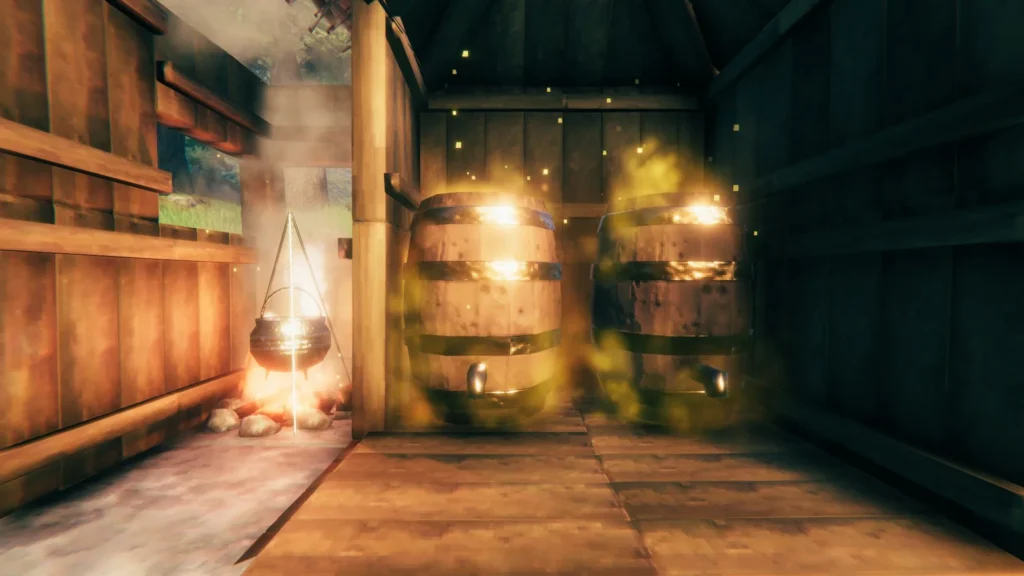
What is the Fermenter in Valheim?
A fermenter is a crafting station that turns mead bases into consumable meads. Each base yields 6 potions and requires 2 in-game days to complete the process.
Fermenter Specs:
- Build Requirements: 30 Fine Wood, 5 Bronze, 10 Resin
- Needs a nearby Workbench
- Must be placed under a roof to function
- One fermenter can only process one batch at a time
The fermenter can’t be moved, so plan your layout carefully.
How to Craft and Place Your First Fermenter
To build your fermenter:
- Smelt Copper and Tin into Bronze.
- Chop Birch or Oak trees for Fine Wood.
- Gather Resin by killing Greydwarfs or chopping trees.
- Place the fermenter indoors or beneath roofing to avoid weather interruptions.
Position it near your cauldron and pantry to reduce crafting time.
Valheim Fermentation Process
Here’s how brewing works:
- Brew a mead base in your cauldron.
- Insert the base into a fermenter.
- Wait 2 in-game days (~60 real minutes).
- Collect 6 meads from the fermenter.
Fermentation indicators:
- The fermenter emits sparkles while active.
- When it stops sparkling, the brew is ready.
Mead Types and Their Uses
Minor Stamina Mead
- Use: Long mining runs, base construction.
- Ingredients: Honey, Raspberries, Yellow Mushrooms.
Medium Healing Mead
- Use: Boss fights, Swamp survival.
- Ingredients: Bloodbags, Honey, Raspberries, Dandelions.
Poison Resistance Mead
- Use: Bonemass fight, Swamp exploration.
- Ingredients: Coal, Thistle, Neck Tail.
Frost Resistance Mead
- Use: Mountain biomes.
- Ingredients: Honey, Bloodbags, Thistle, Greydwarf Eye.
Always stock at least two of each for dungeon crawls or raids.
Building a High-Output Brewing Facility
Design Blueprint
- Start with 4 fermenters; expand to 8+ for full rotations.
- Use signs or item stands to label fermenters by potion type.
- Keep cauldrons and ingredient chests within reach.
Layout Tips
- 2×2 tile spacing between fermenters.
- Roof height: 1.5 tiles minimum.
- Lighting: torches, sconces, or iron braziers.
Organizing your workspace boosts brewing speed and immersion.
Productivity Tactics
Scheduling Batches
- Use a fermenter board to track which brews are active.
- Build extra fermenters to keep queues running.
- Match batches with upcoming biome visits or boss fights.
Fermenter Time Optimization
- While fermenting: gather ingredients, restock mead bases, or explore.
- Never let fermenters sit idle—rotate constantly.
Linking Farming and Brewing
Max efficiency comes from system integration.
The Farm-to-Table Chain
- Grow: Thistle, Berries, Carrots, Turnips.
- Harvest and store by type.
- Brew bases in cauldron → Load fermenter → Bottle meads.
Keep chests nearby labeled by ingredient type.
Using Portals
- Build fermentation rooms near portal hubs.
- Label portals by destination biome: Swamp, Mountain, Plains.
This reduces ingredient delivery time and increases throughput.
Biome-Based Brewing Strategy
Tailor brews to your environment:
- Swamp: Poison Resistance, Medium Healing
- Mountains: Frost Resistance, Minor/Medium Stamina
- Plains: Healing, Stamina (Fire Resistance for future updates)
- Ocean: Stamina, Minor Healing
Pre-batch meads before large expeditions or boss fights.
ExitLag: Secure Your Brewing Progress
Unexpected disconnects can cost hours of progress. ExitLag ensures a smooth connection while your fermenters work.
Start your Exitlag 3 days Trial!
How ExitLag Helps:
- Prevents disconnects during idle crafting
- Improves multiplayer session stability
- Reduces server lag during storage or cauldron use
- Ensures inventory sync, especially when dealing with high item volumes
Craft with peace of mind. ExitLag keeps your operation airtight.
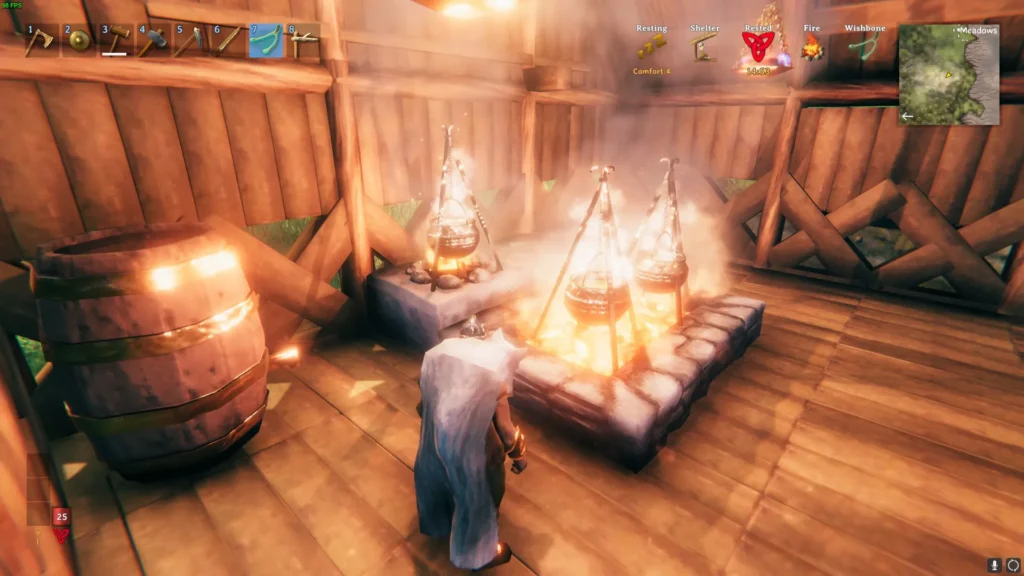
Advanced Brewing Room Designs
The Circular Chamber Concept
- Position 8 fermenters in a circular pattern around a central cauldron.
- Install labeled signs and potion display item stands.
- Place ingredient barrels between fermenters for fast access.
Linear Mega-Row Layout
- Place 10+ fermenters in a line with item stands above.
- Chests behind each fermenter store matching ingredients.
- Sign rows on the ceiling to mark fermentation timers.
Both layouts allow maximum visibility and speed when rotating mead types.
High-Volume Brewing Rotations
Weekly Fermentation Schedule (In-Game Days)
- Day 1–2: Minor Stamina & Poison Resistance
- Day 3–4: Medium Healing & Frost Resistance
- Day 5–6: Minor Healing & Barley Wine Base (future patch)
- Day 7: Restock + Rotation Review
Track batches on a fermenter board. Use item stands to indicate active recipes.
Strategic Fermentation Timing
Avoid overlapping idle periods by using these tips:
- Time insertions before expeditions.
- Sync fermentation with farming cycles.
- Always prep a new base while collecting the last batch.
Tip: Keep a spreadsheet or wallboard with your batch log and goals.
Integrated Farming Systems
Create a fermentation station that seamlessly connects to agriculture.
Three-Zone Integration
- Zone 1: Crop fields (Thistle, Berries, Carrots)
- Zone 2: Kitchen area (Cauldron + Chests)
- Zone 3: Fermenter wall/hall
Include:
- Portals to distant biome farms
- Cauldrons next to crop storage
- Roofed fermenter lanes with ample room
This eliminates downtime caused by ingredient shortage.
ExitLag and Fermenting: Silent Stability
Long fermentation timers demand a reliable connection. ExitLag prevents sudden drops, multiplayer desyncs, or progression loss.
How ExitLag Improves Brewing Performance:
- Maintains session stability over long idle crafting phases
- Prevents item duplication bugs due to lag
- Smooths multiplayer communication for shared crafting
- Keeps visual effects and item states synced
Even offline players benefit from ExitLag’s network optimization when managing multiple systems.
Final Thoughts: Total Fermentation Domination
Becoming a fermenter Valheim master requires foresight, organization, and stable execution. From batch syncing to base-wide fermentation plans, your brewing prowess is the foundation of boss dominance.
With ExitLag as your silent guardian, every potion finishes on time—every time.
FAQ: Valheim Fermenter
How many fermenters is optimal?
6–10 depending on how many potion types you use and your group size.
Can I store uncollected meads?
Yes. Fermenters hold finished meads until you pick them up.
What if I forget a batch?
No expiration penalty. Just collect when ready.
Does ExitLag help single-player fermentation?
Yes. Especially with cloud saves, remote sessions, or large bases.
Can I automate fermentation fully?
Not with vanilla Valheim, but ExitLag ensures the manual process runs without failure.
All game images used in this blog belong to Iron Gate Studio. They are used for informational/educational purposes only and do not imply endorsement or affiliation with the rights holders.
Got questions or want to connect with other players? Join the conversation at the ExitLag Forum!