Ever wondered how much you have spent in Valorant? With new weapon skins, battle passes, bundles, Radianite purchases, and limited-time cosmetics arriving throughout the year, your spending can accumulate much faster than expected. That is why learning how to access your Valorant purchase history is useful for more than simple curiosity.
For most players, checking their Valorant purchase history is about understanding where their money has gone, keeping better control of their gaming budget, and having transaction information available when a billing or refund issue appears. Instead of relying on memory, you can use Riot Games account information to review your purchases and create a clearer record of your spending.
What is Valorant purchase history?
Valorant purchase history is the transaction record associated with purchases made through your Riot Games account for Valorant. Depending on the transaction, the record can help you identify when a purchase happened, what was involved, and how many Valorant Points were spent. This makes the history especially useful when you need to investigate a purchase, organize your expenses, or prepare information for support.
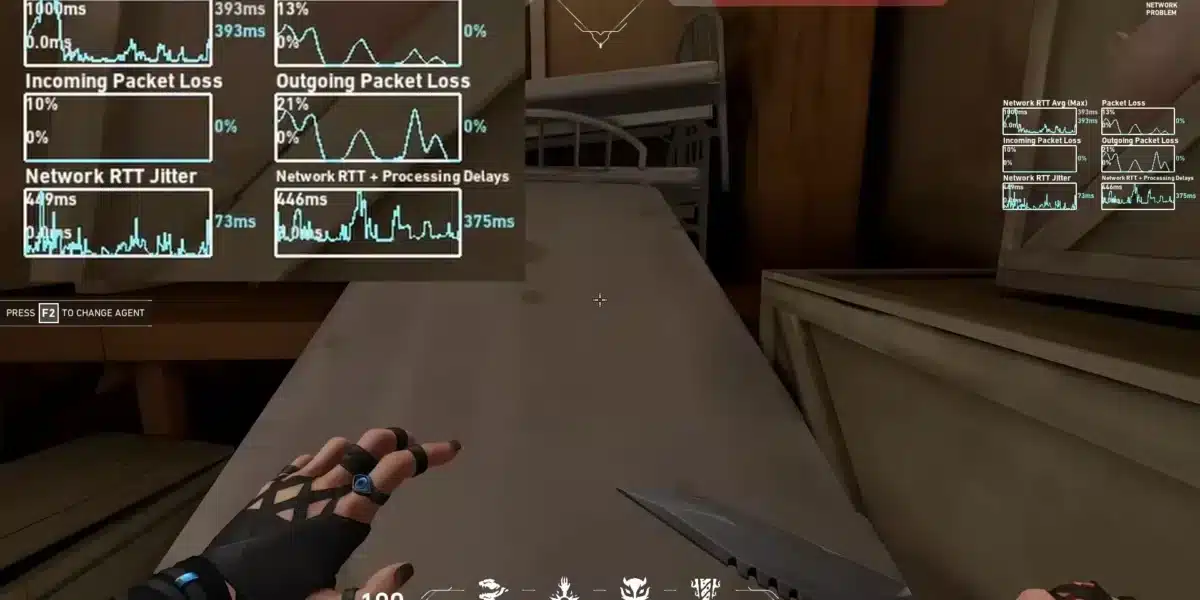
Your connection can also influence how smoothly you experience the game after investing in cosmetics and other content. ExitLag can help Valorant players optimize routing and reduce connection instability, particularly when packet loss, jitter, or inconsistent paths to game servers affect gameplay.
Where Can You Check Your Valorant Purchase History?
The most reliable place to begin is Riot Games’ own account and support environment. You do not need to install a third-party application simply to review your transactions. In fact, using the official account system is generally the safest approach because it keeps your financial information within the platform responsible for your Valorant account.
Why the official Riot purchase history matters
A transaction record is more useful when you know that the information comes from the same account used to make the purchase. This is particularly important for players who have multiple Riot accounts, play across different regions, or have changed their login details over time.
Searching for “Valorant purchase history” through random websites can lead to tools that are unrelated to your actual account. Therefore, players should first use Riot’s official resources before considering any external service.
The official Riot Games support website is the appropriate starting point for account, billing, and payment-related questions.
Step-by-step process to view your transactions
The process is straightforward:
- Open the official Riot Games support website in your browser.
- Sign in using the Riot account associated with your Valorant profile.
- Navigate to the purchase or transaction history area.
- Select the option to retrieve your purchase history.
- Review the transactions displayed for your account.
- Record or screenshot the information if you need it later.
The exact interface can change over time. However, the basic idea remains the same: authenticate your Riot account and access the billing information connected to it.
What information can appear in the record?
A transaction entry can provide useful details about a purchase. Depending on the type of transaction and the information available through the account system, you may see details such as the date, purchase category, item, or amount of Valorant Points involved.
This information is particularly helpful when you are trying to answer a simple question: “When did I buy this?”
It can also help when you are investigating why your account balance changed or when you need information for a support request.
How Much Have You Spent on Valorant?
One of the most common reasons players search for Valorant purchase history is to calculate their total spending. Riot’s purchase records can show individual transactions, but players may not always have a single figure representing everything they have spent over the lifetime of the account.
That means you may need to calculate your total manually.
Why VP totals are not the same as money spent
Valorant Points are an in-game currency, while your actual spending happens when you purchase VP or another paid product. Because of that distinction, adding every VP amount does not necessarily tell you exactly how much money you have spent.
For example, buying a VP package creates a monetary transaction. Spending those VP on a skin is an in-game currency transaction. If you add both values together, you could accidentally count the same money twice.
This is one of the most important points when organizing your Valorant purchase history.
How to calculate your total spending
A simple spreadsheet can make the process much easier.
Start by collecting your transaction information. Then create columns for the purchase date, transaction type, item or package, VP amount, and real-world price.
For example:
| Date | Transaction | VP / Amount | Category | Notes |
| May 1 | VP purchase | 1,775 VP | VP top-up | Skin budget |
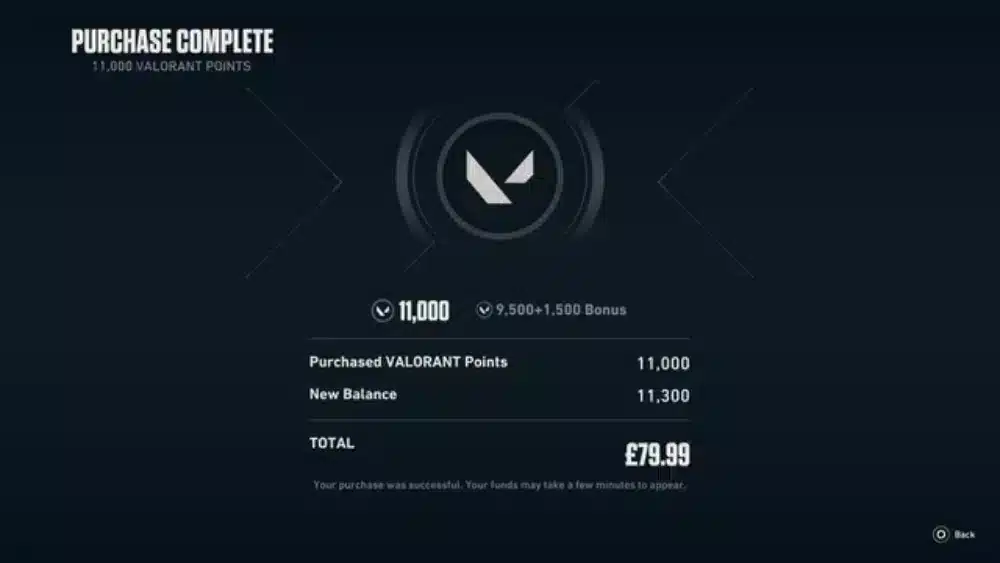
| May 7 | VP purchase | 11,000 VP | VP top-up | Multiple cosmetics |
| May 15 | Battle Pass | 1,000 VP | Battle Pass | Premium content |
| May 20 | Skin purchase | 1,775 VP | Weapon skin | Individual cosmetic |
The important point is to distinguish between money deposited into the account through VP purchases and VP subsequently spent inside the game.
Building a reliable spending calculation
For a more accurate estimate, use the original monetary value of each VP purchase rather than trying to convert VP back into currency based on a current package price.
This matters because VP packages can have different prices depending on region, platform, taxes, promotions, and available purchase options.
A useful spreadsheet can contain:
- Purchase date
- Transaction type
- VP purchased
- Money paid
- Item acquired
- Currency
- Region
- Refund status
- Notes
This creates a personal record that is much easier to understand than a long list of individual transactions.
What Is a Valorant Tracker and How Is It Different?
Players sometimes search for a “Valorant tracjer” or “Valorant trackjer” when they are actually looking for tools that monitor Valorant information. These searches can refer to several different types of tools, including stat trackers, match-history applications, store monitoring tools, and spending trackers.
What a Valorant tracker usually does
A Valorant tracker generally focuses on gameplay information rather than financial transactions.
Depending on the tool, it may display:
- Match history
- Competitive statistics
- Agent performance
- Weapon statistics
- Headshot percentage
- Win rate
- Recent games
- Rank information
This is fundamentally different from your purchase record.
Your purchase history concerns transactions and spending. A gameplay tracker concerns performance and match information.
Why players confuse trackers with purchase history
The confusion is understandable because both types of tools can provide information about your Valorant account.
However, a tracker is not automatically an official replacement for Riot’s transaction records. If your goal is to determine how much money you spent, the official account and billing information should remain your primary reference.
A “Valorant tracjer” search can therefore lead you toward tools that solve a completely different problem.
The same applies to the misspelled search term “Valorant trackjer.” If you are trying to find your spending record, focus on Riot’s account and purchase resources rather than assuming a tracker will contain your complete billing history.
What Should You Do If Your Purchase History Is Not Loading?
Sometimes, players can access their Riot account but cannot immediately see the information they expected. A missing or incomplete page does not necessarily mean that a transaction has disappeared.
Several technical or account-related issues can interfere with the display.
Common browser problems
Browser data can sometimes cause pages to load incorrectly. Cached files, cookies, extensions, or an outdated browser session can interfere with account pages.
If your history does not load, try the following:
- Clear your browser cache.
- Clear relevant cookies.
- Open the page in private or incognito mode.
- Disable unnecessary browser extensions temporarily.
- Try another browser.
- Refresh the Riot account session.
These steps are simple, but they can eliminate common problems before you contact support.
Account and region problems
Another possibility is that you are signed into a different Riot account.
This is particularly easy to overlook if you have multiple accounts. You may remember purchasing a skin but be checking the history associated with another account.
Before assuming that a transaction is missing, verify the Riot account, Riot ID, and relevant account information.
Regional differences can also matter. Transactions may be associated with the account and purchasing environment where they originally occurred.
When should you contact Riot Support?
If basic troubleshooting does not resolve the issue, contacting Riot Support is the next logical step.
When submitting a request, provide enough information to make the issue easy to understand. Explain what you expected to see, what is currently displayed, and when the transaction occurred if you know the approximate date.
Do not send your password or unnecessary sensitive information.
What Counts as a Valorant Purchase?
Understanding what belongs in your Valorant purchase history makes it easier to interpret the record correctly.
Not every item you receive in Valorant represents a financial purchase. Some content can be earned through gameplay, events, progression systems, or other free distribution methods.
Common paid purchases
Depending on the account and available content, players may spend money on:
- Valorant Points
- Weapon skins
- Skin bundles
- Battle Pass access
- Radianite Points
- Certain account or cosmetic content
- Limited-time event collections
The important distinction is between content obtained through a purchase and content obtained without directly spending money.
What may not appear as a paid transaction
Free rewards and progression-based content are different from purchases.
For example, an item received through a free event reward does not necessarily create a monetary transaction in the same way as buying VP does.
Similarly, experience-based unlocks do not represent money spent simply because they produce an item or reward.
This is why a complete personal spending record should focus on actual monetary transactions rather than every item present on the account.
How Can You Organize Your Valorant Purchase History?
If you regularly buy skins or battle passes, creating your own record can make your spending much easier to understand.
Relying exclusively on memory becomes increasingly difficult as your account grows. A simple spreadsheet can solve that problem.
Create categories for your purchases
Instead of recording everything in one undifferentiated list, organize your transactions by type.
Useful categories include:
- VP top-ups
- Weapon skins
- Bundles
- Battle Pass purchases
- Radianite-related purchases
- Refunds
- Other account transactions
This approach makes it possible to answer more specific questions.
For example, you could calculate how much you spent on VP over six months or compare your battle pass spending with your cosmetic spending.
Track Valorant money spent separately
Your spreadsheet should distinguish VP from real currency.
This prevents one of the most common accounting mistakes: adding VP spent on skins to the money paid for VP packages and treating both as separate expenses.
A simple record might look like this:
| Month | Money Spent | VP Purchased | Main Category | Running Total |
| January | $25 | 2,050 | VP | $25 |
| February | $0 | 0 | None | $25 |
| March | $50 | 4,750 | Skins | $75 |
| April | $10 | 1,000 | Battle Pass | $85 |
| May | $25 | 2,050 | VP | $110 |
This type of record provides a much clearer picture of your actual spending behavior.
Keep screenshots of important transactions
A spreadsheet is useful, but screenshots can provide additional context.
If you are dealing with a billing problem, refund request, or suspicious transaction, keeping the original information can make the process easier.
Store these records somewhere secure and avoid sharing them publicly.
Is a Valorant Store Checker Safe?
Players looking for a way to monitor their cosmetics may encounter third-party store checkers. These services can be convenient, but convenience does not automatically mean safety.
A store checker is not the same thing as an official Riot transaction history.
What does a store checker do?
A store checker typically attempts to show information about the rotating Valorant store.
Depending on the service, it may offer features such as:
- Daily shop information
- Cosmetic rotation monitoring
- Wishlist alerts
- Skin availability notifications
- Store previews
Some services may advertise additional account-related features.
However, players should carefully evaluate what access the tool requires before connecting an account.
Potential advantages
Third-party tools can sometimes make cosmetic monitoring more convenient.
For example, a player who wants to know whether a particular skin is currently available may prefer a notification system instead of repeatedly opening the game.
However, this convenience is separate from financial recordkeeping.
Potential risks
The risks depend on the specific service and the permissions it requests.
Be cautious if a website asks for credentials directly, promises information that should only be available through official account systems, or requires unusual account permissions.
Potential concerns include:
- Account security
- Credential exposure
- Privacy issues
- Unclear data handling
- Terms-of-service concerns
- Malicious software
For financial records, the safest option remains the official Riot system.
How Can Your Purchase History Help With Refunds?
Your Riot purchase history can become particularly useful when dealing with billing questions.
A support request is easier to explain when you know what you bought, approximately when you bought it, and which account was involved.
When purchase information is useful
A transaction record can help when you are:
- Asking about refund eligibility
- Reporting an unfamiliar transaction
- Investigating missing content
- Resolving a payment problem
- Confirming when an item was purchased
- Providing information requested by support
The purchase record does not automatically guarantee a refund. Eligibility depends on Riot’s applicable policies and the specific transaction.
What information may be requested?
Depending on the issue, support may need information such as:
- Purchase date
- Item name
- Transaction details
- Order information
- Payment information
- Account details
Do not provide more sensitive information than necessary, and never disclose your password.
How Do Valorant Refunds Work?
Refunds are one of the main reasons players want quick access to their transaction information.
However, players should not assume that every purchase can be reversed.
Understanding refund eligibility
Riot’s refund rules can depend on the item, purchase type, usage status, and applicable policy.
The original material emphasizes unused skins and unused VP as examples of purchases that may qualify under specific conditions. It also notes that certain used content and consumable purchases are generally excluded.
Because refund policies can change, players should verify the current rules directly through Riot’s official support resources before submitting a request.
Step-by-step approach to a refund request
When you believe a purchase may qualify:
- Sign into the Riot Games support environment.
- Open the billing, payments, or refund section.
- Select Valorant where applicable.
- Review the refund information.
- Identify the transaction from your purchase record.
- Submit the requested information.
- Wait for the support response or confirmation.
Having the transaction information available can make the process more organized.
Why using an item can matter
Refund policies often distinguish between unused and used content.
Therefore, if you are unsure whether you want a purchase, review the applicable policy before using, upgrading, or otherwise consuming the content.
Do not assume that a refund will remain available after an item has been used.
How Can Players Avoid Overspending in Valorant?
Reviewing your Valorant purchase history can be surprisingly useful because it turns abstract purchases into a real number.
A single skin may seem inexpensive in isolation. Several skins, battle passes, bundles, and VP purchases can create a very different total over time.
Set a personal monthly limit
The easiest strategy is to decide on a spending limit before opening the store.
A predefined budget makes limited-time offers easier to evaluate because you already know what you can afford.
If your monthly budget is already exhausted, the decision becomes simple: wait.
Separate entertainment spending from necessities
Valorant purchases are optional entertainment expenses.
Treating them as a separate category can make it easier to understand whether your spending is reasonable for your personal budget.
This also prevents cosmetic purchases from blending into everyday expenses.
Use a waiting period
Limited-time cosmetics can create urgency.
Instead of buying immediately, wait several hours or until the next day whenever possible. If you still want the item after the initial excitement fades, you can make a more deliberate decision.
Ask yourself:
- Do I actually like the skin?
- Will I use it regularly?
- Do I already own something similar?
- Is it worth the price to me?
- Am I buying it because I want it or because it is temporarily available?
These questions can reduce impulse purchases.
Can ExitLag Improve the Valorant Experience After You Invest?
After reviewing your Valorant purchase history, it is natural to want the game to perform as smoothly as possible.
A cosmetic purchase does not improve your network connection, and skins do not provide a competitive advantage. Your actual gameplay experience still depends on factors such as your hardware, internet connection, server location, and network routing.
How ExitLag can help with connection stability
ExitLag is designed to optimize network routing between players and game servers.
For Valorant players, the goal is to reduce problems associated with unstable routing, including:
- Packet loss
- Jitter
- Lag spikes
- Inconsistent ping
- Connection instability
The benefit depends on the player’s network conditions and location. A routing optimization service cannot guarantee a specific ping or eliminate every connection problem.
Why stable connections matter in Valorant
Valorant is a competitive tactical shooter where timing and precision matter.
A connection that suddenly becomes unstable can interfere with movement, aiming, ability usage, and communication. Therefore, players who have already invested in cosmetics may reasonably want to make sure network instability is not undermining their gameplay.
The important distinction is that ExitLag supports the connection experience. It does not change the value of a cosmetic purchase or alter the game’s competitive rules.
What Should You Do After Reviewing Your Purchase History?
Finding out how much you have spent does not need to lead to regret. The useful part is understanding your habits and deciding how you want to manage them in the future.
Turn your history into a budget
Once you know your previous spending, create a realistic future limit.
For example, you might decide to allocate a fixed amount per month for optional Valorant purchases. The exact amount should depend on your own financial situation.
The objective is not to eliminate cosmetic purchases. It is to make them intentional.
Review your purchases periodically
Checking your account once every few months can reveal patterns that are difficult to notice individually.
You may discover that most of your spending happens during bundle releases, that you rarely use certain skins, or that small VP purchases have accumulated into a substantial amount.
A regular review makes those patterns visible.
Keep security in mind
Your purchase history contains information connected to your account activity.
Do not publish screenshots that expose account identifiers, transaction information, email addresses, order numbers, or other private details.
If you use external tools, research them carefully and avoid giving credentials to services you do not trust.
Why Accurate Purchase Records Matter for Long-Term Account Management
The value of your Valorant purchase history goes beyond calculating a final number.
A reliable record can help you understand your spending, investigate problems, organize your budget, and communicate more effectively with support.
A record creates accountability
When purchases are visible, it becomes easier to identify patterns.
Instead of remembering individual skins, you can look at the complete picture and decide whether your spending matches your priorities.
This is especially useful for players who regularly purchase cosmetics.
A record can simplify support conversations
Support requests are usually easier when they contain clear information.
If you can identify the transaction date, item, and relevant account details, you can describe the issue more precisely.
That does not guarantee a faster resolution, but it reduces uncertainty when explaining what happened.
A record helps separate spending from gameplay
Your cosmetics do not determine your rank, aim, or tactical decision-making.
Keeping spending records can therefore reinforce an important distinction: purchases are optional additions to the game, while competitive improvement comes from practice, strategy, teamwork, and consistent gameplay.
Final Thoughts on Valorant Purchase History
Your Valorant purchase history is one of the simplest ways to understand your spending in Valorant. By reviewing transactions through the official Riot account environment, separating VP from real-world payments, and keeping your own organized record, you can make better decisions about future purchases. And to improve your gaming even further, you can count on tools such as ExitLag, which optimizes your connection and reduces lag.
Frequently Asked Questions About Valorant Purchase History
How do I check Valorant purchase history?
Sign into the Riot Games account associated with your Valorant account and use Riot’s official support and purchase-history resources. From there, you can review the available transaction information connected to the account.
How can I see how much money I spent on Valorant?
Your transaction history can help you identify your purchases, but you may need to calculate the total yourself. Use the original monetary amount paid for VP or other purchases rather than adding VP spent and real-world payments together.
Is a Valorant tracjer the same as purchase history?
No. A “Valorant tracjer” usually refers to a third-party or gameplay-focused tracker that monitors statistics, matches, ranks, or other game information. Purchase history concerns account transactions and spending.
What about the search term Valorant trackjer?
“Valorant trackjer” is another spelling players may use when searching for Valorant tracking tools. However, if your goal is to find financial transactions, an external tracker should not be treated as a substitute for Riot’s official purchase information.
Is a third-party store checker the same as Riot purchase history?
No. A store checker generally focuses on the rotating cosmetic shop, while Riot purchase history refers to transaction information associated with your Riot account. For financial records, the official Riot system is the better reference.
Got questions or want to connect with other players? Join the conversation at the ExitLag Forum!