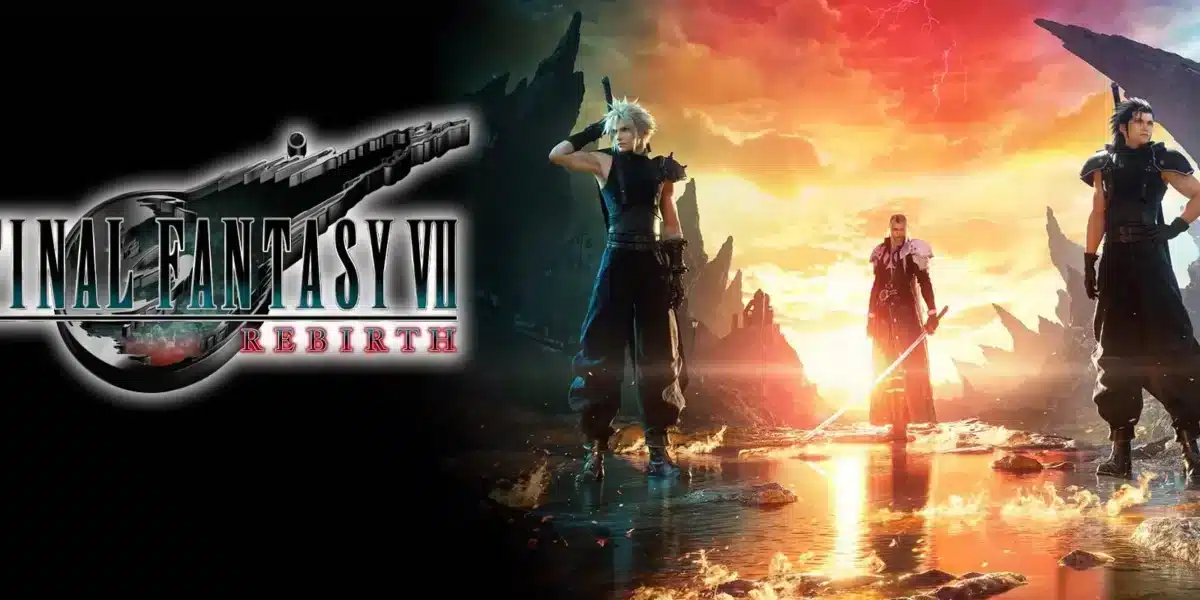

Zack Fair is one of the most important characters in the entire Final Fantasy VII mythos, even though he spends much of the original story in the background. He first appeared in Final Fantasy VII and later became the lead of Crisis Core, the prequel that turned him from a mystery into one of the series’ most beloved heroes. Square Enix’s official pages for Crisis Core Reunion and Final Fantasy VII Rebirth both position him as a central figure in the broader FF7 project, not just a side note in Cloud’s past.
Zack’s story is also inseparable from the city that shapes so much of Final Fantasy VII’s identity. To understand why his return with Cloud matters so much, this guide to Midgar in Final Fantasy gives useful context on the setting, Shinra’s influence, and the world Zack is pulled back into.
Zack Fair matters because he changes how players understand Cloud, Aerith, Shinra, and even Sephiroth. In Crisis Core Reunion, Square Enix describes him as a young and ambitious SOLDIER operative whose journey exposes the darker side of Shinra’s experiments. In Rebirth, Square Enix’s official character profile makes it clear that Zack survives a brutal battle, returns to Midgar with a mako-poisoned Cloud, and becomes part of one of the remake trilogy’s biggest mysteries.
If you want to understand Zack Fair fully, you need to look at three things at once: his original role in FF7 lore, his complete arc in Crisis Core, and the new questions created by Final Fantasy VII Rebirth. That is also why searches like Zack Fair FF7, Zack Fair Crisis Core, and is Zack Fair alive FF7 Rebirth keep growing. His story is no longer just tragic backstory. It is now one of the main engines pushing the remake trilogy forward.
Who is Zack Fair?

Zack Fair is a SOLDIER 1st Class from Gongaga, the original wielder of the Buster Sword before Cloud, and the protagonist of Crisis Core. In the original Final Fantasy VII, he appears mainly through flashbacks and hidden story revelations, but later games expanded him into a full lead character. Square Enix’s Crisis Core Reunion page describes him as the young Shinra operative whose story begins seven years before FF7 and gradually reveals the truth behind Shinra’s experiments and the monsters tied to them.
What makes Zack Fair so memorable is that he is built as a contrast to Cloud. Cloud is guarded, fragmented, and deeply unsure of himself. Zack is open, warm, expressive, and driven by a very direct idea of heroism. Even official and reference materials consistently describe him as upbeat, kind, and deeply loyal to the people around him. That difference is a huge part of why Zack Fair vs Cloud remains one of the most-discussed character comparisons in the series.
For a broader character reference outside Square Enix’s official pages, the Zack Fair character overview helps summarize his appearances, role, and development across the Final Fantasy VII universe. It is a useful companion when comparing how his portrayal changes between the original game, Crisis Core, and Rebirth.
Zack Fair’s personality and ideals
At his core, Zack Fair is a believer. He believes in becoming a hero, believes in protecting people, and believes that honor should mean something. Square Enix’s official Rebirth character page says Zack learned pride in his work and inherited the Buster Sword from the mentor who shaped him, which lines up with how Crisis Core frames Angeal’s influence on him.
That matters because Zack is not just cheerful for the sake of being cheerful. His optimism is tested constantly. He sees Shinra’s corruption, watches his heroes fall apart, and still tries to hold onto his principles. That is why his emotional impact hits so hard. Zack Fair is one of the rare FF7 characters whose moral center feels clear even when the world around him gets more chaotic.
Zack Fair’s basic profile
Some core Zack Fair details are stable across the series, but not every fan-circulated stat is equally solid. The most reliable broad points are these:
| Attribute | Best-supported answer |
| Home | Gongaga |
| Weapon | Buster Sword |
| Role | SOLDIER 1st Class |
| Main playable title | Crisis Core: Final Fantasy VII / Reunion |
| English voice in Remake/Rebirth era | Caleb Pierce |
| Japanese voice | Kenichi Suzumura |
Square Enix’s official Rebirth character page confirms the weapon and SOLDIER status, while voice-credit references confirm Caleb Pierce in Rebirth and Kenichi Suzumura in Japanese. As for age, widely cited reference materials place Zack at about 23 around the end of his original arc, but his exact date of birth is not consistently treated as firmly official in the best primary material available.
What is Zack Fair’s story in Crisis Core and FF7?
To understand Zack Fair, you really need Crisis Core. The original FF7 gives you the outline: Zack was close to Cloud, involved in the Nibelheim incident, and died before the main events of the game. Crisis Core turns that outline into a full emotional arc, showing his rise in SOLDIER, his bond with Angeal, his encounters with Sephiroth and Genesis, and his eventual break from Shinra. Square Enix’s official Reunion page frames the game as Zack’s descent into the truth behind Shinra’s experiments.
That expansion changes how you read FF7 itself. Zack Fair is not just “the guy before Cloud.” He is the person whose life and death helped shape Cloud’s entire identity crisis. In the original FF7 story, Cloud unknowingly absorbed parts of Zack’s experiences into his own fractured self-understanding after severe trauma and experimentation. That is one of the biggest narrative turns in the game, and Zack is essential to it.
Zack, Cloud, Aerith, and Sephiroth
Zack’s role becomes even more important because of how many core characters he connects. He is Cloud’s friend and unofficial model. He is Aerith’s first love. He is one of the few people who knew Sephiroth before the full collapse. His story is like a hinge that swings open several of FF7’s biggest relationships at once.
Those connections matter because Zack Fair’s story is not isolated. Aerith’s bond with him changes how players read her connection with Cloud. Cloud’s fractured identity becomes much clearer once Zack enters focus. And Sephiroth’s fall feels more personal because Zack knew him before everything broke. That is why Zack Fair FF7 remains such an important search term: he touches the emotional center of the entire saga.
Aerith is one of the most important parts of that emotional web, especially because her history with Zack changes how players read several later scenes with Cloud. A deeper look at Aerith Gainsborough in Final Fantasy helps connect Zack’s story to one of FF7’s most central relationships.
Zack’s sacrifice and why it matters
The defining moment of Zack Fair’s original story is his final stand while protecting Cloud from Shinra troops outside Midgar. That death is one of the most famous scenes in the FF7 universe because it is both a character climax and a story trigger. Zack dies, Cloud survives, and the emotional and psychological fallout carries directly into FF7.
This is also the reason Zack’s legacy feels so large. He passes on more than a sword. He passes on a burden, an ideal, and a fractured inheritance that Cloud spends much of FF7 trying to understand. If you strip Zack out of FF7, Cloud’s arc becomes dramatically weaker. That is why Zack Fair is not optional lore. He is structural lore.
Is Zack Fair alive in FF7 Rebirth?
This is the question almost everyone asks now: is Zack Fair alive FF7 Rebirth? The cleanest answer is yes, Zack is alive in Final Fantasy VII Rebirth—but not in a simple, one-line way. Square Enix’s official Rebirth character profile explicitly says he overcomes the odds, cheats death, and returns to Midgar with Cloud. That is the clearest official summary of his status.
What makes the question complicated is not whether Zack appears alive, but how his world relates to the main party’s world. Reference summaries and post-release discussion around Rebirth consistently describe Zack’s sections as taking place in another reality or another world structure connected to the remake trilogy’s broader mystery. So the real uncertainty is not “is he alive on-screen?” It is “what kind of reality is this, and what will it mean in the third game?”
What Rebirth confirms about Zack
Rebirth confirms several important things about Zack Fair. He is active, moving through Midgar, interacting with Elmyra, dealing with a comatose Cloud and Aerith, and later becoming tied to the game’s larger reality-bending finale. Square Enix had already said before release that Zack would get a bigger role in Rebirth than he had in the original FF7, and that is exactly what happened.
So if someone asks, “Is Zack Fair alive in FF7 Rebirth?” the honest answer is: yes, he is alive in the game’s Zack-focused storyline. What remains unresolved is the exact nature of that world and how final the separation is between Zack’s reality and Cloud’s main path.
What Rebirth still leaves ambiguous
The developers clearly wanted Zack’s role to create discussion rather than close it down. Interviews and post-release material treat Zack’s world as something players are still meant to think about, not something fully explained in one scene. That ambiguity is deliberate.
Because of that, the safest wording is this: Zack Fair Final Fantasy 7 Rebirth is alive in a distinct narrative layer that the game presents as real within the remake project, but the full rules behind that reality are still not completely resolved on-screen. That is why the question keeps coming back. The game confirms his presence, but not every consequence.
Zack Fair vs Cloud: what is the difference?
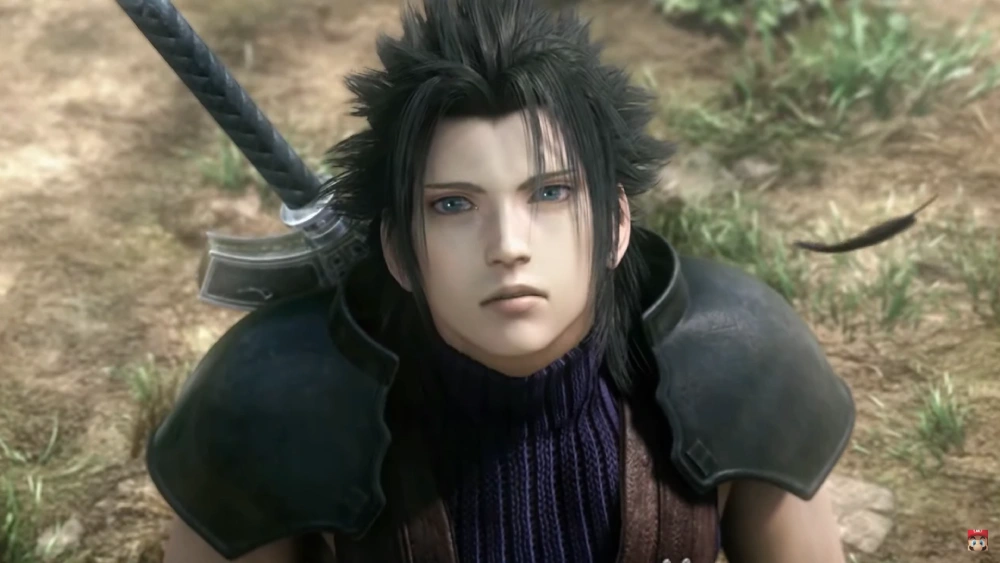
The easiest way to explain Zack Fair vs Cloud is that Zack is the heroic ideal, while Cloud is the broken person trying to rebuild himself around pieces of that ideal. Cloud is more psychologically fragmented, more defensive, and more difficult to read. Zack is more emotionally direct and socially open.
That difference is not accidental. Zack was designed to complicate Cloud’s backstory and deepen the mystery inside FF7. Even the character-creation history around Zack points to him as a way of enriching Cloud’s identity reveal. He exists partly to show what Cloud is not, what Cloud admired, and what Cloud unconsciously borrowed after trauma.
Personality differences
Zack is warmer, louder, and more instinctively hopeful. Cloud is cooler, quieter, and more detached. That is why the two can share visual echoes without feeling like the same person. Even when Cloud reflects Zack in fragments, the difference in emotional energy is obvious.
This is one reason Zack Fair remains so appealing. He is not just “Cloud but earlier.” He offers a completely different heroic tone. If Cloud is about identity, recovery, and self-acceptance, Zack is about loyalty, momentum, and sacrifice. Both matter, but they hit different emotional nerves.
Voice performance also plays a major role in how players connect with Zack across different versions of the character. The Zack Fair voice actor listing is a helpful reference for checking his English and Japanese portrayals throughout the franchise.
Story-function differences
Cloud is the main protagonist of FF7. Zack is the character who makes Cloud’s inner mystery possible. Cloud carries the central perspective, but Zack carries a huge portion of the hidden scaffolding under that perspective.
That is why Zack Fair vs Cloud should not be read as a popularity contest alone. They are designed to work together. Zack provides contrast, history, and emotional inheritance. Cloud provides the long-term arc of processing that inheritance. In narrative terms, they complete each other.
What is the best Zack Fair build in Crisis Core Reunion?
When people search for a Zack Fair build, they are usually talking about Crisis Core Reunion, not Rebirth. Zack is not a freeform build character in Rebirth the way he is in Crisis Core Reunion. In Crisis Core, your Zack Fair build depends on Materia, fusion, stat growth, and which command abilities you want to emphasize. Build guides from RPG Site and Inverse both point to a small group of standout tools that repeatedly define strong endgame setups.
The most common advice is to build around survivability, efficient healing, and one or two top-tier damage tools rather than trying to do everything at once. Community and guide consensus especially favors setups that scale Zack’s damage hard while keeping him safe in difficult missions.
Best general Zack Fair build approach
If you want a strong all-purpose Zack Fair build, prioritize these ideas:
- one reliable healing option
- one high-end physical damage command
- one or two strong magic or utility choices
- materia fusion that boosts HP, ATK, or survivability
- accessories that support limit breaking and sustain
Two guide sources are especially consistent here. RPG Site highlights Curaga and Costly Punch as elite choices worth considering in strong setups, while Inverse also calls Costly Punch one of the best overall materia options and recommends pairing it with HP-focused support and healing.
A practical sample build philosophy looks like this:
| Build focus | Recommended direction |
| Main damage | Costly Punch or another top-tier command |
| Healing | Curaga |
| Survival | HP Up / defensive fusion |
| Extra offense | Quake, Energy, or a strong elemental spell |
| Utility | Dualcast or situational support |
That is not the only viable Zack Fair build, but it is one of the safest and strongest templates for players who want a powerful late-game Zack without getting overly niche.
Best early and late-game priorities
Early in Crisis Core Reunion, you do not need to chase a perfect build immediately. The game is flexible enough that you can experiment. RPG Site explicitly notes that many builds can work because stats can become wildly powerful through fusion, especially later on.
Late game is where optimization matters much more. That is when a focused Zack Fair build starts to shine, especially if you are pushing harder missions or secret content. Inverse specifically calls out Costly Punch-based setups as essential for high-end content, especially when paired with high HP and reliable healing. So if you only remember one thing about a strong Zack Fair build, remember this: build for a clean damage loop, then give Zack the sustain to keep using it.
How ExitLag helps when replaying FF7 titles on PC
This topic is different from a competitive online game, so it is worth being precise. Crisis Core Reunion, Rebirth, and the broader FF7 single-player experiences are not built around online PvP where milliseconds decide fights. So ExitLag is not “mandatory” for Zack Fair fans in the same way it might be for an esports shooter. Still, PC players can benefit from cleaner routing when dealing with launcher connections, downloads, cloud sync, remote streaming, or unstable network conditions around modern PC play.
That makes ExitLag more of a quality-of-experience tool here than a direct combat enhancer. If your setup involves unstable routing, patch delivery issues, or remote access scenarios, it can help create a smoother PC environment.
When ExitLag helps most
ExitLag makes the most sense for FF7 players on PC when you are dealing with:
- unstable game-launcher connections
- slow or inconsistent patch downloads
- remote streaming or remote play use cases
- cloud-save syncing problems caused by poor routing
- generally unstable internet paths on your machine
That is a narrower use case than in online competitive games, but it is still real for some players.
Why it still fits FF7 players
If you are revisiting Zack Fair Crisis Core on PC, the main goal is smooth, frustration-free access. ExitLag can help reduce networking headaches around that access layer, even if the game itself is primarily single-player. That makes it a practical support tool rather than the center of the experience.
Why Zack Fair still matters
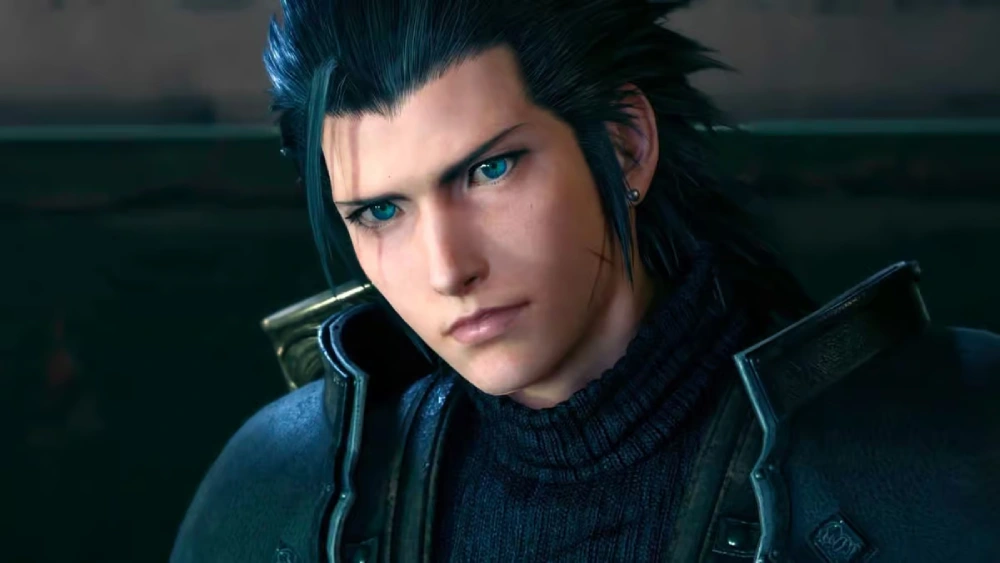
Zack Fair still matters because he embodies something the FF7 universe rarely gives in a simple form: uncomplicated decency. He is not naive, exactly. He is tested, manipulated, betrayed, and hunted. But he still chooses loyalty and courage. That is why fans keep coming back to him even after Cloud, Sephiroth, Aerith, and Tifa dominate more of the spotlight.
He also matters because Square Enix clearly still sees value in him. The decision to position Crisis Core Reunion as part of the remake project and then expand Zack’s role in Rebirth shows that he is no longer just a lore appendix. He is one of the keys to how this version of the FF7 story is being retold.
Best games to experience Zack Fair
If you want the best Zack Fair experience, the recommended order is:
- Crisis Core: Final Fantasy VII Reunion
- Final Fantasy VII or the remake project
- Final Fantasy VII Rebirth
That gives you the cleanest emotional arc. You meet Zack as a protagonist first, then understand how his absence shapes Cloud, and then see how Rebirth reopens the entire question of his fate.
Players who enjoy revisiting older Final Fantasy experiences may also want to explore how the series has appeared in different formats beyond the mainline RPGs. This Final Fantasy Record Keeper guide gives extra context for fans interested in the franchise’s broader legacy, characters, and crossover-style history.
Why fans connect with him so strongly
Fans tend to connect with Zack Fair because he feels emotionally clear in a story full of broken memories and hidden motives. He is a heroic figure, but not a cold one. He is skilled, but never defined only by power. He is tragic, but not reduced to tragedy. That mix is rare, and it is why Zack keeps feeling bigger every time the FF7 project returns to him.
FAQ
Zack Fair is a SOLDIER 1st Class from Gongaga, the protagonist of Crisis Core, and one of the most important background figures in the original FF7 story. He is the original wielder of the Buster Sword before Cloud.
Yes, Zack appears alive in Final Fantasy VII Rebirth. Square Enix’s official character profile says he survives a brutal battle and returns to Midgar with Cloud, though the exact nature of his reality remains part of the game’s larger mystery.
Zack is more open, upbeat, and direct, while Cloud is more guarded and psychologically fragmented. Story-wise, Zack helps explain Cloud’s identity crisis and emotional inheritance.
A strong Zack Fair build in Crisis Core Reunion usually emphasizes Costly Punch, Curaga, HP growth, and efficient materia fusion. Multiple build guides treat Costly Punch as one of Zack’s strongest late-game tools.
Caleb Pierce voices Zack in English in Final Fantasy VII Rebirth, while Kenichi Suzumura voices him in Japanese.
His age around the end of his main arc is widely cited as about 23, but some fan-circulated birthday details are less firmly supported than other basic profile points. The best available profile material still treats some of those specifics more cautiously than fans often do.
Final thoughts
Zack Fair is not just the hero of a prequel. He is one of the emotional foundations of the entire FF7 universe. His optimism, sacrifice, bond with Cloud, love for Aerith, and strange new role in Rebirth all make him impossible to treat as a minor character. Whether you care most about Zack Fair FF7, Zack Fair Crisis Core, Zack Fair Final Fantasy 7 Rebirth, or even building the strongest Zack Fair build in Crisis Core Reunion, the same truth holds: he changed the meaning of this story.
And if you are heading back into Zack’s world on PC, make the overall experience smoother where you can. Zack Fair deserves a clean replay, and ExitLag can help reduce routing headaches around PC play, downloads, launcher stability, and remote streaming scenarios while you revisit one of Final Fantasy’s most beloved heroes.
Got questions or want to connect with other players? Join the conversation at the ExitLag Forum!