

Dota 2 Liquipedia is one of the most important tools for players and fans who want to fully understand the competitive side of Valve’s iconic MOBA. From professional tournaments to historical data, this platform centralizes information that shapes how the community follows the game.
At first glance, Dota 2 Liquipedia may look like a simple statistics website. However, it quickly becomes clear that it functions as a living archive of the entire competitive ecosystem. Teams, players, patches, and events are documented in a structured and reliable way. And before we continue, know that to know more about all the relevant content about gaming, you just have to check our blog.
What is Dota 2 Liquipedia and how does it work?

Dota 2 Liquipedia is an open-access knowledge base focused entirely on the competitive scene. It operates as a structured Dota 2 wiki, where information is added, reviewed, and corrected by a global community of editors.
This model allows Liquipedia to scale far beyond what a single company could manage. As a result, the platform covers not only Tier 1 events but also qualifiers, regional leagues, and smaller competitions that shape the ecosystem.
Community-driven structure
First of all, Liquipedia relies on volunteer editors who follow strict formatting and sourcing rules. These contributors update pages in real time, especially during live events.
Secondly, moderation systems ensure accuracy. Changes are reviewed, and incorrect data is quickly corrected, keeping the platform trustworthy even during fast-paced tournaments.
Why the wiki format matters
Because it is a wiki, information is interconnected. Team pages link to player histories, tournaments link to match results, and heroes link to competitive usage data. This structure makes research fast and intuitive.
In the same way, readers can move from a single match to an entire season overview without leaving the platform.
Check also: The Frustration of Dota 2 Lag
How Dota 2 Liquipedia covers the competitive scene
One of the strongest aspects of Dota 2 Liquipedia is its deep focus on the competitive scene. The platform documents every layer of professional play, from grassroots events to The International.
Instead of highlighting only champions, Liquipedia tracks full brackets, match timelines, and roster movements. This gives context to results rather than isolated outcomes.
Tournament info and historical records
Tournament pages include detailed tournament info such as formats, prize pools, dates, and participating teams. Over time, these pages become historical records that show how the esports scene has evolved.
For example, users can compare prize pool growth, regional dominance, and format changes across multiple seasons.
Teams and player profiles
Each team and player has a dedicated profile. These pages document transfers, role changes, and performance history. For fans, this creates a narrative around careers and rivalries.
For aspiring professionals, these profiles function as learning tools, showing how top players adapt across metas and teams.
Exploring the hero database and competitive trends
Beyond esports results, Dota 2 Liquipedia offers a powerful hero database focused on professional play. Instead of public matchmaking data, it highlights how heroes are used at the highest level.
This distinction is critical. Competitive drafts often differ greatly from ranked games, and Liquipedia helps bridge that understanding.
You may also like: Dota 2 Ranks: MMR, Medals, Calibration and Fast Climb Tips
Hero picks, bans, and meta shifts
Liquipedia tracks pick and ban rates across tournaments. By comparing patches and events, players can identify when a hero rises or falls in popularity.
As a result, readers can see how balance changes impact drafts long before trends reach public matchmaking.
Strategy guides through data
While Liquipedia does not publish traditional strategy guides, it provides the raw material needed to build them. Draft patterns, hero pairings, and role flexibility are all visible through competitive data.
In practice, this allows players to study professional decision-making rather than relying on opinion-based advice.
Why Dota 2 Liquipedia matters for active players
For players who still compete regularly, Dota 2 Liquipedia is not just a reference site. It becomes a preparation tool.
Before scrims or tournaments, teams often study opponent drafts and tendencies using Liquipedia. Even ranked players benefit by understanding why certain heroes dominate specific patches.
Knowledge meets performance
However, information alone is not enough. Competitive matches demand stability and precision. While Liquipedia sharpens decision-making, performance still depends on technical consistency.
This is where ExitLag fits naturally into the competitive routine. By optimizing routing and reducing packet loss, ExitLag helps ensure that knowledge gained from Dota 2 Liquipedia can actually be applied in real matches.
In summary, Liquipedia builds your understanding, while ExitLag protects your execution. Together, they support a more consistent and competitive Dota 2 experience.
Check also: How to fix FPS drop in Dota 2: complete guide to reduce latency
How players use Dota 2 Liquipedia to improve competitive decisions
Dota 2 Liquipedia is not only a reference platform, but also a practical tool for players who want to improve their competitive mindset. When used correctly, Dota 2 Liquipedia helps transform raw information into smarter in-game decisions.
At first, many players access Dota 2 Liquipedia only to check tournament results or rosters. However, with deeper use, it becomes clear that Dota 2 Liquipedia offers structured insights that directly influence drafting, preparation, and strategic planning.
In other words, Dota 2 Liquipedia works as a competitive encyclopedia. It shows what is being played, why it is effective, and how the professional scene adapts after patches. This makes it invaluable for players aiming to stay relevant in the meta.
Above all, Dota 2 Liquipedia bridges the gap between professional play and ranked matches. By studying real competitive data, players reduce guesswork and base decisions on proven patterns.
Using draft data before ranked matches
Firstly, many players analyze recent tournaments to understand priority picks and bans. This practice helps avoid outdated hero choices and prepares players for common draft scenarios.
Secondly, draft history reveals how teams adapt to counters. Observing this process teaches flexibility rather than rigid hero pools.
Understanding role adaptation in the meta
Liquipedia also shows how heroes shift roles across patches. Supports become cores, and offlaners gain new identities.
This flexibility is easier to understand when players follow competitive usage instead of public matchmaking trends.
Using the hero database from Dota 2 Liquipedia correctly
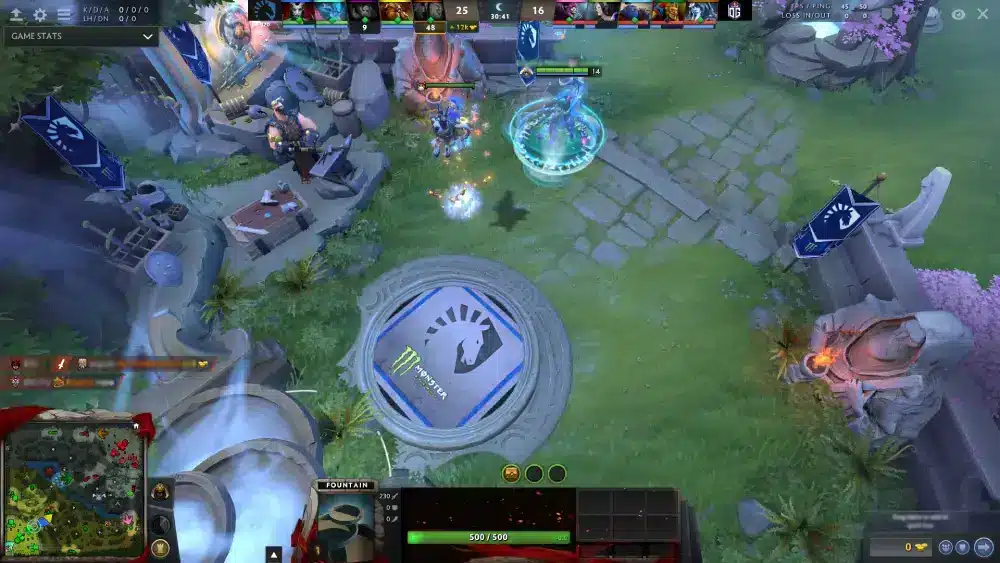
The hero database is one of the strongest features of Dota 2 Liquipedia. Unlike casual stat sites, it focuses on professional execution rather than raw win rates.
This difference is critical. Pro play highlights coordination, timing, and draft synergy, which are often absent in ranked statistics.
Identifying meta-defining heroes
By reviewing multiple events on the same patch, players can identify heroes that consistently shape drafts.
As a result, time investment becomes more efficient, focusing practice on heroes with long-term relevance.
Learning itemization patterns
Although Liquipedia is not a traditional strategy guide, repeated item choices reveal clear patterns.
Players who analyze these trends gain a deeper understanding of why items are chosen, not just what to buy.
Check this too: Dota 2 Characters: Complete Hero Guide and Roles Explained
Reading tournament info to understand the competitive scene
Detailed tournament info allows players to follow the competitive scene in a structured way. Brackets, formats, and results are clearly organized.
From now on, fans can follow multiple regions without confusion or fragmented sources.
Comparing regional playstyles
Different regions approach the game differently. Some prioritize tempo, others focus on scaling.
Liquipedia makes these contrasts visible by grouping tournaments and results logically.
Tracking emerging teams and players
Beyond top-tier organizations, Liquipedia documents qualifiers and smaller leagues.
This coverage helps players understand how the ecosystem evolves beyond headline teams.
How Dota 2 Liquipedia complements strategy guides and tools
While Dota 2 Liquipedia excels as a Dota 2 wiki, it does not replace strategy guides. Instead, it provides factual grounding for deeper analysis.
In the same way, players still need stable conditions to apply what they learn.
Turning knowledge into execution
Studying drafts means little if lag disrupts gameplay. Competitive matches demand precision.
ExitLag supports this by optimizing routing, reducing packet loss, and stabilizing ping. This ensures that strategies learned through Dota 2 Liquipedia can be executed consistently.
Aligning preparation and performance
Liquipedia improves decision-making. ExitLag protects mechanical reliability.
Together, they create a complete competitive preparation routine.
Check this: Dota 2 packet loss: fix connection issues and dominate games
Common mistakes when using Dota 2 Liquipedia

Despite its depth, some players misuse the platform.
Copying without understanding
Blindly copying professional drafts often fails in ranked environments.
Players must understand context, not just trends.
Ignoring patch versions
Outdated data leads to poor conclusions.
Always verify the patch before analyzing drafts or heroes.
How Players Use Dota 2 Liquipedia
| Goal | Section Used | Practical Outcome |
| Follow the meta | Hero Database | Identify top picks and bans |
| Improve drafts | Tournament pages | Learn winning team compositions |
| Study opponents | Team profiles | Track tendencies and strategies |
| Prepare for patches | Event history | Understand meta shifts |
Frequently Asked Questions (FAQ)
Dota 2 Liquipedia is mainly used to track the competitive scene, including tournaments, teams, players, and hero usage in professional matches. It focuses on structured esports data rather than casual matchmaking.
Yes. The platform is maintained by a large community of editors and moderators. While it does not offer opinions, the data is verified and updated frequently.
Definitely. Ranked players can improve drafting decisions, hero pools, and meta awareness by studying professional trends.
No. It provides data, not instructions. Players must interpret the information and adapt it to their own matches.
Updates happen constantly, especially during tournaments and roster changes.
In conclusion
Dota 2 Liquipedia is the most complete competitive reference available for Dota 2. It documents the competitive scene, hero usage, and tournament history in a structured way.
However, information alone does not win games. Execution matters.
By reducing latency, stabilizing connections, and preventing packet loss, ExitLag ensures that everything learned from Dota 2 Liquipedia can be applied smoothly in real matches. Download ExitLag and turn competitive knowledge into consistent performance. Download ExitLag now!
Got questions or want to connect with other players? Join the conversation at the ExitLag Forum!