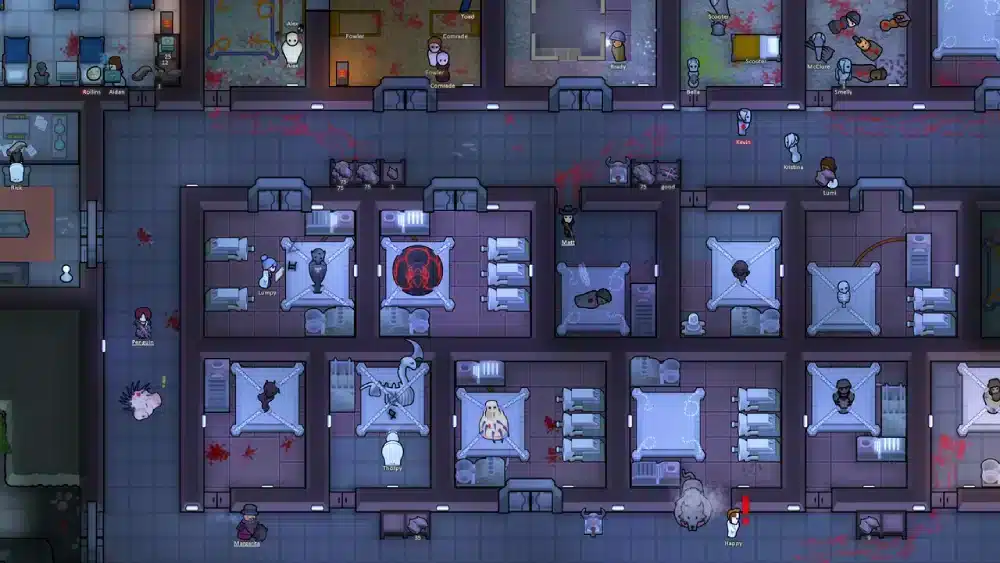
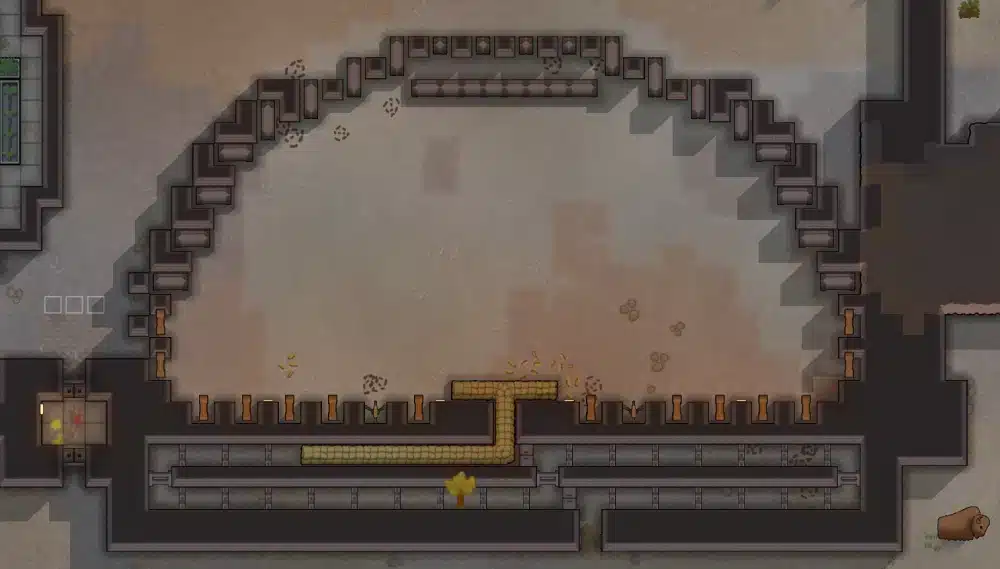
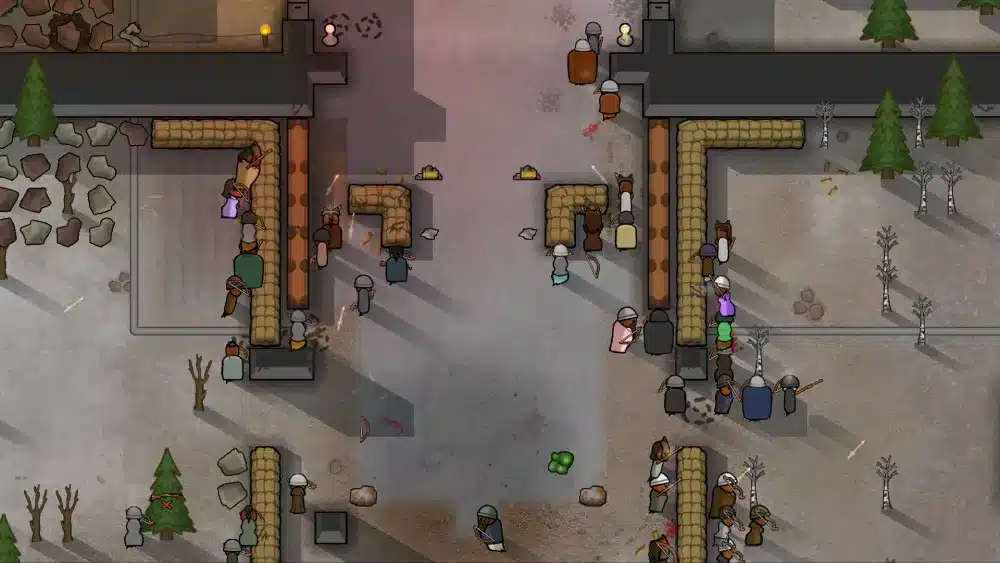
If you’re trying to decide between Dwarf Fortress vs RimWorld, you’re comparing two of the most influential colony sims ever created. Both games deliver deep management systems, emergent storytelling and complex world-building, but they approach these ideas in completely different ways. Understanding their strengths helps players choose the right experience for their style.
In the next paragraphs, we’ll break down the core design philosophies behind Dwarf Fortress vs RimWorld and explain why millions of strategy and simulation fans still debate which game offers the superior experience. Whether you prefer chaotic emergent events, structured storytelling or extreme simulation complexity, both games offer something remarkably unique.
What Is the Key Difference in Dwarf Fortress vs RimWorld?
When comparing Dwarf Fortress vs RimWorld, the biggest difference lies in how each game builds its challenges and stories. Both are colony sims, both offer survival depth, and both can collapse your base in the most unexpected ways, but the origin of those moments is completely different.
Understanding this distinction early helps you know exactly what type of chaos, pacing and creativity each game is designed to deliver.
While they share themes, the philosophy behind their gameplay couldn’t be more different: Dwarf Fortress prioritizes world simulation above all else, while RimWorld focuses on narrative structure and player-guided storytelling.
How Each Game Generates Its World and Challenges
Dwarf Fortress creates a living world where every detail matters. The environment doesn’t revolve around your fortress, it evolves with or without you. Every creature has its own history, every material reacts based on physics, and every system (from fluid mechanics to dwarf emotions) interacts in unpredictable ways.
This produces stories that emerge naturally from the simulation rather than from pre-built narrative logic.
RimWorld uses a completely different foundation. Instead of simulating every microscopic detail, the game relies on AI storytellers that push events with intention.
The goal isn’t to simulate the world atom by atom, it’s to maintain tension, pacing and emotional engagement. The storyteller carefully controls when raids hit, when disasters occur, and how the colony’s mood spirals (or recovers).
The Player Experience — Two Styles of Chaos
For players, the difference becomes clear the moment the first disaster hits. Dwarf Fortress feels unpredictable because systems collide in ways even the player didn’t anticipate, a creature gets attached to a tavern visitor, a cavern breach floods the lower levels, or a minor emotion snowballs into a fortress-wide tantrum spiral.
RimWorld’s unpredictability feels curated rather than systemic. You sense that something is coming, but not specifically what. The storyteller builds pressure, then releases it, creating emotional arcs similar to a narrative campaign.
Here are three gamer-friendly takeaways that highlight this contrast:
- Dwarf Fortress reacts to its own systems, not to player pacing, the world doesn’t “wait” for you;
- RimWorld reacts to player progress, shaping events to keep the story engaging;
- Dwarf Fortress surprises you with complexity, while RimWorld surprises you with timing and narrative twists.
This difference is why players who enjoy deep simulation gravitate toward Dwarf Fortress, while those who prefer structured chaos and character-driven drama often prefer RimWorld.
Dwarf Fortress vs RimWorld — Core Gameplay Differences
Players often begin their comparison by looking at the fundamental gameplay loops. Even though both games involve colony management, survival and base-building, their approach couldn’t be more different and that’s exactly why so many discussions of RimWorld vs Dwarf Fortress start with core design philosophy rather than graphics or difficulty.
Simulation vs Story-Driven Design
Dwarf Fortress focuses on deep simulation. Every creature, material, weather shift and fluid movement is simulated individually. This leads to incredibly complex interactions, sometimes hilarious, sometimes catastrophic, that arise from the simulation itself.
This is especially true when comparing Dwarf Fortress Steam vs RimWorld, since the Steam edition preserves all simulation depth despite its visual improvements.
RimWorld, by contrast, uses the AI storyteller to craft narrative arcs. Instead of simulating every micro detail, it pushes events based on pacing, tension and variation. This creates more controlled chaos, ideal for players who want stories with shape and rhythm.
This is why many players who debate RimWorld vs Dwarf Fortress describe RimWorld as the more guided, curated experience.
If you want to understand the difference quickly:
- Dwarf Fortress = simulation creates the story;
- RimWorld = story generator shapes the experience.
Both are colony sims, but the creative direction is fundamentally different.
Difficulty Curve and Player Control
Dwarf Fortress has a steep learning curve, especially in its classic ASCII form. Even the Steam version, which is far more approachable, retains the complexity of its systems. Losing is expected, often spectacular, and part of the fun.
RimWorld offers more accessible controls, clearer UI and more predictable systems. The difficulty can be tailored directly using storytellers like Cassandra Classic or Randy Random, giving players more agency over the flow of events.
Visuals & Accessibility
Graphics may not be the main focus in colony sims, but they strongly impact how approachable each game feels, especially for new players.
Art Style and Clarity
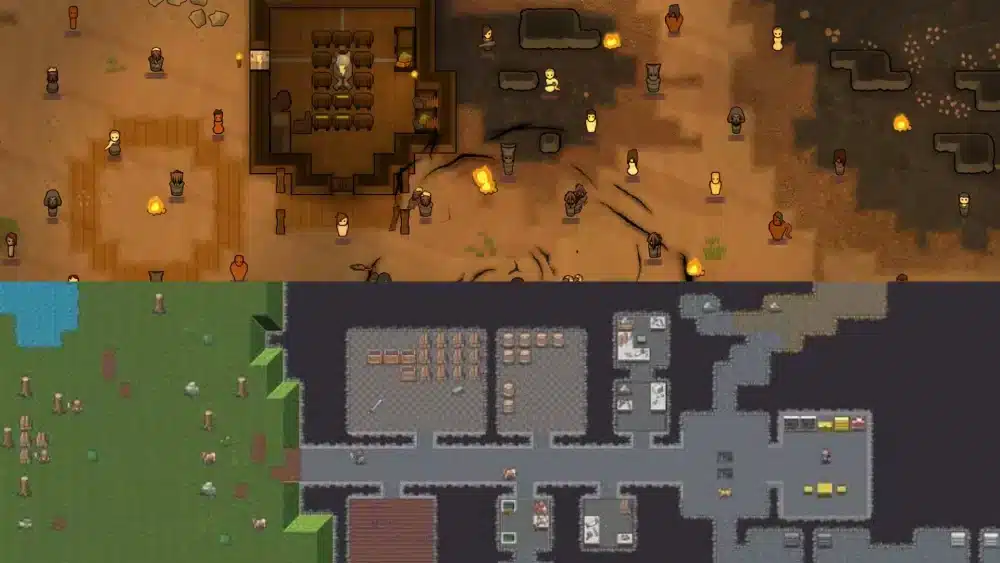
RimWorld uses a clean top-down 2D art style with smooth animations and intuitive color coding. Every object and pawn is recognizable instantly, making it easy to manage large colonies.
The Dwarf Fortress Steam vs RimWorld comparison highlights the biggest upgrade in Dwarf Fortress history: its brand-new tileset and visual overhaul. The Steam release transformed Dwarf Fortress from pure ASCII into a visually readable, highly detailed pixel-art experience. Still, it retains the density of its menus and systems.
UI, Tutorials and Learning Curve
RimWorld has:
- Drag-and-drop interface;
- Clear menus;
- Survival tutorial;
- Consistent UI language.
Dwarf Fortress has:
- Deeper nested menus;
- Numerous hotkeys;
- Tooltips for almost everything (Steam version);
- More overwhelming early progression.
Both are rewarding once mastered, but RimWorld wins in terms of ease of entry.
Storytelling Depth and Emergent Events
One of the most heated discussions in the Dwarf Fortress vs RimWorld debate is storytelling. Both games generate unforgettable moments, but the origin of those stories differs dramatically.
Emergent Chaos in Dwarf Fortress
Dwarf Fortress uses simulation to create stories no human writer could plan. A single cat adopting a dwarf, a forgotten beast poisoning the water supply, or a tantrum spiral collapsing your fortress, every event emerges naturally from the simulation layers.
Small details matter. Emotions, relationships, fluid physics, material properties, all combine into cascading consequences.
AI-Driven Narratives in RimWorld
RimWorld’s “storytellers” curate your experience. Whether you choose Phoebe, Cassandra or Randy, each one controls:
- Enemy raid timing;
- Event tension;
- Resource scarcity;
- Break risk pacing;
- Emotional arcs.
This creates smoother narratives with emotional pacing and dramatic structure.
In short:
- Dwarf Fortress = unpredictable simulation chaos;
- RimWorld = structured, designed storytelling flow.
Mod Support and Community Creativity
Mods are essential in both communities, and comparing them is fundamental to understanding RimWorld vs Dwarf Fortress in the modern era.
RimWorld’s Massive Mod Scene
RimWorld has one of the most active modding communities in gaming.
There are mods for:
- Biomes;
- Races;
- Full tech trees;
- Weapons and armors;
- AI improvements;
- Storyteller overhauls;
- UI expansions.
Many RimWorld players consider mods mandatory after a few runs, as they dramatically enhance replayability.
Dwarf Fortress Mods and Tools
Dwarf Fortress mods exist, but the ecosystem is smaller — the real magic has always been external tools such as DFHack and Dwarf Therapist.
The Steam edition has increased interest in modding, and curated Steam Workshop support makes experimentation easier than ever. However, the complexity of the simulation means modding often focuses on tilesets, balance tweaks and quality-of-life changes rather than full overhauls.
Verdict — Which Colony Sim Is Better?
Choosing between Dwarf Fortress vs RimWorld depends entirely on the experience you’re seeking. Both games excel at different aspects of colony management and storytelling.
If you want:
- Deep simulation;
- Unpredictable emergent chaos;
- A world that feels alive down to the atoms.
→ Choose Dwarf Fortress.
If you want:
- Accessible controls;
- AI-driven stories;
- Smooth pacing;
- A huge modding scene.
→ Choose RimWorld.
Neither game replaces the other, they complement each other. Many players end up loving both for different reasons.
FAQ
Yes! Dwarf Fortress has a far steeper learning curve, especially for new players. This is the main reason many RimWorld vs Dwarf Fortress comparisons highlight difficulty as the biggest contrast between the two.
Dwarf Fortress offers emergent, simulation-driven chaos; RimWorld delivers curated AI-driven narrative pacing. When discussing RimWorld vs Dwarf Fortress, storytelling often becomes a deciding factor for players who value narrative structure.
Yes, it adds graphics, mouse controls and improved tutorials, making it far more accessible. This is why many reviews distinguish Dwarf Fortress Steam vs RimWorld as a more approachable entry point for newcomers.
RimWorld has a larger, more transformative modding scene, while Dwarf Fortress focuses on tools and tilesets. In many RimWorld vs Dwarf Fortress debates, modding flexibility is one of RimWorld’s biggest strengths.
RimWorld is more beginner-friendly thanks to its UI, difficulty settings and narrative structure, especially when comparing the Dwarf Fortress Steam vs RimWorld experience for first-time colony-sim players.
Choosing the Best Colony Sim With Confidence
Finding the winner in the Dwarf Fortress vs RimWorld debate ultimately depends on whether you prefer simulation-driven chaos or narrative-driven strategy. Both games shine in their own way, delivering some of the richest colony management experiences available today.
And while both titles are single-player — with RimWorld supporting multiplayer only through unofficial mods and Dwarf Fortress being entirely offline — a stable connection still matters for PC gamers. Downloading mods, receiving updates, syncing cloud saves and accessing workshop content all benefit from smoother, optimized routing.
ExitLag helps stabilize these routes, reduce packet loss and keep your PC experience responsive during downloads, updates and background services that support your games.
If you want your colony sim sessions and overall PC gaming experience to feel even more fluid and stable, try ExitLag and experience intelligent route optimization built for gamers.
Keep your strategy games running smoothly, test ExitLag and feel the difference!
Got questions or want to connect with other players? Join the conversation at the ExitLag Forum!