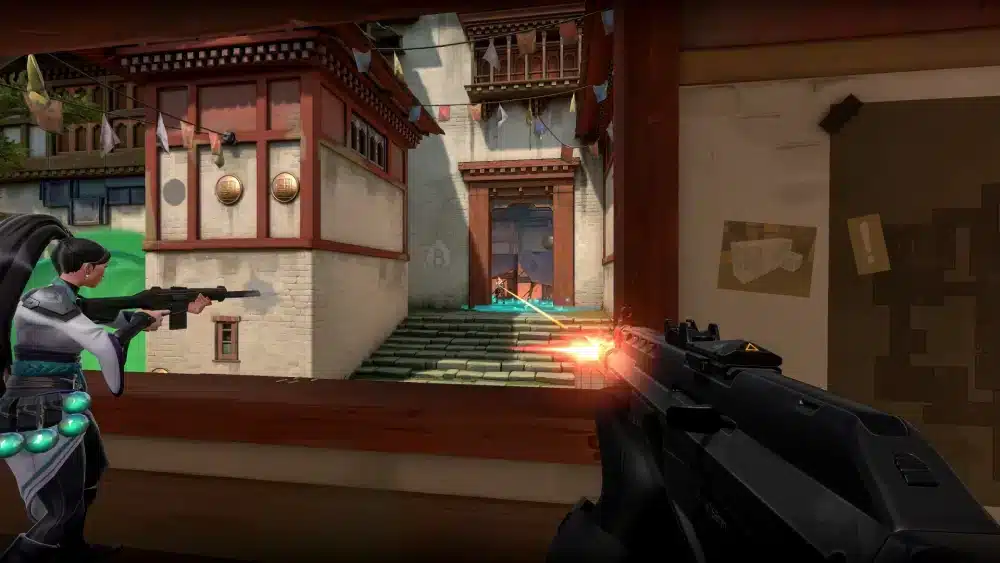
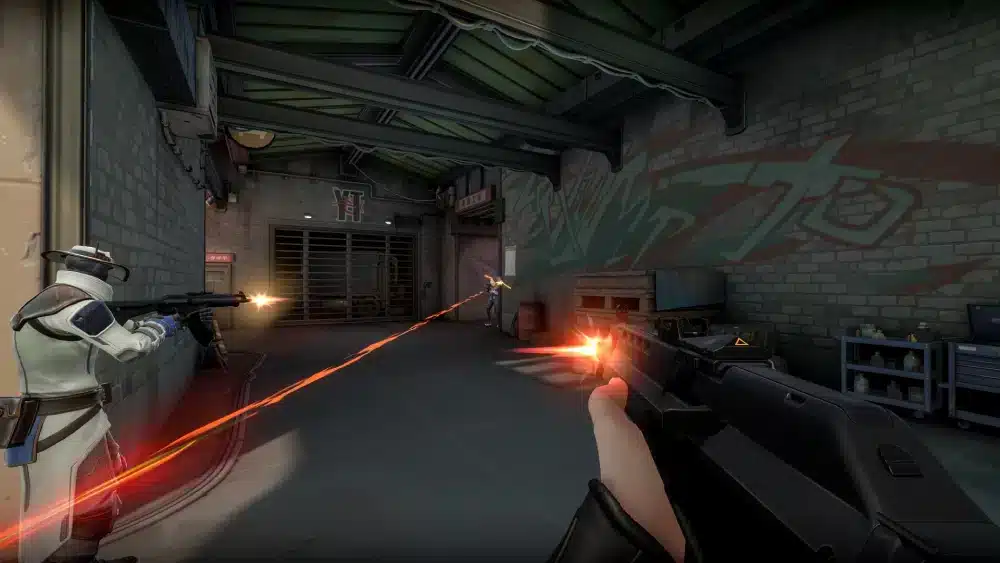
Valorant is a five-player tactical shooter where every round is decided by coordinated utility, shared information, and collective execution. A Duelist who entries without smokes dies in the open. A Controller who saves smokes for the wrong round gives the enemy team free map control. A team that never shares callouts makes decisions in silence while the opposing five-stack coordinates every move in voice chat. The fastest way to fix all of that is to find Valorant teammates before you queue, not after the match ends.
When you find Valorant teammates through dedicated platforms and Discord communities rather than relying on solo queue randomness, the entire experience of the game changes. Your five-stack agrees on composition before agent select, calls utility timings during rounds, communicates economy decisions between rounds, and debriefs after losses instead of surrendering in silence. That level of coordination produces faster rank growth and significantly fewer frustrating sessions.
This guide covers every platform for finding Valorant teammates, what to include in an LFG post, how the rank system shapes who you can queue with, and the agent role fundamentals that turn five individuals into one functioning team.

Understanding the Valorant Rank System Before You Start
Before using any Valorant team finder, knowing the rank structure and queue restrictions helps you search for the right players and understand which lobby tier your group will enter.
The Full Valorant Rank Ladder
Valorant has nine competitive tiers. Every rank except Radiant is divided into three numbered tiers (1 being lowest, 3 being highest within that rank), for a total of 25 distinct ranks:
- Iron (1, 2, 3): Entry-level competitive play, foundational mechanics
- Bronze (1, 2, 3): Most populated tier, core game sense developing
- Silver (1, 2, 3): Above average crosshair placement and basic utility usage
- Gold (1, 2, 3): Consistent aim with growing game sense
- Platinum (1, 2, 3): Top 25% of the player base, deliberate utility play
- Diamond (1, 2, 3): Top 10%, strong mechanics and coordinated team play
- Ascendant (1, 2, 3): Near-elite tier, sitting between Diamond and Immortal
- Immortal (1, 2, 3): Top 1%, leaderboard-ranked, high-level decision-making
- Radiant: Top 500 players per region, the highest visible rank in the game
Gold is the most populated tier, and Silver is the intended average skill benchmark. Reaching Diamond or above places you in the top 10% of the competitive player base, and Radiant represents the top 0.05%.
Valorant Party Rank Restrictions
Valorant enforces rank proximity rules that directly shape which players you can queue with when trying to find Valorant teammates:
- If the lowest-ranked player in the party is Iron or Bronze, the highest player in the party can be no higher than Silver (any tier)
- If the lowest is Silver, the highest can be Gold (any tier)
- If the lowest is Gold, the highest can be Platinum (any tier)
- If the lowest is Platinum through Radiant, all players must be within one full rank of each other (for example, Platinum 2 to Diamond 2 maximum)
- Groups of four are not allowed in Valorant competitive; you can queue as 1, 2, 3, or 5
- Five-stacks ignore rank disparity restrictions, but large skill gaps produce RR penalties
This structure means that when posting in a Valorant team finder, always state your current rank and tier clearly, and specify whether you are building a duo, a trio, or a five-stack. The five-stack format produces the most coordinated play and removes all rank restriction concerns.
The Best Platforms to Find Valorant Teammates
Official Valorant Discord Server
Riot Games maintains an official Valorant Discord server with hundreds of thousands of members and active LFG channels organized by region, rank range, and queue type. It is the highest-volume single platform for finding Valorant teammates at any time of day.
To use it effectively:
- Join through the invite link on the official Valorant website or support pages
- Complete the verification process and assign your region and rank roles
- Navigate to the LFG channel that matches your rank range (Iron/Bronze, Silver/Gold, Platinum/Diamond, Ascendant+)
- Post your information and respond quickly to replies
The server’s scale means LFG channels stay active even during off-peak hours. A well-written post during peak hours typically receives responses within minutes.
Dedicated Valorant Team Finder Platforms
Several platforms are built specifically for finding Valorant teammates with structured profile filtering:
- Gankster Valorant Player Finder: Filterable by rank, role, server, and availability with searchable player profiles, no Discord server required to browse
- TeamTavern: A structured Valorant team finder platform where players create detailed profiles including rank, agent pool, language, mic usage, and session goals. Teams can post recruitment listings and players can apply directly.
- Valorant Tracker LFG (tracker.gg): Integrated with Valorant stats, so you can view a potential teammate’s win rate, headshot percentage, and agent performance before agreeing to queue. Posts auto-expire after 48 hours, keeping the pool fresh.
- RiftQ and multi-game LFG platforms: Several platforms that support multiple games include Valorant sections with rank and role filtering and profile-based matching
The advantage of stat-integrated platforms over Discord channels is verification. When someone claims to be Platinum 2 with a 57% win rate on Jett, you can check before the first queue rather than discovering a mismatch three rounds in.
Community Valorant Discord LFG Servers
Beyond the official server, several community-run Discord servers function as focused Valorant team finder hubs:
- Valorant LFG NA / EU: Region-specific servers with rank-gated LFG channels that filter by skill tier, keeping Gold players out of Diamond channels and vice versa
- Premier team finder servers: Dedicated servers for players building five-stacks specifically for Premier, Valorant’s organized team competition format
- Agent-specific and role-specific communities: Controller main servers, IGL-focused servers, and agent-specific communities that pair players with shared agent pool preferences and playstyle priorities
Searching “valorant lfg” or “valorant team finder” on Disboard.org or Discord’s built-in Server Discovery returns all currently active options with member counts and activity indicators.
What to Include in Your Find Valorant Teammates Post
Every effective post for finding Valorant teammates answers the same core questions potential partners need before reaching out. Missing any element slows the process and attracts mismatched players.
The Complete Valorant LFG Post Template
Include these eight elements in every post:
- Riot ID and tagline (for example: PlayerName#NA1) so players can add you immediately
- Current rank and tier (for example: Gold 3 or Platinum 1) and your region server
- Agent pool and role (for example: Controller main: Omen, Clove / Initiator flex: Sova)
- Queue preference (Competitive, Premier, Unrated, Spike Rush)
- Party size you are building (looking for 1 duo partner, 2 to complete a trio, full five-stack for Premier)
- Communication preference (mic required, Discord voice, in-game voice chat, text only)
- Session goal (ranked climb, Diamond push, Premier team building, learning a new agent)
- Availability in your timezone
A strong example post: “RiotID#NA1 / Platinum 2 / Controller main: Omen, Clove / Initiator flex: Sova / LF2 for five-stack / mic on, Discord req / Premier team building, targeting Ascendant / evenings 7-11pm EST”
That post filters itself. Players who do not match skip it. Those who do respond immediately.
The Four Valorant Agent Roles and How They Shape Team Building
Understanding what each agent role contributes is essential when trying to find Valorant teammates, because the most common reason teams lose consistently in ranked is not individual aim, but role gaps in the composition.
Agent Role Breakdown
| Role | Primary Function | Example Agents |
| Duelist | First contact, space creation, entries, converting kills | Jett, Neon, Reyna, Raze, Phoenix, Iso |
| Initiator | Information gathering, angle clearing, enabling entries | Sova, Fade, Breach, Gekko, KAY/O, Tejo |
| Controller | Vision denial, smoke placement, tempo control | Omen, Clove, Brimstone, Viper, Astra |
| Sentinel | Flank watching, site anchoring, defensive utility | Cypher, Killjoy, Sage, Deadlock, Chamber |
A functional five-stack typically runs one Controller, one Sentinel, one to two Initiators, and one to two Duelists. A team with no Controller has no safe site entry and gives the enemy free sightlines. A team with no Sentinel gets flanked and attacked from behind without warning. A team with no Initiator entries into held angles without information, which turns into raw gunfights the Duelist often loses.
When building a Valorant team finder post, always list your agent pool and role so potential teammates can assess whether your kit fills what the composition still needs.
Why Role Coverage Matters More Than Individual Skill
The difference between a coordinated Valorant teammates group and a random five-stack shows most clearly in agent select. Pre-built teams draft around composition intentionally: they agree on which site a Controller will smoke, which Initiator will flash the entry, which Sentinel will watch the flank, and which Duelist will take first contact.
Random teams pick whoever they want and figure out coverage in real time, or never figure it out at all. An extra Duelist who takes no information and enters with no smokes produces worse results than a Sentinel who anchors a site and covers a flank that would otherwise collapse the round.
When you find Valorant teammates through dedicated platforms, building composition awareness into the search eliminates this gap before agent select opens.
Pro Tips: Getting More From Your Valorant Teammate Search
Pro Tips: Find Valorant Teammates
- Build a Premier team rather than a ranked five-stack if long-term coordination is your goal. Premier is Valorant’s organized team competition format with seeded brackets and scheduled matches. A five-stack with shared goals, consistent practice sessions, and post-game VOD reviews improves significantly faster than five players who queue when available and disband after sessions. Many Premier-focused Discord servers exist specifically for recruiting five-stacks at every skill level.
- List your agent pool with role flexibility, not just your main. A player who can play both Controller and Initiator fills composition gaps that a single-role specialist cannot. A Valorant team finder post that shows flexibility (“Omen/Clove main, Sova flex”) is more attractive to squads building a full comp than one that says only “Controller main.”
- Post simultaneously in the official Discord, a community LFG server, and Valorant Tracker LFG. These platforms attract different player types at different active hours. Covering all three at once shortens the search from hours to minutes and produces more options to evaluate at the same time.
- Run one Unrated match with any new teammates before Competitive. The information a single Unrated match provides, communication style, decision-making under pressure, economy discipline, and callout habits, is worth far more than the time it costs. This warmup prevents the most common five-stack failure mode: discovering a mismatch mid-ranked session after RR is already lost.
Common Mistakes When Trying to Find Valorant Teammates
Common Mistakes Players Make Finding Valorant Teammates
- Posting with no agent or role information. A post that says “Gold 3 LFG” tells potential teammates nothing about whether you fill the role their composition needs. Two Gold 3 Duelist mains who connect through a Valorant team finder end up with a five-stack that has two entries and no Controller smokes. Fix: always include your agent pool and role in every post, listing your main and your flex options separately.
- Ignoring the no-four-stack rule. Many players try to queue as a group of four, not realizing Valorant explicitly blocks four-player competitive parties. This forces one of the four to solo queue, which places a random fifth on the team and breaks the coordination the group was trying to build. Fix: when building a party for competitive, always target a duo, a trio, or a complete five-stack. If you have four players, recruit a fifth before queuing rather than splitting the group.
- Forming a full five-stack and immediately queuing Premier without practice matches first. Premier schedules matches on fixed dates with bracket implications. A five-stack that has never played together before their first Premier match has no shared callout vocabulary, no established IGL, and no tested composition strategy. Fix: run at least three to five Competitive matches as a full five-stack before your first scheduled Premier game. Use those matches to establish who makes round calls, which agent each player locks, and how the team communicates economy rounds.
Ping Affects Your Whole Team, Not Just You
When you successfully find Valorant teammates and build a reliable five-stack, your connection quality becomes a shared performance factor. In a tactical shooter where economy timing, utility deployment windows, and duel outcomes are measured in milliseconds, every player’s ping directly affects what the team can execute.
A Controller whose smoke lands a half-second late because of connection instability gives the enemy information before the site is blocked. A Duelist whose entry timing desyncs from the Initiator’s flash because of packet loss takes a duel that should have been won and converts it into a death. A Sentinel whose trip wire notification arrives late because of an unstable connection fails to warn the team about the flank they were anchoring.
ExitLag is a game connection optimizer used by over 30 million players worldwide across 4,000+ supported titles. It analyzes multiple network paths in real time and selects the fastest, most stable route between your PC and Valorant’s servers, rather than relying on your ISP’s default routing, which is not built for low-latency tactical gaming.

For players who actively find Valorant teammates and build coordinated five-stacks, the most relevant features are:
- Multipath Technology: Game data travels through multiple simultaneous network routes. If one path degrades during a round, others maintain the connection without visible disruption or desync.
- Real-Time Optimization: Keeps ping consistent from the pistol round to overtime, so your endgame clutch performance matches your early-round execution.
- Traffic Shaper: Prioritizes Valorant traffic over every other process running on your network, preventing background apps, streaming, or other devices from spiking your connection during a critical round.
- PC Boost: Frees RAM and reduces background CPU load so your hardware runs Valorant at full capability throughout the session.
Start with a free trial before your next ranked session with your new squad. The teammates, the composition, and the strategy are yours to build. The connection is the variable ExitLag removes before the first buy phase begins.
All images used in this blog post belong to their respective owners and are used for informational and educational purposes only. They do not imply endorsement or affiliation with the rights holders.
Got questions or want to connect with other players? Join the conversation at the ExitLag Forum!