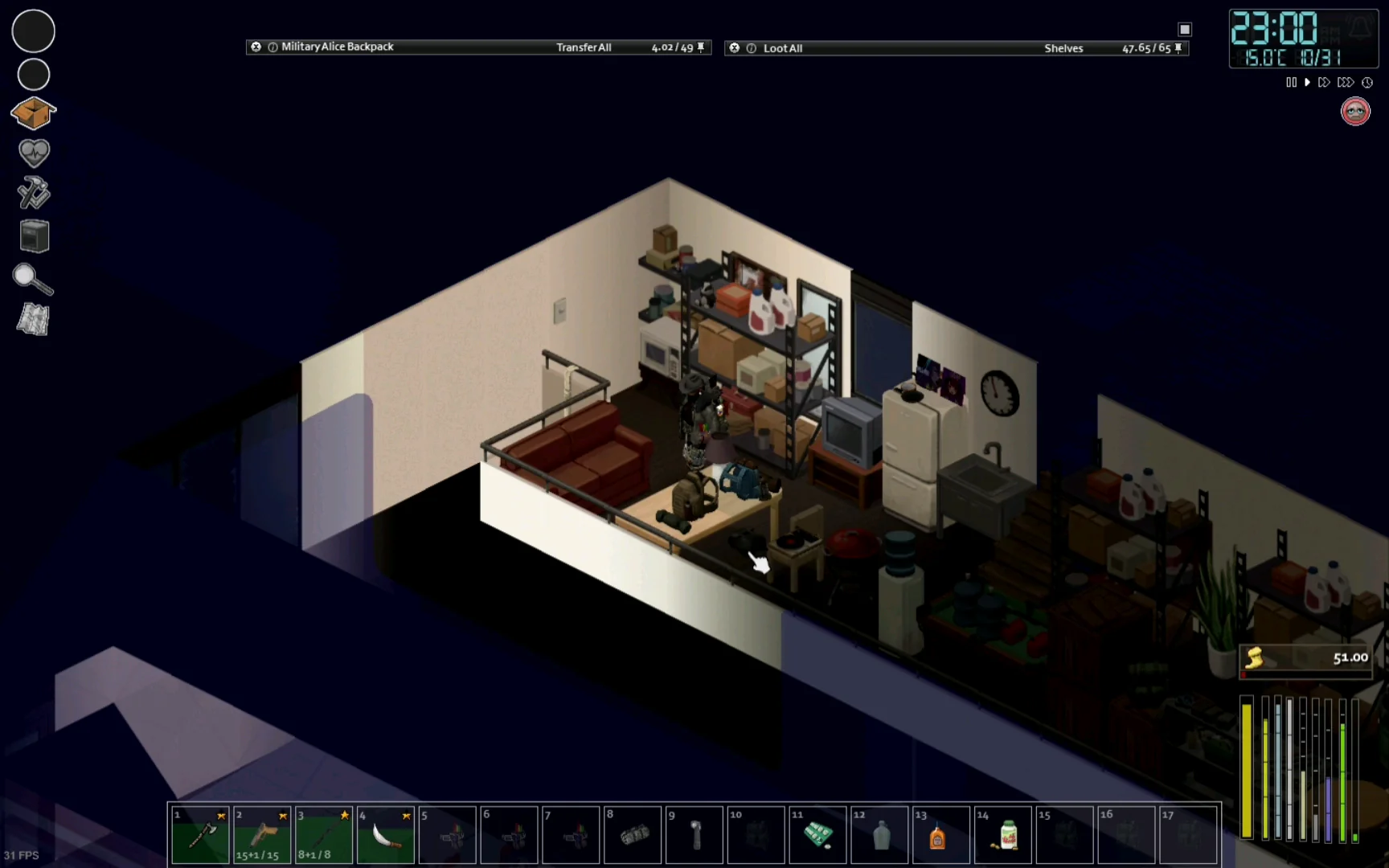
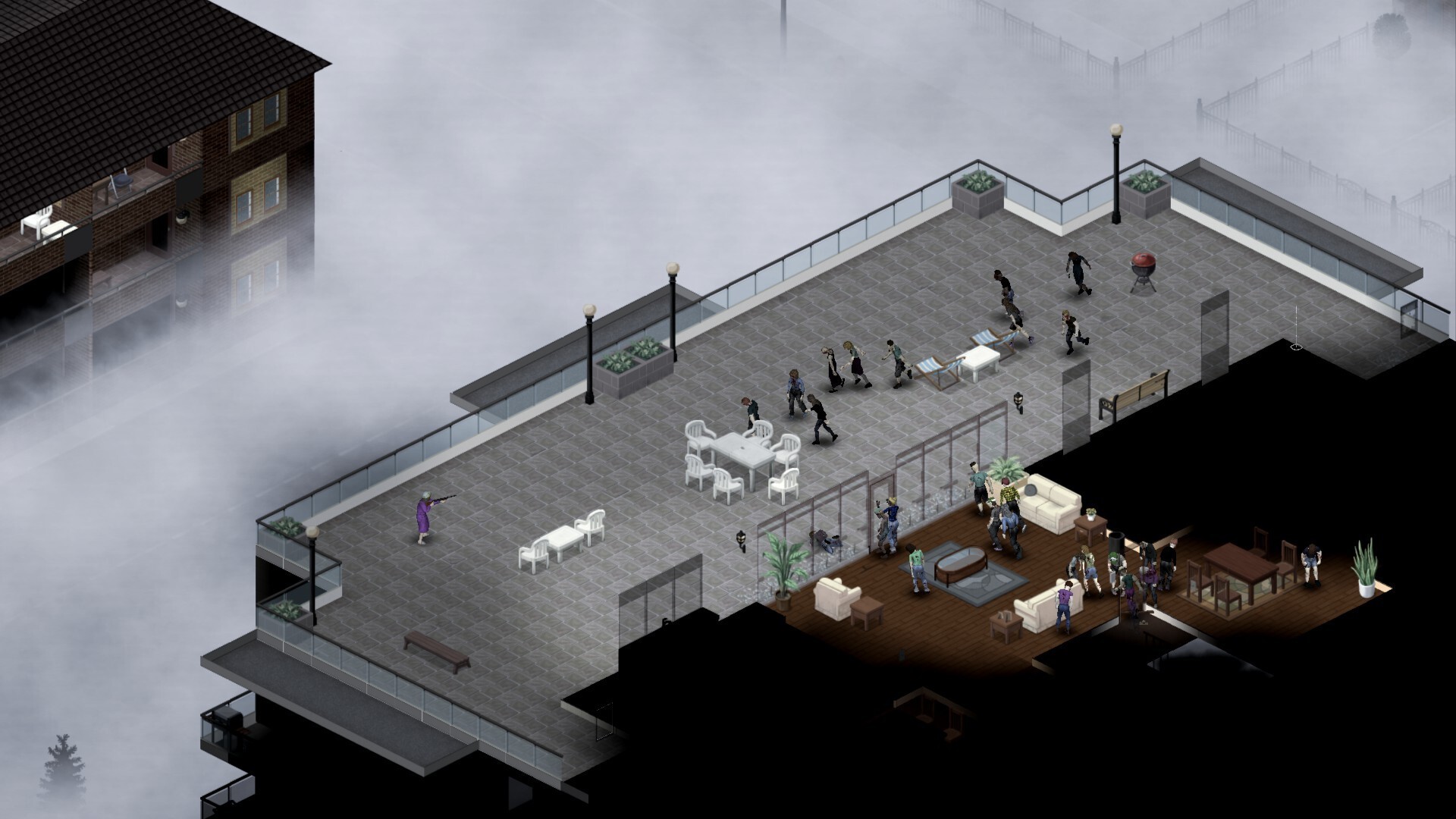
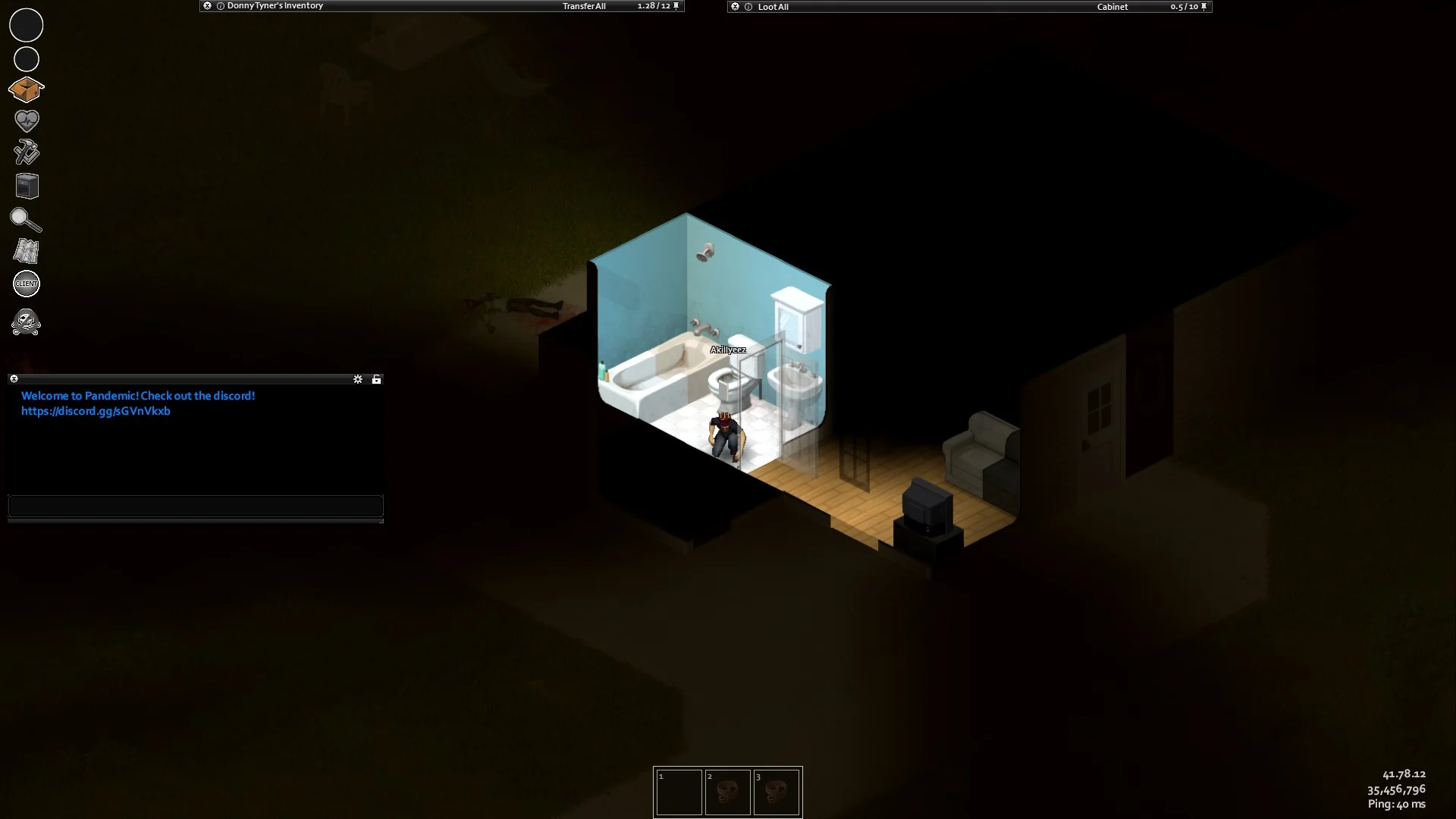
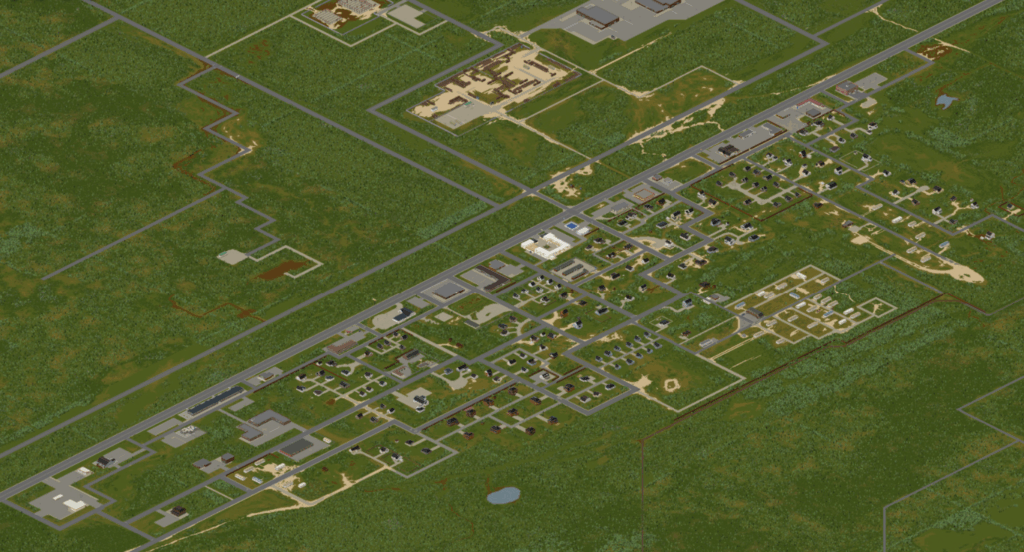
The Project Zomboid Muldraugh map is one of the most useful resources for anyone learning how to survive in Project Zomboid. Muldraugh combines residential neighborhoods, commercial areas, industrial locations, major roads, wooded spaces, and several important loot destinations, creating a town where route planning matters almost as much as combat ability.
Unlike the denser streets of Louisville or the more compact environment of Riverside, Project Zomboid Muldraugh map gives survivors a mixture of open terrain and developed areas. That makes the town approachable for players who want room to maneuver, but it does not make the area safe. Commercial zones, major roads, and important buildings can still create dangerous concentrations of zombies, particularly when noise, alarms, vehicles, or poor route choices attract additional threats.
What is The Project Zomboid Muldraugh Map?
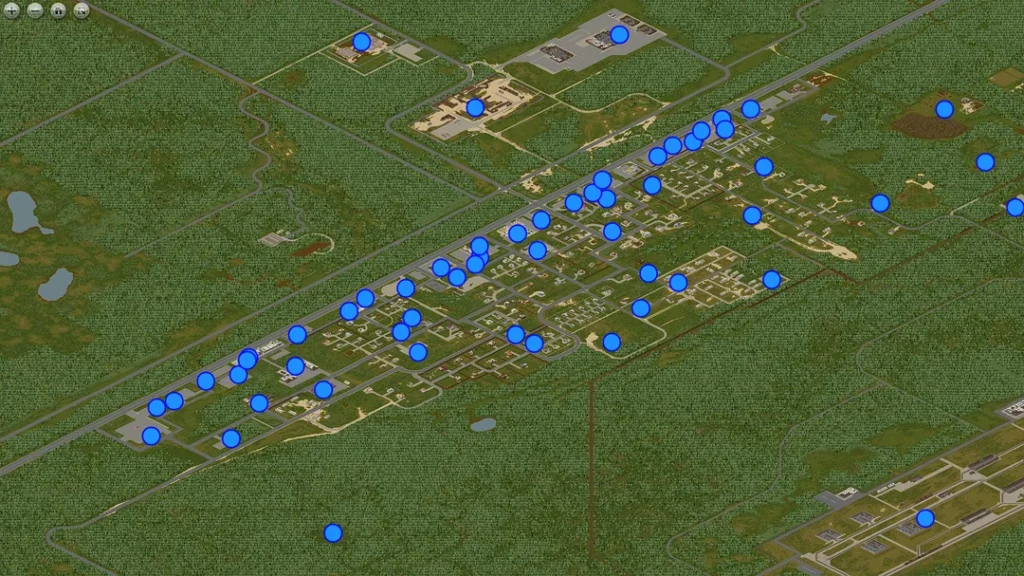
The Project Zomboid Muldraugh map is essentially a tactical guide to understanding where you are, where you need to go, and which routes can give you an escape when a simple supply run turns into a survival emergency. Muldraugh is particularly valuable because it rewards players who learn its layout instead of treating every building as an isolated destination.
Why Muldraugh Matters in Project Zomboid
What Is Muldraugh in Project Zomboid?
What is Muldraugh in Project Zomboid? Muldraugh is a fictionalized version of the Kentucky town used as one of the game’s central survival locations. In gameplay terms, it is an important part of Knox Country and has historically served as one of the game’s recognizable starting environments.
The town was designed with a more rural and small-town character than larger urban areas. The developers have previously described Muldraugh as being inspired by the real location, with its in-game layout deliberately giving players a reason to eventually travel beyond the town.
That design philosophy is important when reading a map Project Zomboid Muldraugh resource. Muldraugh is not simply a collection of buildings filled with loot. Its roads, residential districts, industrial areas, wooded spaces, and connections to other locations all contribute to the survival experience.
The official development team has also continued to update the region. Build 42 brought a major visual and structural overhaul to Muldraugh and several other Knox Country locations, including new and reworked buildings, landscaping, tiles, and map details.
Where Do Players Start in Muldraugh?
Where you begin depends on your game configuration, character setup, and version. Sandbox settings can change how the world behaves, while different builds can introduce changes to the map and starting experience.
For that reason, it is better to learn Muldraugh as a collection of neighborhoods and strategic zones rather than memorizing one fixed spawn point.
Many survivors find residential areas easier to understand during the opening stage because houses naturally provide access to basic supplies. Kitchens can contain food and containers, bedrooms may provide clothing and useful items, garages can contain tools, and sheds can become valuable sources of equipment.
However, the safest-looking house is not automatically the best long-term location.
You should consider the surrounding streets, nearby buildings, possible escape routes, visibility, fences, access to water, and distance from high-traffic areas before committing to a permanent base.
Who Benefits From Starting in Muldraugh?
Muldraugh is particularly useful for players who want a survival experience that encourages exploration without immediately forcing them into the densest urban environments.
It can suit players who prefer:
- Careful residential looting
- Gradual base construction
- Vehicle-based exploration
- Carpentry progression
- Resource gathering
- Rural and urban route planning
- Learning how zombie movement affects different environments
At the same time, Muldraugh is not a beginner-only location. Experienced players can use the same environment for more ambitious challenges, including long-distance expeditions, multiplayer settlements, vehicle logistics, and carefully planned scavenging routes.
The key difference is how much information you extract from the environment.
A new player may see a warehouse.
An experienced survivor sees a potential source of tools, a possible zombie concentration, an escape route, a vehicle-access problem, and a location that may be valuable later.
When Should You Leave Muldraugh?
There is no universal day when you should leave.
Instead, relocation should depend on what your character has already accomplished.
Before moving toward another town or a more dangerous region, consider whether you have:
- Reliable weapons
- Food reserves
- Water containers
- Medical supplies
- Useful tools
- A functioning vehicle
- Fuel or a realistic refueling plan
- A secure place to return to
- Enough knowledge of your destination
The original appeal of Muldraugh is that it can serve as both a starting point and a staging area. You can establish yourself, gather supplies, improve your character, and eventually use the town as a launch point for longer expeditions.
The official Project Zomboid mapping project has also evolved considerably over time. The developers recently highlighted an upgraded official mapping project supporting multiple game versions, including Build 41, Build 42, and legacy versions.
Reading the Project Zomboid Muldraugh Map
Residential Blocks in South and Central Muldraugh
Residential districts are among the most important areas to understand when using the Project Zomboid map Muldraugh.
Houses can provide the foundation for an early survival run. Instead of immediately targeting high-value commercial buildings, players can move through residential streets while gathering basic necessities.
Typical priorities include:
- Kitchen food
- Cooking equipment
- Water containers
- Clothing
- Books
- Basic weapons
- Tools
- Medical supplies
- Backpacks
- Vehicle-related items
Residential areas also offer something that large commercial buildings do not always provide: multiple possible fallback locations.
If one house becomes compromised, another nearby structure may offer temporary shelter. This flexibility can be extremely valuable during the first few days.
However, residential zones should not be treated as automatically safe.
Opening doors, breaking windows, triggering alarms, starting vehicles, or making repeated loud noises can change the situation quickly. A quiet neighborhood can become dangerous when multiple sources of noise pull zombies toward the same street.
Northern Warehouse Areas
Industrial and warehouse locations can be highly valuable because they often contain tools and equipment that support long-term progression.
A commonly referenced warehouse area around the northern portion of Muldraugh has historically attracted players looking for carpentry equipment, axes, hardware, and related supplies.
These locations are valuable because tools have uses far beyond their immediate loot value.
A saw can contribute to carpentry progression.
An axe can become an important weapon and woodcutting tool.
Hardware can support construction.
Storage areas can also provide equipment that becomes increasingly useful once the initial scramble for food is over.
However, warehouses create a classic risk-versus-reward problem.
Large buildings may contain more loot than an ordinary home, but their surrounding areas can also attract significant zombie populations. Entrances, loading areas, parking lots, and nearby roads can leave survivors exposed.
Therefore, the safest warehouse run is not necessarily the fastest one.
Before entering, examine the surrounding area and identify where you will retreat if the building contains more zombies than expected.
Gas Stations and Auto Shops
Vehicles can completely change how you approach the Project Zomboid Muldraugh map.
A functioning car gives you mobility, storage, an escape option, and access to locations that would otherwise require long journeys on foot.
Gas stations and auto-related locations therefore become strategically important.
Players commonly look for:
- Fuel
- Gas cans
- Vehicle parts
- Tools
- Repair supplies
- Replacement vehicles
- Mechanical resources
However, these locations can be dangerous precisely because they are useful.
Gas stations are obvious destinations. They are also positioned near roads, which means a survivor may encounter zombies while approaching, refueling, loading supplies, or attempting to leave.
A vehicle should therefore be treated as part of your survival strategy rather than merely as transportation.
Before driving into a crowded area, ask yourself where you can turn around.
Also consider where you will park.
A car left in the middle of a busy road may become an obstacle instead of an escape tool.
The Commercial Strip
Commercial zones are among the most attractive destinations on a map Project Zomboid Muldraugh because they can contain concentrated supplies.
Grocery locations, restaurants, medical buildings, and other commercial structures can provide resources that would otherwise require multiple residential searches.
However, concentration creates danger.
The more valuable the location, the more likely players are to encounter larger groups of zombies or difficult approaches.
Cortman Medical is an especially recognizable location in Muldraugh. Medical buildings can become important targets because medical supplies are valuable throughout a run.
Still, entering a medical facility simply because it contains useful loot can be a mistake.
Plan the approach first.
Check nearby streets.
Clear a retreat route.
Avoid creating unnecessary noise.
Then decide whether the loot is worth the risk.
Key Loot Zones and Resource Planning
McCoy Logging Corp
McCoy Logging Corp is another important destination for players learning Muldraugh.
Logging areas can be valuable because construction and carpentry become increasingly important as survival progresses. Lumber-related locations can provide access to resources and equipment that support building projects.
The location also illustrates why the Project Zomboid Muldraugh KY map should be understood geographically.
A location may be excellent for scavenging while being less suitable as a permanent base.
A player might travel to a logging area specifically to obtain resources and then return to a safer settlement.
That approach is often more practical than trying to convert every useful location into a permanent home.
Self-Storage Areas
Self-storage facilities can be interesting targets because storage units may contain varied supplies.
Their layout can also make them useful for controlled exploration.
However, narrow spaces can create problems when zombies are nearby.
A survivor who enters too deeply into a confined area without checking exits may discover that the apparent loot opportunity has become a trap.
Whenever possible, maintain an escape route.
Do not allow yourself to become surrounded by storage units, fences, vehicles, or environmental obstacles.
Police Station
A police station is naturally attractive because firearms, ammunition, and related equipment can significantly change a character’s capabilities.
Yet weapons can create their own problems.
Firearms are loud.
Noise can attract zombies from surrounding areas.
A survivor who obtains a powerful weapon but uses it without considering the consequences may turn a manageable encounter into a town-wide problem.
For that reason, weapon acquisition should always be paired with a plan for noise management and retreat.
Choosing a Long-Term Base
What Makes a Good Safehouse?
A good safehouse is not necessarily the building with the most rooms.
Instead, consider the surrounding environment.
Important characteristics include:
- Defensible entrances
- Multiple escape routes
- Access to food
- Nearby water
- Space for storage
- Room for farming
- Distance from major zombie traffic
- Vehicle access
- Visibility
- Nearby trees or natural barriers
The Project Zomboid map Muldraugh becomes especially useful at this stage because a building cannot be evaluated independently from its surroundings.
A beautiful farmhouse surrounded by open approaches may be less secure than a modest house near useful barriers.
Likewise, a large commercial building might contain excellent storage space but expose you to constant zombie traffic.
Isolated Hillside Houses
An isolated house on the edge of Muldraugh can provide several advantages.
First, distance from major roads may reduce incidental traffic.
Second, elevated terrain can improve visibility.
Third, surrounding vegetation or fences may provide natural barriers.
A player who chooses this type of location can gradually develop it into a self-sufficient settlement.
However, isolation also has a downside.
The farther you move from town, the more time you may spend traveling for supplies.
That creates a logistical trade-off.
A remote base may be safer but less convenient.
A central base may be convenient but require stronger defenses.
Trailer Parks
Trailer parks can work as temporary or fallback bases.
Their smaller structures can make initial clearing more manageable, and multiple units provide alternative locations if one becomes compromised.
However, limited storage and defensive advantages can make them less attractive for long-term settlement.
A trailer park may therefore work better as a temporary staging area than as the center of a large survivor operation.
Farmhouses Outside Town
Farmhouses can become excellent long-term options when self-sufficiency becomes a priority.
Potential advantages include:
- Farming space
- Natural separation from urban areas
- Room for storage
- Access to water depending on location
- Lower surrounding activity
- Opportunities for vehicle parking
Farming becomes increasingly valuable when utilities are no longer reliable.
The exact timing and behavior of utilities depend on game settings, so players should not assume every run will follow the same schedule.
Construction Sites
Construction areas can be valuable because they may contain tools, materials, and equipment.
However, they are not always ideal bases.
Open layouts can make defense more difficult, while exposed positions may leave survivors vulnerable from multiple directions.
A construction site can therefore be an excellent scavenging destination without being an ideal permanent settlement.
Navigating the Muldraugh Map
North Toward West Point
One of the most important strategic decisions is when to travel north.
West Point provides a different urban experience and can become an attractive destination for players looking for different loot opportunities.
The route between areas can also expose survivors to more dangerous encounters.
A long-distance trip should therefore begin with preparation rather than impulse.
Before leaving Muldraugh, make sure you know:
- Your destination
- Your return route
- Where fuel can be obtained
- Where you can stop
- Where you can turn around
- What supplies you are carrying
- What you will do if your vehicle fails
The biggest mistake during an expedition is assuming that the route will remain safe simply because it was safe once before.
Zombie movement, noise, vehicles, weather, and player actions can change conditions.
East Through Dixie Highway
The eastern route can become dangerous because major roads can concentrate zombie activity.
Highways offer speed and straightforward navigation, but they also expose you to traffic and reduce opportunities for stealth.
If you are traveling by vehicle, keep enough space to maneuver.
If you are traveling on foot, consider whether forested or less direct routes can reduce exposure.
A route that takes longer can still be the better survival choice if it dramatically reduces the chance of becoming surrounded.
West Through the Woods
Wooded routes offer an alternative to major roads.
They can help players avoid concentrated urban zombie populations, although forests create their own risks.
Movement can be slower.
Visibility can be limited.
Navigation can become more difficult.
For this reason, players should avoid entering unfamiliar wilderness without basic preparation.
Carry enough water, food, and medical supplies to survive an unexpected delay.
Survival Priorities During the First Days
First 24 Hours
The first day should focus on stability rather than ambition.
Your objective is not to loot everything.
Your objective is to make sure you survive long enough to benefit from the loot you already have.
Prioritize:
- Water containers
- Basic food
- A backpack
- A practical weapon
- Medical supplies
- Useful clothing
- A temporary safehouse
Once these fundamentals are secured, you can begin planning the next stage.
Days 2–4
After establishing a basic shelter, begin expanding your resource network.
Hardware stores, warehouses, garages, sheds, and other tool-rich locations become more important.
Carpentry equipment deserves particular attention because construction can eventually transform an ordinary building into a sustainable base.
This is also a good stage to begin organizing storage.
Instead of keeping everything inside one container, separate resources by purpose.
Keep food together.
Store tools together.
Keep medical supplies accessible.
Create a dedicated location for vehicle equipment.
This organization saves time later and reduces the risk of forgetting what you already possess.
Day 5 and Beyond
Once your basic infrastructure is stable, begin preparing for self-sufficiency.
Long-term priorities can include:
- Rain collection
- Farming
- Fishing
- Foraging
- Vehicle maintenance
- Carpentry
- Food preservation
- Expanded storage
- Backup safehouses
At this stage, the Project Zomboid Muldraugh map becomes less about individual buildings and more about creating a network of useful locations.
A successful survivor does not necessarily live in one place forever.
Instead, the survivor creates routes between reliable resources.
Building a Practical Muldraugh Route
Route Planning Before Loot Runs
Before leaving your base, determine what you actually need.
If you need tools, do not spend hours searching for food.
If you need medicine, prioritize medical locations.
If you need vehicle equipment, focus on garages, mechanics, and related locations.
This simple approach reduces exposure.
Every additional building you enter creates another opportunity for something to go wrong.
Create Primary and Secondary Routes
A good route should always have an alternative.
If your primary road becomes blocked, where do you go?
If a vehicle breaks down, what is your fallback?
If a building alarm activates, where can you run?
If a horde crosses your path, can you change direction without becoming trapped?
These questions turn the Muldraugh KY Project Zomboid map from a visual reference into an actual survival planning tool.
Avoid Overloading Your Character
Looting too much can become its own danger.
An overloaded character moves less effectively and may struggle when an unexpected group appears.
Instead, prioritize items according to immediate usefulness.
A heavy item that you cannot realistically carry home may not be worth taking.
Likewise, filling every inventory slot can make emergency movement harder.
Think in terms of value per weight.
Zombie Management in Muldraugh
Fight Small Groups
Combat becomes more manageable when zombies are separated.
Whenever possible, isolate individual zombies or small groups rather than attacking a large crowd.
Use terrain to your advantage.
Fences, buildings, trees, doors, and corners can help control movement.
However, environmental obstacles can also trap you, so always maintain an escape route.
Use Sound Carefully
Sound is one of the most important mechanics to understand when navigating the Project Zomboid Muldraugh map.
A gunshot can attract zombies.
A vehicle can create noise.
An alarm can transform an ordinary building into a dangerous location.
Even actions that seem harmless can create problems if performed in the wrong place.
Before making significant noise, ask where the zombies will come from.
Then ask where you will go when they arrive.
Be Careful Around Windows and Doors
Windows are convenient entrances but can also become dangerous chokepoints.
Before entering through a window, check the surrounding area.
A zombie hidden behind a building or obstacle can catch you by surprise.
Likewise, opening a door without checking what is on the other side can turn a quiet room into an immediate combat situation.
Develop the habit of checking before committing.
Vehicles and Mobility
Why Vehicles Matter
A vehicle can dramatically expand the usefulness of the Project Zomboid map Muldraugh.
Walking limits how much you can carry and how far you can travel in a single expedition.
A vehicle gives you:
- Storage
- Faster travel
- Escape potential
- Access to distant locations
- A way to transport construction materials
- A method for fuel logistics
However, a vehicle is only useful when it is maintained.
Parking Safely
Do not park randomly.
A vehicle left near a crowded commercial location may become surrounded.
A vehicle blocking your base entrance can also create problems during an emergency.
Whenever possible, park where you can leave quickly.
Keep the front of the vehicle oriented toward an escape route.
Avoid placing it against fences, walls, or other obstacles unless you have a specific reason.
Managing Fuel
Fuel should be treated as a strategic resource.
Do not assume that the nearest gas station will always be available when you need it.
Keep fuel reserves where possible.
Gas cans can provide flexibility, especially when traveling between safehouses.
If you find multiple vehicles, consider their condition rather than immediately choosing the largest one.
A reliable vehicle with modest storage can be more useful than a larger vehicle that constantly fails.
Farming and Water Preparation
Starting a Farm
Farming becomes increasingly valuable as your run progresses.
A farm gives you a renewable source of food and reduces dependence on dangerous supply runs.
Early crops should be selected according to your goals and available seeds.
Cabbage is commonly considered a useful early crop because of its growth characteristics.
Other crops, including potatoes and tomatoes, can contribute to a more varied food strategy.
The important principle is diversification.
Do not depend on a single source of food.
Protecting Crops
A farm without protection can become vulnerable.
Fences and barriers can help prevent unwanted movement through crop areas.
However, defenses should be planned around the entire property rather than just the field.
A zombie that reaches your farm is already inside your wider defensive perimeter.
Therefore, consider:
- Base entrances
- Farm fencing
- Storage locations
- Vehicle access
- Escape routes
- Water access
Preparing for Water Problems
Water should be planned before it becomes an emergency.
Collect suitable containers early.
Understand where rain collection can be established.
Two-story structures and rooftops can provide useful locations for water collection depending on the building and setup.
The exact requirements depend on your character count, sandbox settings, farming plans, and overall consumption.
The key lesson is simple: prepare before the utilities become unreliable.
Muldraugh Map Reference Table
| Area or Feature | Main Value | Main Risk | Best Use |
| Residential neighborhoods | Food, tools, clothing, basic supplies | Small zombie groups and alarms | Early-game scavenging |
| Northern warehouse areas | Tools, carpentry resources, hardware | Larger zombie concentrations | Resource runs |
| Gas station | Fuel and vehicle support | Road traffic and zombies | Fuel logistics |
| Auto-related locations | Vehicle equipment and repairs | Exposure near roads | Vehicle preparation |
| Commercial strip | Concentrated food and medical resources | High zombie activity | Targeted looting |
| Cortman Medical | Medical supplies | Dense surrounding activity | Medical supply runs |
| McCoy Logging Corp | Carpentry and lumber resources | Distance and exposure | Construction supply runs |
| Self-storage areas | Varied loot and storage-related resources | Confined spaces | Targeted scavenging |
| Police station | Weapons and ammunition | Noise and zombie concentration | High-risk equipment runs |
| Rural properties | Space, farming potential, lower traffic | Distance from town | Long-term bases |
Advanced Thinking With the Project Zomboid Muldraugh Map
Think in Zones Instead of Buildings
One of the most effective ways to use a Project Zomboid Muldraugh KY map is to stop thinking about individual buildings.
Instead, divide the town into zones.
A residential zone may be your early-game supply area.
A commercial zone may become a high-risk resource target.
An industrial zone may provide tools.
A rural zone may become your long-term farming area.
This approach makes planning easier because every expedition has a purpose.
Establish Resource Loops
A resource loop connects several useful destinations.
For example, you might leave your base, collect food from nearby homes, travel to a tool-rich location, refuel, and return through a quieter route.
The goal is to avoid unnecessary backtracking.
Every trip should ideally produce something useful.
Over time, these loops become familiar.
You stop asking where to go and start knowing which route is appropriate for each objective.
Maintain a Backup Safehouse
A second safehouse can be extremely useful.
It does not need to be as developed as your primary base.
Its purpose is to give you somewhere to retreat when a trip goes wrong.
Keep basic supplies there.
Consider leaving water, food, medical items, and perhaps vehicle-related resources.
That way, a failed expedition does not automatically become a failed run.
Using Map Knowledge in Multiplayer
PvE Considerations
Multiplayer changes the value of map knowledge.
In PvE servers, players may share supplies, construct communal bases, or divide responsibilities.
One player can focus on farming.
Another can handle carpentry.
Another can maintain vehicles.
Another can scout distant areas.
A detailed understanding of the Project Zomboid map Muldraugh helps coordinate those activities.
Instead of several players looting the same neighborhood, a group can establish specialized routes.
PvP Considerations
PvP adds another layer of uncertainty.
Players must consider not only zombies but also other survivors.
A location that is excellent for loot may become dangerous because another group expects players to visit it.
For that reason, avoid assuming that a known loot location is automatically a good multiplayer destination.
The safest route in PvE may be predictable.
In PvP, predictability can become a liability.
Shared Storage
In cooperative servers, centralized storage can simplify resource management.
However, decentralization can provide additional security.
If everything is stored in one building and that building becomes inaccessible, the entire group can lose its logistical foundation.
A distributed storage system can therefore provide resilience.
Muldraugh and Modern Map Updates
Why Build Version Matters
Players should pay close attention to the game version before relying on older map guides.
The developers have substantially changed Muldraugh over time.
In 2026, The Indie Stone described Build 42.20 as a major map overhaul, including Muldraugh among several locations that received significant reworking. The update introduced unique buildings, revised landscaping, additional tiles, and other environmental changes.
This matters because older coordinates, screenshots, assumptions, and route recommendations may not perfectly match a newer build.
The Official Mapping Project
The official Project Zomboid mapping project has a long history. The developers previously highlighted the original community mapping work that stitched together thousands of screenshots to provide a bird’s-eye view of Muldraugh and its surroundings.
More recently, The Indie Stone highlighted a substantially upgraded version of the official mapping project, including support for different game versions.
For players who want to inspect the current world visually, this is a particularly relevant external resource.
Why Old Coordinates Require Caution
Community guides often use grid references because they are convenient.
However, coordinates should not be treated as universal truth across every version, server, mod configuration, or map revision.
This is particularly important after substantial map updates.
If a guide gives you a coordinate, verify what version it describes before building your entire strategy around it.
A Practical Muldraugh Survival Checklist
Before Leaving Your Base
Check the following:
- Weapon condition
- Water supply
- Food
- Medical supplies
- Backpack capacity
- Vehicle condition
- Fuel
- Destination
- Primary route
- Alternative route
- Expected loot
- Escape plan
Before Entering a High-Risk Location
Take a few seconds to inspect the surroundings.
Look for:
- Zombie groups
- Open exits
- Fences
- Vehicles
- Windows
- Doors
- Nearby buildings
- Potential alarm risks
- Clear retreat paths
That brief preparation can prevent an entire run from collapsing.
After Returning From a Loot Run
Do not immediately leave again.
Unload your supplies.
Repair equipment.
Organize storage.
Refuel if possible.
Evaluate what you are missing.
Then plan the next expedition.
This rhythm makes survival more sustainable because it turns random scavenging into a controlled process.
Final Strategic Takeaways
The Project Zomboid Muldraugh map rewards players who think beyond individual loot locations. Muldraugh works because its different environments create meaningful decisions. Residential districts can provide early supplies. Commercial areas offer concentrated resources but increased danger. Industrial locations support construction and progression. Rural properties create opportunities for farming and long-term survival.
For survivors learning the Project Zomboid Muldraugh map, the most valuable habit is simple: use the map before you need it. Study your neighborhood, identify supply zones, mark potential safehouses, understand your roads, and prepare fallback routes before a horde forces you to improvise. And to improve your gaming experience even further, you can count on tools such as ExitLag, which optimizes your connection and reduces lag.
FAQ
What is the Project Zomboid Muldraugh map?
The project zomboid muldraugh map shows the layout of Muldraugh, one of the main survival locations in Knox Country. It includes residential neighborhoods, commercial areas, industrial locations, roads, wooded areas, and rural properties that players can use for looting, exploration, transportation, and base building.
Where should you build a base in Muldraugh?
Good base locations depend on your playstyle and sandbox settings. Isolated houses, rural properties, and locations away from major roads can provide useful defensive advantages. When choosing a safehouse, consider zombie activity, escape routes, vehicle access, water, farming space, and proximity to important resources.
What are the most important loot locations in Muldraugh?
Important destinations include residential neighborhoods, warehouse areas, gas stations, auto-related locations, commercial buildings, Cortman Medical, McCoy Logging Corp, self-storage areas, and the police station. Each location offers different resources and carries different levels of risk.
How can I use the Project Zomboid Muldraugh map to plan loot runs?
Start by identifying the resource you need, then choose the closest suitable area and plan both a primary and alternative route. Check your vehicle, fuel, inventory space, weapons, water, and escape options before leaving. Using the map this way reduces unnecessary travel and helps you avoid dangerous areas.
Has the Muldraugh map changed in recent Project Zomboid builds?
Yes. Muldraugh has received substantial map work across Project Zomboid’s development. Players should therefore check which game build a map guide or coordinate reference was created for before relying on older layouts, screenshots, or grid references.
Got questions or want to connect with other players? Join the conversation at the ExitLag Forum!