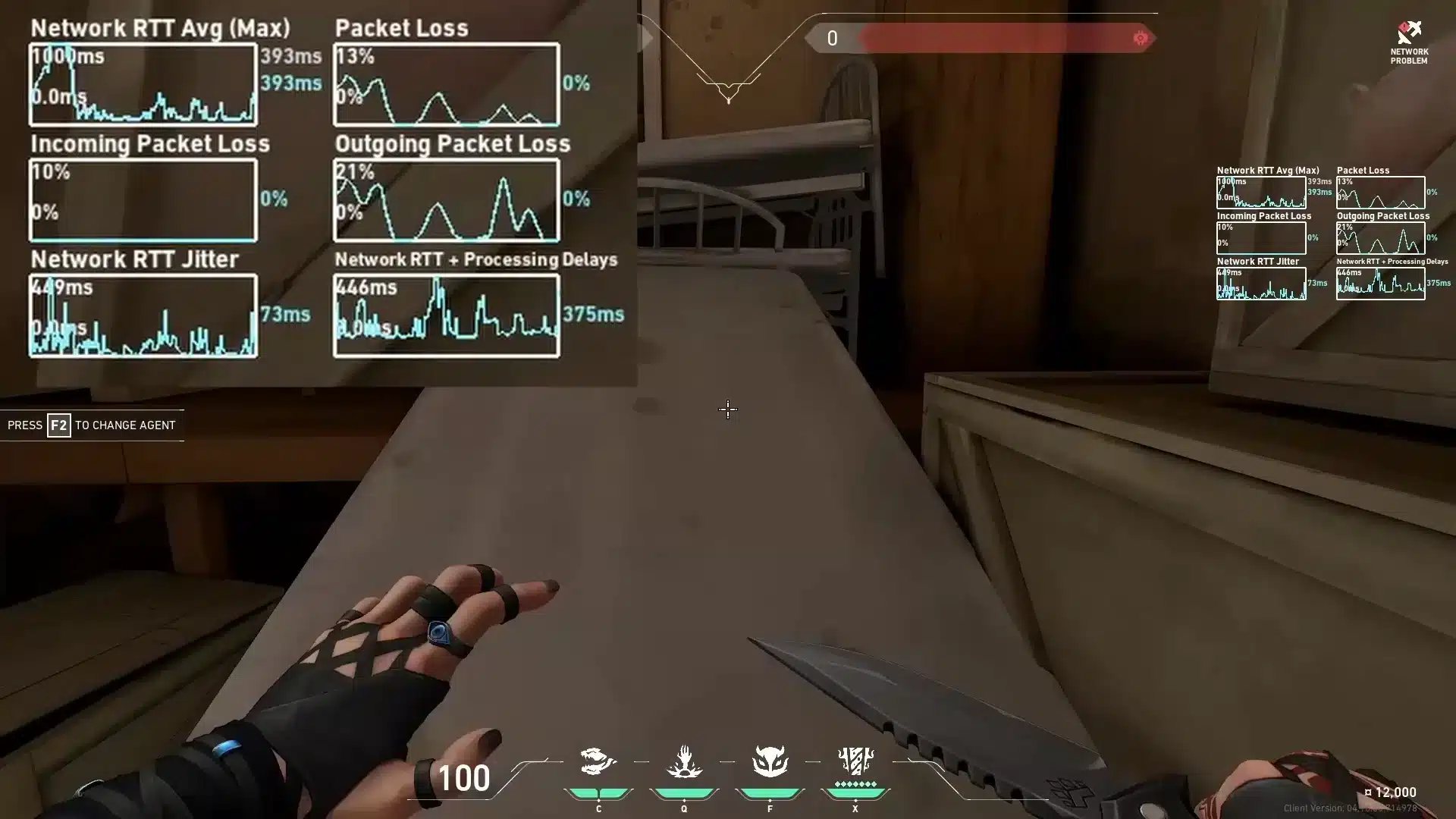
Valorant Ranks give Competitive players a clear way to measure progression, starting at Iron and extending all the way to Radiant. However, the badge displayed on your profile tells only part of the story, because Ranked Rating (RR), hidden MMR, match results, and individual performance all interact behind the scenes.
Understanding these systems can make Valorant ranked considerably less frustrating. Two players at the same rank may receive different amounts of RR after similar results, while a strong winning streak can sometimes accelerate progression because the matchmaking system believes a player belongs higher on the ladder.
In this guide, we explain all Valorant Ranks in order, how the Valorant ranking system works, what RR and MMR actually mean, and how rank distribution provides context for your position. More importantly, we will cover practical habits that can help you climb without turning every Competitive match into a desperate chase for RR.
All Valorant Ranks in Order
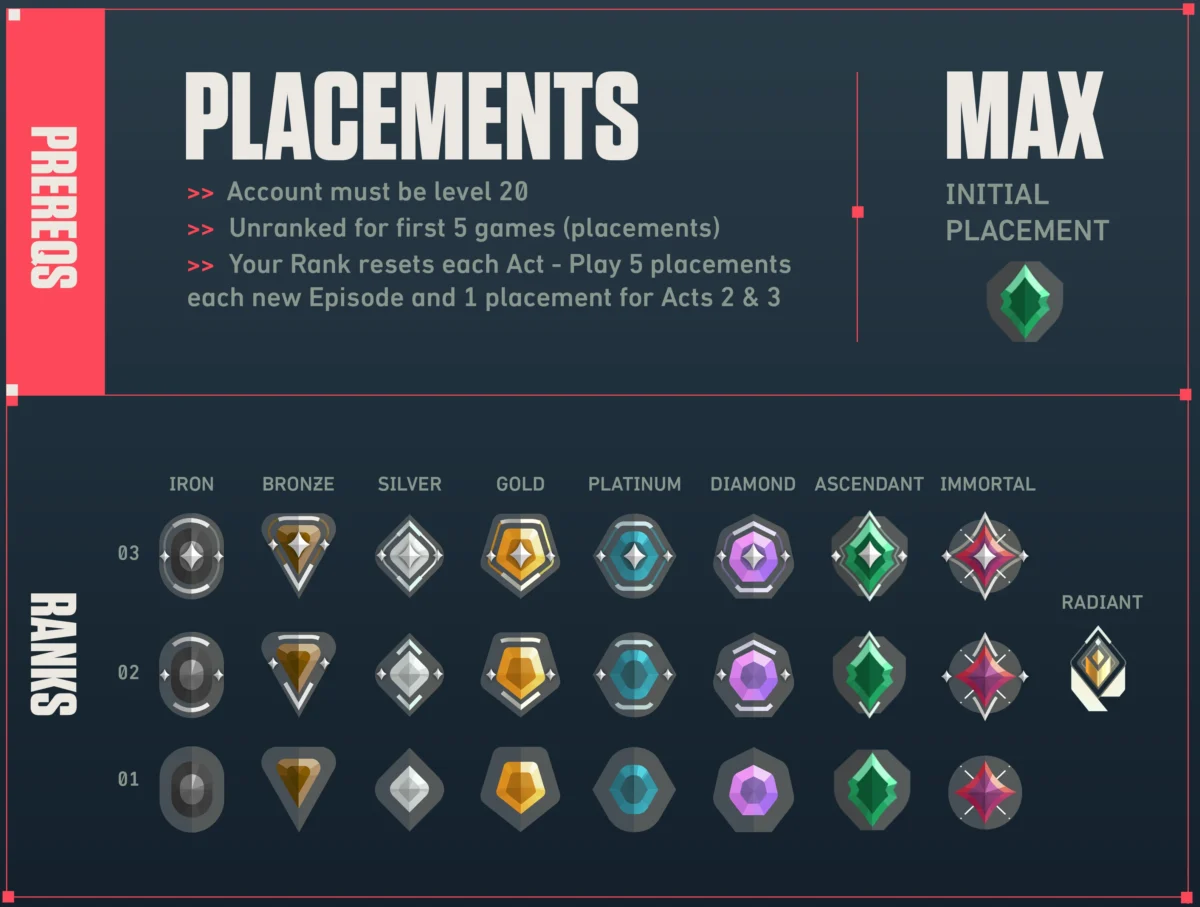
The current Valorant rank system contains nine main ranks, beginning with Iron and ending with Radiant. Most ranks contain three tiers, meaning players progress through levels such as Gold 1, Gold 2, and Gold 3 before reaching Platinum.
The ranks in Valorant are:
- Iron;
- Bronze;
- Silver;
- Gold;
- Platinum;
- Diamond;
- Ascendant;
- Immortal;
- Radiant.
Ascendant was added between Diamond and Immortal to improve the distribution of players across the ladder while preserving the prestige of the highest ranks. Radiant remains the highest competitive rank and represents the elite end of the system.
This structure creates a progression that is easy to understand visually, but reaching the next badge depends on more than simply accumulating victories. To understand why your RR gains sometimes change, we need to look at how the ranking system works underneath those visible tiers.
How Does the Valorant Ranking System Work?
The Valorant ranking system separates your visible rank from the matchmaking calculation used behind the scenes. Your visible Valorant rank shows where you currently sit on the ladder, while RR tracks your progress toward promotion or demotion.
Meanwhile, matchmaking uses hidden MMR to estimate your underlying skill. Riot updated its hidden MMR calculations for the 2026 season specifically to improve match quality and create more consistent experiences, while further RR adjustments arrived later to help consistently winning players feel less stuck.
A simplified version looks like this:
Match performance → Hidden MMR → Matchmaking → Win/Loss → RR change → Visible rank
The distinction matters because visible rank and MMR do not always move together. Riot deliberately keeps them somewhat separate so the system can create fair matches without making your displayed rank fluctuate dramatically after every individual performance.
Consequently, two Gold 2 players can receive different RR changes after winning the same match. Their badges may look identical, but the system can have different estimates of where each player's skill belongs.
What Is RR in Valorant Ranked?
Ranked Rating, commonly called RR, represents your visible progress within a rank. For most of the ladder, reaching 100 RR allows you to move into the next tier or rank, making RR the number players naturally watch after every Competitive match.
Match outcome remains one of the most important influences on RR. Winning therefore matters more than protecting your K/D, although individual performance and the relationship between your rank and MMR can also affect progression.
If your hidden MMR suggests that you belong above your current Valorant ranking, the system can encourage convergence by giving you stronger gains or reducing losses. Conversely, if your visible rank is ahead of your MMR, progression may become more difficult until the two move closer together. Riot has explicitly described this convergence relationship between MMR and rank.
This explains why copying another player's RR gains does not tell you exactly how your own account should progress. The visible result of one match exists within a much larger matchmaking history.
RR vs. Hidden MMR: What's the Difference?
RR and MMR are closely connected, but they are not interchangeable. RR is visible and helps determine your displayed rank progression, while hidden MMR is Riot's internal estimate used to help build balanced matches.
The easiest way to remember the difference is:
| System | Visible? | Main purpose |
| Rank | Yes | Shows your current competitive tier |
| RR | Yes | Tracks progress within the ranking system |
| MMR | No | Estimates skill for matchmaking |
| Leaderboard | Yes | Ranks top competitive players |
If your MMR is higher than your visible Valorant rank, the system generally wants the two values to converge. That can influence how quickly you move toward the level where matchmaking believes you belong.
However, MMR should not become something you obsess over. Since you cannot see the number directly, your attention is better spent on improving decisions and producing consistent results.
How Do Valorant Placements Work?
Placement matches help establish your starting position when the competitive system needs to determine where you belong. Your previous matchmaking history and hidden MMR provide useful information, meaning placements do not exist in complete isolation from everything the system already knows about your performance.
Players often make the mistake of treating placements as completely different matches. They become overly cautious, chase statistics, or worry that one terrible game will permanently destroy their Valorant ranking.
Instead, play the same fundamentals that should define every Competitive session:
- Communicate clearly with teammates;
- Use abilities to support the round objective;
- Trade teammates whenever possible;
- Avoid unnecessary early deaths;
- Manage your economy;
- Adapt to the opposing team;
- Prioritize winning rounds over protecting K/D.
One match can certainly affect the process, but your long-term competitive history matters more than one unlucky game. Focus on playing consistently rather than trying to manipulate placement through unusual behavior.
How Rank Shields Work in Valorant
Rank Shields add some protection when players reach Tier 1 of eligible ranks. Riot introduced the system so that losing at 0 RR does not necessarily cause an immediate demotion to the previous rank.
Players receive two Rank Shields when entering Tier 1, such as Gold 1 or Platinum 1. Losing at 0 RR consumes a shield, and after both shields are gone, another loss at 0 RR can result in demotion. Rank Shields do not apply in the same way to the other tiers.
For example, reaching Gold 1 no longer means one unfortunate loss at 0 RR must immediately send you back to Silver 3. The system provides a small buffer, giving you an opportunity to recover.
However, Rank Shields should not change how you approach matches. They are protection against immediate demotion, not a substitute for maintaining the consistency required to remain at the new rank.
Valorant Rank Distribution: Where Do Most Players Rank?
Valorant rank distribution shows how the competitive population is spread across the ladder. Mid-level ranks naturally contain a large portion of the player base, while Immortal and Radiant are significantly more exclusive.
Exact percentages can change over time as Riot adjusts matchmaking, MMR, and rank thresholds. For that reason, a distribution chart from an older season should not be treated as a permanent description of the current Competitive population.
This has happened before. When Riot introduced Ascendant, one of the stated goals was improving distribution because too many players were concentrated around lower ranks, particularly Bronze and Silver.
Distribution is therefore best used as context rather than a target. Knowing that you are above or below the average player can be interesting, but your improvement should be measured against your own performance over time.
Ascendant, Immortal, and Radiant Explained
The upper Valorant Ranks work differently from the early progression players experience through Iron, Bronze, Silver, and Gold. As competition increases, small mistakes become easier for opponents to punish, while mechanics, communication, positioning, and decision-making all need to become more consistent.
Ascendant sits between Diamond and Immortal. Riot created the rank to improve ladder distribution without overcrowding the higher tiers, helping maintain the competitive prestige associated with Immortal and Radiant.
Radiant represents the highest level of the standard Competitive ladder, while upper-rank leaderboard requirements can vary by region. Riot continues to adjust high-level RR thresholds when necessary to improve parity between regional leaderboards.
Reaching these levels therefore requires more than occasional exceptional performances. The higher you climb, the more consistency matters because opponents are increasingly capable of converting even small mistakes into round advantages.
Valorant Ascension Ranked vs. Ascendant Rank
There is an important distinction for searches involving Valorant ascension ranked. Ascendant is part of the normal Competitive ladder, sitting between Diamond and Immortal, while Skirmish: Ascension was introduced in 2026 as a separate limited-time ranked experience.
Skirmish: Ascension has its own ladder and ranking structure, including tiers from Iron through Radiant. Its leaderboard is separate from normal Competitive progression, so reaching a particular position there does not change your standard Valorant rank.
The similar terminology can easily create confusion, especially for players returning after a break. When discussing the normal Valorant rankings, Ascendant is the rank you need to understand.
How to Rank Up Faster in Valorant
There is no legitimate shortcut that guarantees rapid progression through Valorant Ranks. However, improving the decisions you repeat every match can increase your chances of winning and gradually push your RR in the right direction.
Focus on fundamentals that influence many rounds:
- Improve crosshair placement;
- Learn a small, effective Agent pool;
- Communicate useful information;
- Trade teammates;
- Understand the economy;
- Learn common map positions;
- Use abilities with a purpose;
- Review repeated mistakes;
- Avoid playing while tilted.
Crosshair placement deserves particular attention because it affects almost every gunfight. Keeping your crosshair near likely enemy head positions reduces the amount of correction required when someone appears, allowing you to react more efficiently without depending on spectacular flicks.
Likewise, mastering two or three Agents is often more valuable than constantly changing characters. Deeper knowledge of utility, timings, positioning, and team interactions makes your contribution more reliable even when your aim is not at its best.
Play for Round Impact, Not Just K/D
A high K/D looks impressive, but Valorant ranked matches are decided by rounds rather than individual statistics. A player can accumulate kills after rounds are effectively lost while another creates decisive advantages through utility, information, trades, and objective play.
Before judging a match solely by the scoreboard, ask yourself:
- Did I trade teammates effectively?
- Did my utility create opportunities?
- Did I communicate enemy positions?
- Did I die unnecessarily early?
- Did I adapt to the opponent?
- Did my kills influence important rounds?
These questions provide much more actionable information than simply comparing kills. A Controller who consistently enables site entries or a Sentinel who successfully prevents rotations can influence a match without always appearing at the top of the scoreboard.
Ultimately, victories drive progression. Improving the actions that increase your team's probability of winning is therefore more valuable than protecting personal statistics.
How to Stop Losing RR During a Bad Streak
One of the fastest ways to damage your Valorant ranking is continuing to queue after frustration begins affecting your decisions. A normal two-match losing streak can quickly become five defeats when players start chasing the RR they just lost.
Tilt commonly leads to unnecessary peeks, poor communication, rushed decisions, blaming teammates, and abandoning coordinated play. Once you recognize these behaviors, continuing immediately may not be the best option.
After a difficult match, identify one or two specific problems. Perhaps you repeatedly lost opening fights, used utility too early, failed to trade teammates, or struggled to adapt when opponents changed their strategy.
Specific problems can be corrected. “I need my RR back” cannot. Taking a short break and returning with a clear objective is often more productive than trying to recover an entire session's losses immediately.
How Connection Quality Can Affect Valorant Ranked
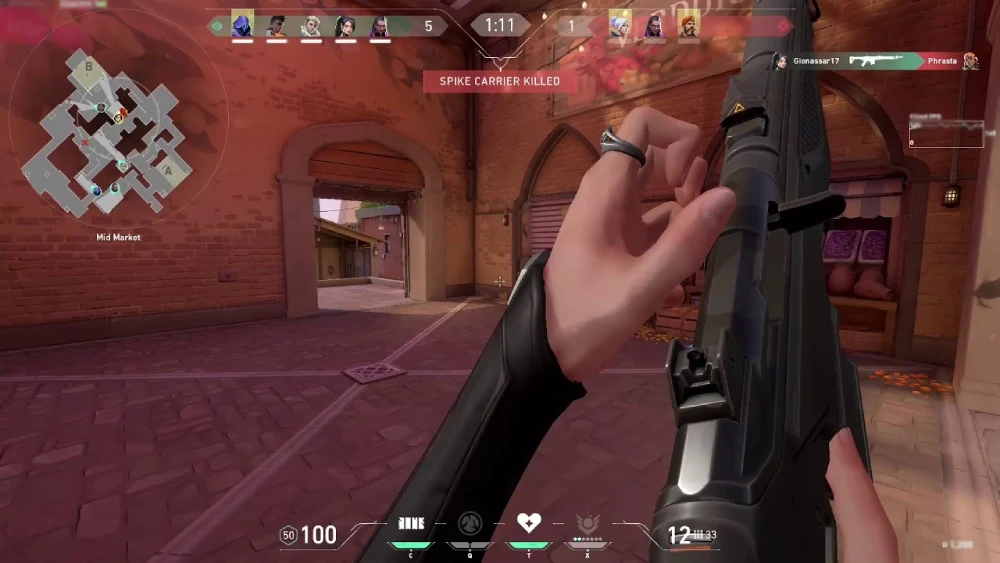
VALORANT depends on real-time communication between your device and game servers, which means connection stability can influence how responsive competitive matches feel. High latency, packet loss, jitter, and unstable routing can become particularly noticeable during fast engagements.
Network-related symptoms may include:
- Sudden ping spikes;
- Packet loss;
- Delayed actions;
- Movement inconsistencies;
- Connection instability.
However, not every stutter is network-related. FPS drops and frame-time issues can produce symptoms that feel similar, so checking both network statistics and system performance is important before assuming your internet connection is responsible.
A stable connection cannot improve your aim or decision-making, but it can reduce avoidable technical interference while you focus on climbing the Valorant Ranks.
How ExitLag Can Help With Valorant Connection Stability
ExitLag is designed to optimize network routes for supported online games. Internet traffic may pass through several networks before reaching game infrastructure, and the default path selected by your provider can sometimes experience congestion, jitter, packet loss, or inefficient routing.
When connection problems are route-related, optimization can help create a more stable path. However, ExitLag does not replace mechanical practice or fix FPS problems, which is why identifying the source of instability remains important.
FAQ
Here are quick answers to some of the most common questions about Valorant Ranks and Competitive progression.
The ranks are Iron, Bronze, Silver, Gold, Platinum, Diamond, Ascendant, Immortal, and Radiant. Radiant is the highest standard Competitive rank.
Competitive uses visible ranks and RR alongside hidden MMR. Match results affect RR, while MMR helps determine matchmaking and influences how your visible rank converges toward your estimated skill.
For most of the ladder, reaching 100 RR promotes you to the next tier or rank. Progression works differently at the highest leaderboard levels.
RR is your visible ranked progression, while MMR is Riot's hidden estimate of your skill used for matchmaking.
Radiant is the highest Valorant rank, sitting above Immortal and representing the elite end of Competitive play.
Climb the Valorant Ranks With More Consistency
Climbing the Valorant Ranks requires more than chasing kills or worrying about every RR change. Better communication, stronger fundamentals, effective utility, smarter decisions, and consistent teamwork will gradually create more opportunities to win.
If packet loss, jitter, or unstable routing is interfering with your Competitive matches, improving the network path can also help you focus on your gameplay rather than connection problems.
Ready for smoother and more stable matches? Try ExitLag and optimize your VALORANT connection today!