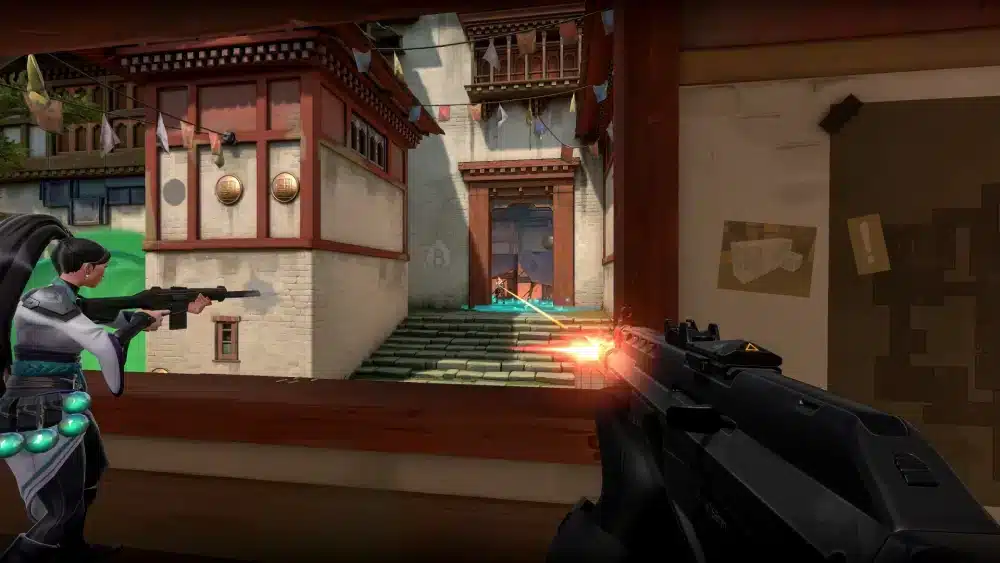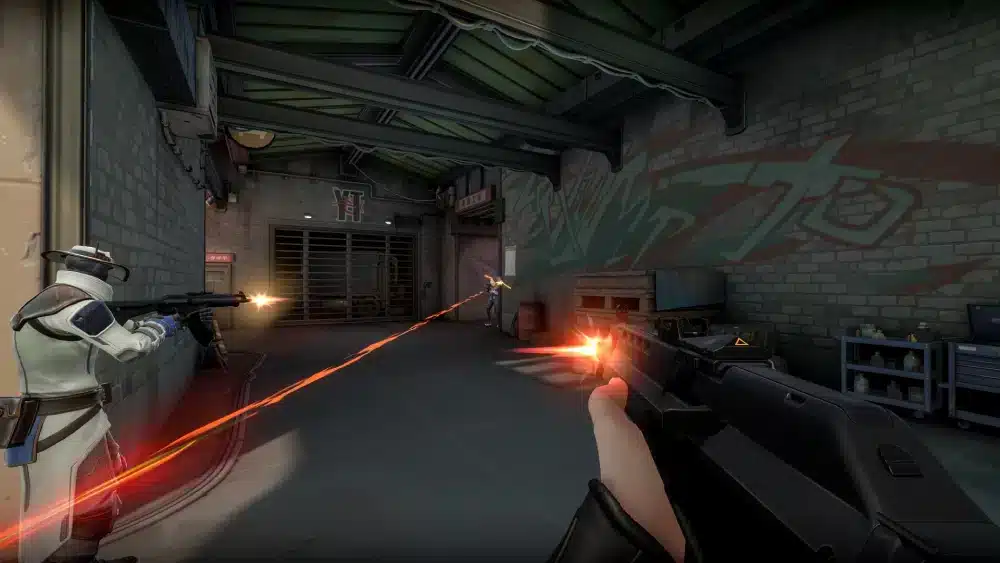
Valorant slang is the language of the game. If you have ever joined a ranked match and heard teammates yell “flank”, “eco”, “lurk”, or “util dump” without knowing what any of it means, you already know how confusing the in-game communication can get.
Every competitive shooter develops its own vocabulary over time. Valorant lingo borrows heavily from tactical shooter traditions while adding its own unique terms tied to the game’s economy, agent abilities, and round structure.
The fastest way to improve your team communication is to learn the most common Valorant terms before they come up mid-round. This guide covers every essential term, from basic callouts to economy vocabulary to ability-specific slang, so you can understand and respond to your team instantly.

Valorant Slang: Core Combat Terms Every Player Needs
Understanding the basic combat vocabulary of Valorant Slang is the foundation of effective team play. These terms come up in almost every round.
Movement and Positioning Terms
These terms describe how players move around the map and position themselves for fights:
- Peek: Briefly moving out of cover to spot or shoot an enemy before retreating back.
- Wide peek: Moving far out from a corner to create a difficult angle for the enemy to track.
- Off-angle: An unexpected position that catches enemies off guard by breaking their crosshair placement.
- Lurk: Staying behind enemy lines to gather information, flank, or catch rotating players.
- Anchor: A defender who stays on a site alone while teammates rotate elsewhere.
- Rotate: Moving from one area of the map to another in response to enemy activity.
- Stack: When two or more players hold the same position or area simultaneously.
What Does Flank Mean in Valorant?
Flank is one of the most important tactical concepts in the game. Flanking means attacking enemies from the side or behind rather than engaging them head-on.
A successful flank requires timing, map knowledge, and awareness of where both teams are positioned. Players use flanks to disrupt an enemy push, relieve pressure on a site, or catch defenders rotating away from the bomb.
Agents like Omen and Yoru excel at flanking because their teleport abilities allow quick repositioning. Cypher and Killjoy abilities can watch for flanks on your own team, giving you real-time information if enemies try to sneak behind your push.
Gunplay and Shooting Slang
These Valorant terms relate specifically to shooting mechanics:
- Dink: A headshot, named after the distinctive sound it makes on impact.
- One tap: Killing an enemy with a single shot, usually a headshot.
- Flick: A fast, sudden mouse movement to aim and fire at an enemy.
- Whiff: Missing a shot you were expected to hit.
- Spray: Holding down the fire button and letting the gun’s recoil pattern determine bullet spread.
- Counterstrafe: Pressing the opposite movement key to stop momentum before shooting, ensuring the first bullet is accurate.
- Wallbang: Getting a kill by shooting through a wall or surface.
- Pre-fire: Shooting a common spot before an enemy is visible, anticipating their position.
Valorant Lingo for Economy and Rounds
The economy system in Valorant is one of its most skill-intensive layers. Understanding Valorant lingo around money and buying is essential for making correct team decisions every round.
Economy Terms
| Term | Meaning |
| Full buy | Purchasing a rifle, full armor, and all abilities |
| Eco | Saving credits by buying nothing or very little |
| Force buy | Spending all credits even without enough for a full buy |
| Half buy | Buying a lighter loadout, usually a pistol and light armor |
| Save | Choosing not to fight in order to preserve the weapon for next round |
| Bonus round | A round where the winning team can full buy off their previous win |
| Anti-eco | Playing aggressively against a team that is on an eco round |
Round-Based Slang
These terms define how rounds are structured and what each player is expected to do:
- Entry frag: The first kill of a site push, usually the most dangerous role.
- Trade: When one player kills the enemy who just eliminated a teammate, restoring the numbers advantage.
- Retake: Attacking a site that defenders just lost in order to defuse the spike.
- Exit frag: Killing attackers who are trying to escape after planting the spike.
- Clutch: Winning a round while outnumbered, usually 1v2, 1v3, or more.
- Ace: A single player eliminating all five enemies in one round.
- Flawless: Winning a round without any teammate dying.
Common Valorant Terms for Abilities and Utility
Every Valorant agent has a unique kit. The community has developed shared slang for how those abilities are used regardless of which agent you are playing.
Ability Vocabulary
These are ability-related Valorant slang terms that apply across most agents:
- Util: Short for utility, meaning any ability the agent has available.
- Util dump: Using all abilities at once, typically when entry-fragging a site.
- Flash: Any ability that temporarily blinds or disorients enemies.
- Molly: A lingering damage ability that controls an area, similar to a molotov cocktail.
- Smoke: Any ability that blocks vision by creating a cloud or area of obscured sightlines.
- One-way smoke: A smoke positioned so that one side can see through while the other cannot.
- Intel: Information gathered about enemy positions, usually from scouting abilities.
- Recon: Abilities that reveal enemy locations, associated with agents like Sova and Fade.
Can You Explain Some Common Valorant Terms and Their Usage?
Here is a practical breakdown of how common Valorant terms appear in real match communication:
- A teammate says “flank right” during a site push. This means an enemy is attacking your team from the side or behind on the right side of the map. Stop and check behind you.
- Your team calls “eco this round.” That means everyone should spend as little as possible to rebuild credits for a strong buy next round.
- A teammate asks you to “trade.” This means if they peek and die, you should immediately swing out to eliminate the enemy who killed them.
- Someone calls “clutch potential.” This signals that a single teammate is the last alive and in a position where they could win the round alone.
- The team tells you to “util dump on site.” This means use every ability you have as you enter to clear angles and control space.
Team Communication Slang and Chat Abbreviations
Valorant lingo extends into the text and voice chat with shortened phrases that allow faster communication during tense moments.
Common Abbreviations in Valorant
- GG: Good game, said at the end of a match regardless of outcome.
- GG WP: Good game, well played, showing respect for both sides.
- NT: Nice try, acknowledging a good effort that did not result in success.
- GL HF: Good luck, have fun, said at the start of a match.
- EZ: Easy, used after winning a round or match, often considered unsportsmanlike.
- MB or MG: My bad, admitting a mistake.
- LFG: Looking for group, searching for teammates before queuing.
- CT: Counter-Terrorist, referring to the defending team in Valorant.
- T side: The attacking team’s side of the round.
Teamwork and Strategy Callouts
These phrases are said over voice chat during active play:
- “Plant it”: Plant the spike, usually said when there is limited time.
- “Stick”: Continue defusing even under pressure, do not stop.
- “Fake”: A coordinated move where attackers pretend to go one site to pull defenders away.
- “Split”: Attacking a site from two different angles at the same time.
- “Default”: A slow, controlled approach to gather information before committing to a site.
- “Play for picks”: Focus on eliminating enemies one by one rather than executing a full push.
Pro Tips: Mastering Valorant Slang in Real Matches
- Use directional callouts with flank warnings: When calling a flank, include the direction and how many enemies you spotted. “Two flanking right mid” gives your team actionable information instead of just “flank.”
- Call your util before entering a site: Saying “flashing main” before you throw a blind ability prevents your teammates from turning into the flash and blinding themselves instead of the enemy.
- Keep economy calls concise: Instead of explaining the full financial situation, just say “eco” or “force” at the start of the buy phase so the team aligns instantly without lengthy discussion.
- Differentiate between lurking and rotating: Tell your team if you are lurking (staying back intentionally for a late flank) versus rotating (actively moving to help on another site). The two require very different responses from your teammates.
Common Mistakes Valorant Players Make with In-Game Lingo
- Calling “save” without confirming the team: If one player decides to save while others are still fighting, it creates a numbers disadvantage mid-round and can cost a preventable loss. Fix: Ask the team before saving and make the call together, especially early in a half.
- Overusing “GG” prematurely: Calling GG mid-game when your team is losing creates a negative atmosphere that hurts morale and performance. Fix: Save GG for when the match genuinely ends. Focus on IGL-style calls instead of surrendering mentally.
- Confusing a lurk with a flank: A lurk is a planned strategic delay behind enemy lines. A flank is a reactive attack from an unexpected angle. Mixing them up leads to poorly timed repositions. Fix: If you plan to lurk, tell your team explicitly so they do not wait for you to push with them.

Play Valorant Without Lag Using ExitLag
Learning Valorant slang is one part of improving. Eliminating connection problems is the other. High ping, packet loss, and unstable routing directly affect how accurately your shots register and how quickly your abilities activate in a match.
ExitLag is a connection optimizer used by over 30 million players across 4,000+ game titles, including Valorant. It analyzes multiple network routes in real time and selects the fastest, most stable path between your device and Riot’s game servers.
Key features for Valorant players:
- Real-Time Optimization: Reduces input delay so your counterstrafe fires the moment you stop moving, not a frame later.
- Multipath Technology: Sends your game data through multiple routes simultaneously so a single path failure does not register as a missed shot or a dropped ability.
- Traffic Shaper: Prioritizes Valorant traffic over background applications so nothing else on your network interferes with your connection during ranked matches.
- PC Boost: Clears background processes and RAM pressure, improving frame consistency during intense gunfights.
Download ExitLag and try it free.
All images used in this blog post belong to their respective owners and are used for informational and educational purposes only. They do not imply endorsement or affiliation with the rights holders.
Got questions or want to connect with other players? Join the conversation at the ExitLag Forum!