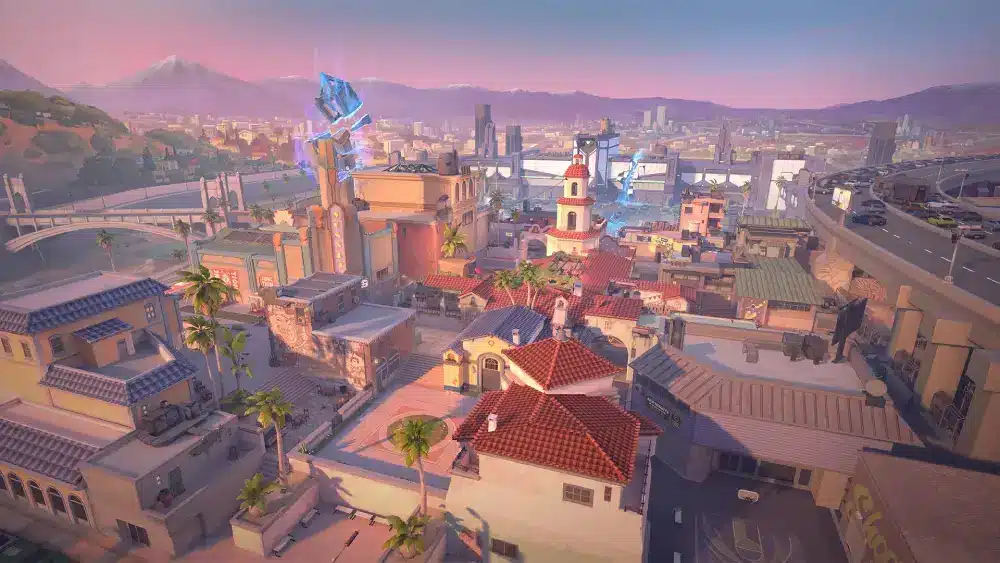
Sunset Valorant is a traditional three-lane map built around two Spike sites and a highly important Mid area. Set in Los Angeles, Sunset rewards teams that understand map control, rotations, utility timing, and how to create pressure across multiple parts of the map instead of committing too early.
Learning Sunset Valorant means understanding much more than the routes toward A and B. Mid control can create valuable opportunities for both sides, while narrow entrances, interconnected areas, and defensive positions make utility especially important when taking or retaking territory.
So, how does Sunset Valorant work? Sunset is a two-site, three-lane VALORANT map where controlling Mid can open rotations and split attacks toward A or B. Successful teams combine information, utility, map pressure, and coordinated site executions rather than relying exclusively on direct pushes through the main entrances.
Sunset Valorant: Map Layout Explained
Understanding Sunset Valorant starts with its relatively traditional structure. Riot Games describes Sunset as a three-lane map, and unlike maps built around unusual movement mechanics, much of its strategic depth comes from positioning, map control, and how teams contest the available routes.
There are two Spike sites, A and B, with Mid creating important connections between areas of the map.
Is Sunset a two-site map?
Yes. Sunset has two Spike sites: A and B.
This makes its basic structure easier to understand than maps with three sites, but the presence of a valuable central area means teams still have several options when deciding where to apply pressure.
Attackers can approach a site directly or establish control elsewhere before executing.
Defenders must therefore decide how much territory they are willing to contest early in a round and when giving up an area is safer than taking an unnecessary fight.
Why is Mid important on Sunset?
Mid is one of the defining strategic areas of the sunset map Valorant.
Controlling central territory gives attackers more flexibility because they are no longer restricted to predictable site entrances. Defenders who lose Mid may need to watch additional angles and become more cautious about rotations.
However, taking Mid is not automatically valuable.
Teams need a plan for what happens after gaining the space.
If several players spend utility and time securing Mid but never use that control to threaten another area, defenders can eventually adjust.
Good Mid control creates options.
Sunset Map Valorant: Important Areas and Callouts
Learning the major areas of the sunset map Valorant helps teams communicate quickly. Exact terminology can sometimes vary between players or regions, but using recognizable in-game callouts makes information easier to understand.
You do not need to memorize every small corner immediately. Start with the major areas and gradually add more specific positions as you become familiar with the map.
A Site and surrounding areas
A Site contains several positions attackers and defenders need to clear or control during an execute.
Important areas around the A side include:
- A Main;
- A Lobby;
- A Site;
- A Elbow;
- A Link;
- A Alley.
Understanding how these areas connect helps attackers divide defensive attention.
A Main provides one of the obvious approaches, but controlling connected areas can create a much more difficult situation for defenders.
For defenders, the objective is not always to hold every piece of territory until elimination.
Sometimes giving up an outer area and preparing a coordinated retake provides better odds than fighting alone against several attackers.
B Site and surrounding areas
The B side has received significant changes since Sunset’s original release, particularly around the structure of B Site and B Main.
Major B-side callouts include areas such as:
- B Main;
- B Site;
- B Market;
- B Boba;
- B Lobby;
- B Back.
B Main is an important point of contact because attackers using a direct B execute generally need to work through this area.
However, a team focused exclusively on B Main can become predictable.
Combining pressure from other parts of the map can force defenders to divide attention and make the final site entry easier.
Sunset Valorant Map: A Site vs. B Site
Both sites on the sunset Valorant map require attackers to manage defensive angles before planting the Spike. The best site to attack depends on information, defender positioning, available utility, and what happened earlier in the round.
Instead of deciding before the round that you will always attack one site, use information to guide the final decision.
| Area | Main challenge | Attacker priority | Defender priority |
| A Site | Multiple defensive positions | Isolate angles and establish site control | Delay entry and preserve retake options |
| B Site | Contested entry and post-plant positioning | Coordinate utility through B Main or split pressure | Disrupt execution and control key space |
| Mid | Central map influence | Create multiple attack options | Gather information and limit splits |
| A Main | Direct site access | Gain space safely | Contest or delay |
| B Main | Major B approach | Clear defensive utility and angles | Slow attackers and deny comfortable entry |
The important lesson is that Sunset rewards teams that connect these areas strategically.
Winning one section of the map should create opportunities somewhere else.
How to Attack A Site on Sunset
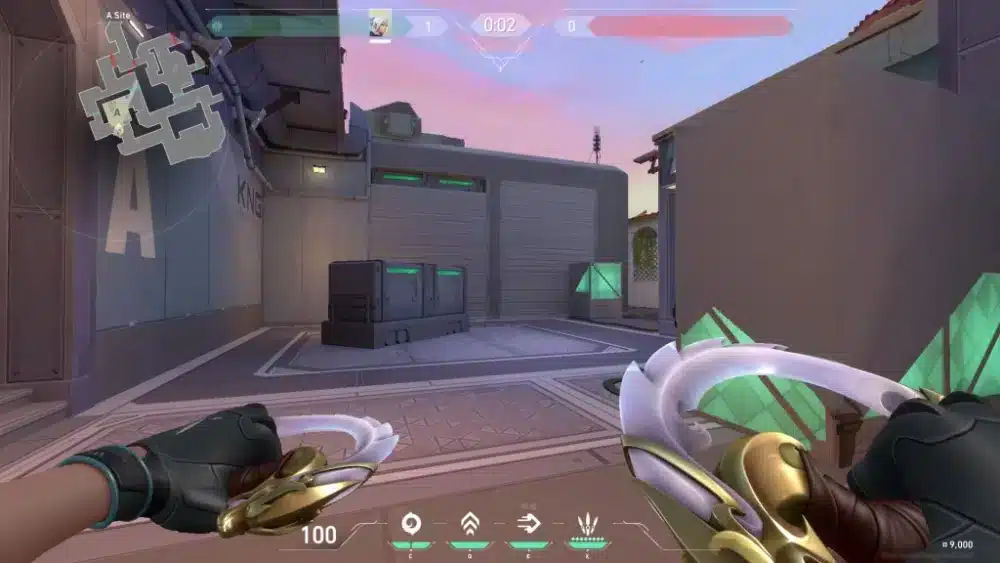
Attacking A on Valorant Sunset requires more than running through A Main and hoping to win the first duel. Defenders can use positioning and utility to make a direct entrance difficult, especially when attackers fail to clear angles systematically.
A coordinated execute should reduce the number of threats players need to fight simultaneously.
Clear space before committing
Use reconnaissance, flashes, smokes, or other appropriate utility to identify and isolate defender positions before moving the entire team forward.
The exact abilities depend on your sunset comp, but the principle remains the same.
Utility should create space for players rather than being used without a follow-up.
For example, blocking defender sightlines provides limited value if nobody uses that moment to take territory.
Coordinate utility with movement.
Once an area becomes safer, take the space and prepare for the next defensive position.
Don’t forget rotations
A site execute does not happen independently from the rest of the map.
Defenders elsewhere can rotate once they recognize the attack.
This means attackers should consider how quickly they are revealing their intentions.
Early pressure in another area can force defenders to hesitate before rotating.
Likewise, maintaining control of important routes can make defensive rotations more dangerous.
The goal is to create uncertainty before committing enough players to finish the site take.
How to Attack B Site on Sunset
B Site is another major focus of Sunset Valorant strategy. Riot redesigned parts of the B area in Patch 9.08 to address defensibility and post-plant gameplay, meaning older diagrams or videos may show a layout that no longer matches the current version.
Modern strategies should therefore be based on the updated geometry.
Taking B Main
B Main is one of the most obvious paths toward the site, which also makes it an area defenders can prepare to contest.
Attackers should expect utility or defensive pressure rather than treating B Main as free territory.
Use information and utility before committing several players into a narrow approach.
Once your team establishes control, decide whether the situation supports an immediate execute or whether additional pressure elsewhere would improve the attack.
You do not always need to rush after gaining initial space.
Sometimes holding B Main forces defenders to continue respecting the possibility of an execute.
Create pressure from more than one direction
A direct five-player push can work, but repeating the same approach makes your team easier to read.
Sunset’s three-lane structure gives attackers alternatives.
Establishing control through Mid can create additional pressure and make it harder for defenders to focus exclusively on B Main.
This does not mean every round requires an elaborate split.
The important concept is maintaining enough map presence that defenders cannot confidently stack one location without consequences.
Why Mid Control Matters on Sunset
Mid deserves special attention in any map sunset guide because it influences both sites and rotation decisions.
A team that consistently controls Mid can create uncertainty about where the final attack will happen.
Defenders, meanwhile, can use Mid information to understand how much freedom attackers actually have.
Attacking through Mid
Attackers can use Mid control to create alternative routes rather than entering sites only through the most obvious main lanes.
The process generally involves several stages:
- Establish information about defender positions;
- Use utility to remove or isolate dangerous angles;
- Take central space;
- Maintain control of relevant routes;
- Decide whether to split toward A or B;
- Coordinate the final execute.
The fifth step is important.
Do not decide too early that Mid control automatically means attacking a particular site.
Let the information gathered during the round influence your decision.
Defending Mid
Defenders do not necessarily need to fight aggressively for every part of Mid.
The objective is maintaining useful information and preventing attackers from gaining uncontested access to valuable routes.
Depending on your Agent composition, utility can help watch areas without exposing a player continuously.
If attackers gain significant Mid control, communicate immediately.
Teammates may need to adjust positioning because routes that were previously safe can become vulnerable.
Information is often as valuable as an elimination.
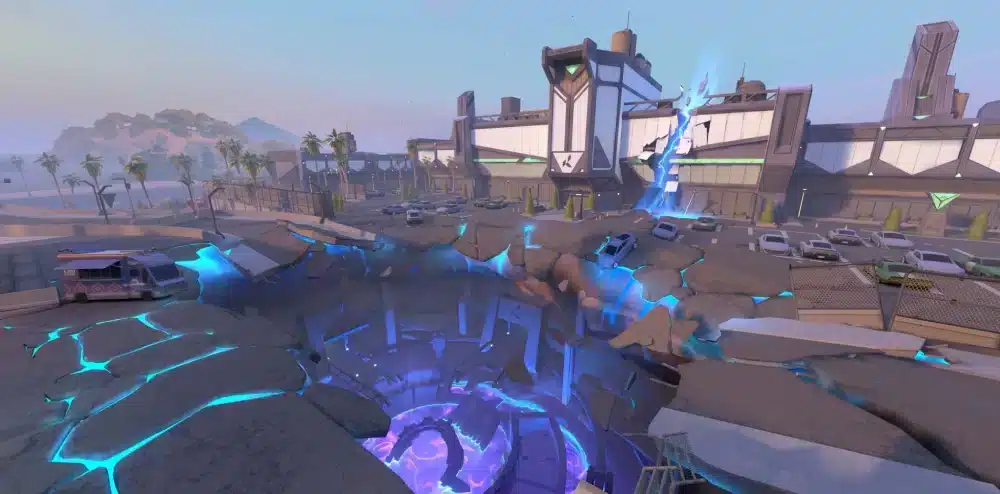
Sunset Comp: Building a Strong Team Composition
A good sunset comp should provide the tools necessary to gather information, control sightlines, create entry opportunities, delay pushes, and manage rotations.
Because Agent balance changes regularly, it is better to understand the roles Sunset needs than to treat one five-Agent lineup as permanently superior.
A balanced composition generally includes complementary tools rather than five individually strong Agents with limited synergy.
Controllers on Sunset
Controllers are important because Sunset contains sightlines and choke points where smokes can isolate defenders during site executions.
A Controller can also make retakes more difficult for opponents by blocking important angles.
When choosing one, consider:
- Smoke placement flexibility;
- Duration and availability;
- Ability to support both sites;
- Post-plant usefulness;
- Team strategy.
The strongest choice can change with patches.
Instead of selecting an Agent only because professional teams use them, understand why their utility works with your composition.
Initiators on Sunset
Initiators can help teams gather information and make site entries safer.
Reconnaissance abilities can reveal or pressure defender positions, while flashes and other initiation tools can help teammates move through contested areas.
This is particularly useful around Mid and site entrances.
A good Initiator player does not simply use every ability at the beginning of the round.
Save utility for moments when information or space has meaningful value.
Coordinate with teammates so they can act on what your abilities reveal.
Sentinels on Sunset
Sentinels can help control territory, watch flanks, and make attacking certain areas more complicated.
This becomes especially useful on a map where Mid control can open additional routes.
Defenders can use Sentinel utility to reduce the number of areas that require constant manual attention.
Attackers can also benefit from flank protection after establishing map control.
Remember that utility placement should evolve.
If opponents repeatedly destroy or avoid the same setup, change it rather than assuming one configuration will work every round.
Duelists on Sunset
Duelists can create space during site entries and pressure defenders once utility has prepared an opening.
However, the Duelist should not be expected to enter unsupported.
A coordinated sequence is much stronger:
Initiator utility gathers information or disrupts defenders, Controller utility isolates sightlines, and the Duelist uses the resulting opportunity to take space.
Teamwork makes entry abilities more valuable.
This is why sunset comp should be evaluated as a complete system rather than a list of five popular Agents.
Example Sunset Comp Structure
Instead of relying on a permanent Agent tier list, build your sunset comp around functions.
A practical composition structure could contain:
- One Controller;
- One Initiator;
- One Sentinel;
- One Duelist;
- One flexible second Initiator, Duelist, Controller, or Sentinel.
The fifth slot depends on your team’s preferred style.
A more information-heavy team may prefer additional Initiator utility, while another composition might prioritize aggressive entry or stronger site control.
Is there one best Sunset comp?
No composition remains objectively best forever.
VALORANT receives regular Agent and map balance changes, and the competitive meta evolves as players discover new strategies.
Professional compositions are useful references, but ranked teams have different levels of coordination.
An Agent combination requiring precise utility timing may perform differently with five coordinated players than with a team communicating very little.
Choose Agents your team understands while still covering the necessary roles.
How to Defend Sunset
Defending Sunset Valorant is largely about balancing information with survival. If defenders surrender too much territory, attackers gain multiple routes. If defenders constantly fight for every area, attackers can punish unnecessary aggression.
The best approach changes from round to round.
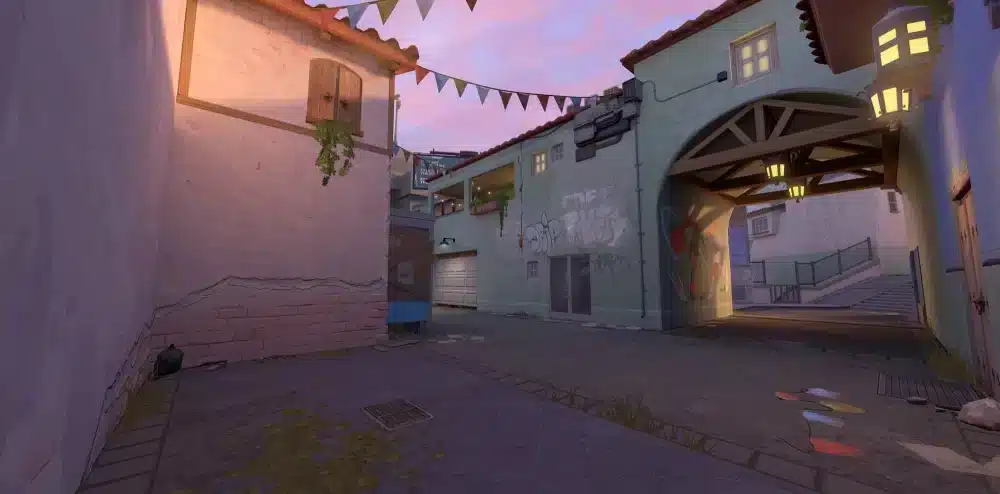
Contest space without becoming predictable
Early-round aggression can generate valuable information or catch attackers unprepared.
Doing it every round makes the strategy predictable.
Mix defensive approaches.
Sometimes contest an important area with utility and support. On another round, allow attackers to take initial space and prepare a deeper defensive setup.
Changing your positioning forces attackers to gather information again instead of assuming they know where defenders will be.
Know when to retake
You do not always need to die defending a site. If several attackers execute together and you are isolated, surviving and waiting for teammates may create a stronger retake.
Communicate what you saw:
- Number of attackers;
- Utility used;
- Spike location if known;
- Enemy positions;
- Damage dealt;
- Areas you still control.
This information helps rotating teammates understand what they are entering.
A coordinated retake is generally stronger than several players attempting separate one-versus-many fights.
How to Play Post-Plant on Sunset
Post-plant situations on the sunset Valorant map require attackers to protect the Spike while maintaining positions that can support one another.
This is especially important on B, where Riot specifically changed the map geometry to improve the balance of post-plant and retake situations.
Do not assume an old post-plant setup remains optimal after map updates.
Don’t retreat too far
Attackers sometimes gain the site, plant, and immediately abandon too much territory.
This can give defenders space to approach the Spike without enough resistance.
Instead, maintain positions that allow teammates to trade eliminations and contest important retake routes.
The exact setup depends on:
- Remaining players;
- Available utility;
- Spike location;
- Defender positions;
- Weapons;
- Time.
A strong post-plant is dynamic.
React to what defenders are doing rather than automatically running to the same location after every plant.
Retaking as defenders
Defenders should avoid entering individually when teammates are still rotating.
Whenever possible, coordinate the retake.
Identify which areas attackers control and use utility to remove or isolate those positions.
Time matters, but rushing without coordination can make the attackers’ job easier.
Sometimes waiting a few seconds for a teammate creates a much stronger retake than immediately taking a disadvantaged fight.
Best Weapons and Engagements on Sunset
Weapon effectiveness on Valorant Sunset depends heavily on the distance and position of each engagement.
The map contains both tighter spaces and longer sightlines, so no single weapon dominates every possible fight.
Your economy also matters.
Match your position to your weapon
Instead of asking only which weapon is strongest, ask whether your current position gives that weapon a favorable engagement.
Close-range weapons benefit from different positions than rifles or long-range options.
If your loadout is better at shorter distances, avoid unnecessarily exposing yourself to long sightlines.
Likewise, if your weapon benefits from distance, look for positions where opponents cannot easily close the gap.
Map knowledge helps you create favorable fights before mechanical skill even becomes relevant.
Don’t ignore your economy
Buying decisions affect future rounds.
A player who spends everything without considering teammates can create an uneven team economy where some players have full equipment while others cannot support the round effectively.
Coordinate purchases when possible.
A slightly weaker individual purchase within a coherent team buy can sometimes be more useful than one player purchasing everything while teammates have almost nothing.
VALORANT is a team economy as much as an individual one.
Common Mistakes on Sunset Valorant
Players learning Sunset Valorant often focus heavily on memorizing site positions while overlooking the decisions that connect those positions.
Knowing every callout helps, but understanding timing and map control is what makes that knowledge useful.
Ignoring Mid
One of the biggest mistakes is treating every attacking round as a choice between A Main and B Main. Mid exists for a reason.
You do not need to take it every round, but applying occasional Mid pressure prevents defenders from assuming they can focus entirely on the outside lanes.
Even showing presence can influence rotations.
The objective is creating uncertainty.
If defenders always know where your team can appear, their decisions become much easier.
Rotating too quickly
Hearing utility on one site does not necessarily mean every attacker is committed there.
Experienced teams can create pressure specifically to force rotations.
Before abandoning your position, consider what information your team actually has.
Did someone see the Spike? How many attackers were identified? Is Mid controlled? Could the initial pressure be a fake?
Communicate before rotating. An unnecessary rotation can leave the opposite site completely exposed.
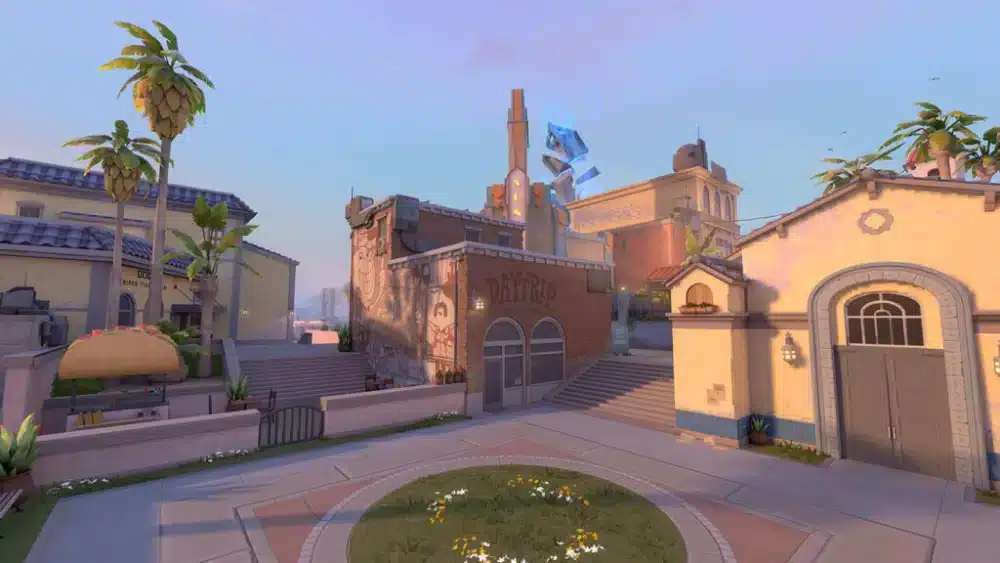
Using utility without a purpose
Abilities are limited resources within each round. Throwing utility simply because the round started can leave your team without important tools during the final execute or retake.
Ask what each ability is accomplishing.
Is it gathering information? Taking space? Delaying attackers? Isolating an angle? Supporting an entry? Utility becomes much stronger when tied to a specific action.
Sunset Valorant for Ranked Play
Playing Sunset Valorant in ranked does not always provide the level of coordination seen in organized teams. You may have teammates using different strategies, limited communication, or unfamiliar Agent combinations.
Simple plans often work better than complicated executions that require perfect timing from everyone.
Communicate simple information
Useful communication does not need to be long. Call:
- Enemy location;
- Number of players seen;
- Spike information;
- Utility used;
- Damage when relevant;
- Areas you control;
- Rotation intentions.
Avoid filling voice communication with unnecessary information during active fights.
Short, accurate calls help teammates make decisions quickly.
Adapt to your teammates
If your team is playing aggressively, consider how you can support that approach rather than executing a completely separate strategy.
Likewise, if teammates prefer slower map control, constantly forcing solo entries may create unnecessary disadvantages.
Adaptation is a valuable ranked skill.
You cannot control how every teammate plays, but you can make decisions that improve how your own utility and positioning interact with them.
Sunset Map Changes You Should Know
The sunset map Valorant players experience today is not identical to its original 2023 version. Riot has adjusted the map based on gameplay observations, with the B Site receiving a particularly significant update.
This is why older guides should be checked carefully before copying specific setups.
Patch 9.08 B Site changes
Riot updated Sunset’s B Site in Patch 9.08 to address defensibility and post-plant gameplay.
The changes affected several areas, including B Main, B Main Exterior, B Site, B Site Back, B Boba, and Mid Courtyard.
The objective was to provide more ways to play on the site while making certain post-plant situations easier for retaking defenders to manage.
A specific Cypher Trapwire setup was also removed as part of the geometry changes.
Therefore, screenshots and lineups created before the update may no longer correspond perfectly to the current map.
Sunset and the Competitive map pool
Map rotations in VALORANT change over time.
As of Patch 13.00, Sunset returned to the Competitive and Deathmatch queues alongside the new map Summit, while Fracture and Pearl rotated out.
However, treat rotation status as time-sensitive information.
Sunset can leave or return to the Competitive pool in future updates without the underlying map guide becoming obsolete.
Always check the latest VALORANT patch notes when your main question is whether a specific map is currently available in Competitive.
How to Learn Sunset Faster
The fastest way to become comfortable with Valorant Sunset is combining map study with actual matches.
Memorizing an image of the layout helps, but real rounds teach timing, common positions, utility patterns, and how opponents actually move.
Learn in layers
Do not try to memorize everything simultaneously. Start with:
- A Site and B Site;
- Main entrances;
- Mid routes;
- Major callouts;
- Rotation paths;
- Common defensive positions;
- Utility interactions;
- Agent-specific setups.
This makes learning much more manageable.
Once the broad structure becomes automatic, smaller callouts and advanced strategies become easier to understand.
Review your mistakes
After losing an important round, ask what actually happened.
Perhaps you rotated without enough information. Maybe your team ignored Mid. Perhaps an execute failed because utility was used too early.
Identifying the decision behind the loss is more useful than simply blaming aim.
Mechanical skill matters enormously in VALORANT, but positioning, timing, information, and utility can create easier fights before the first shot is taken.
Sunset Valorant and Connection Quality
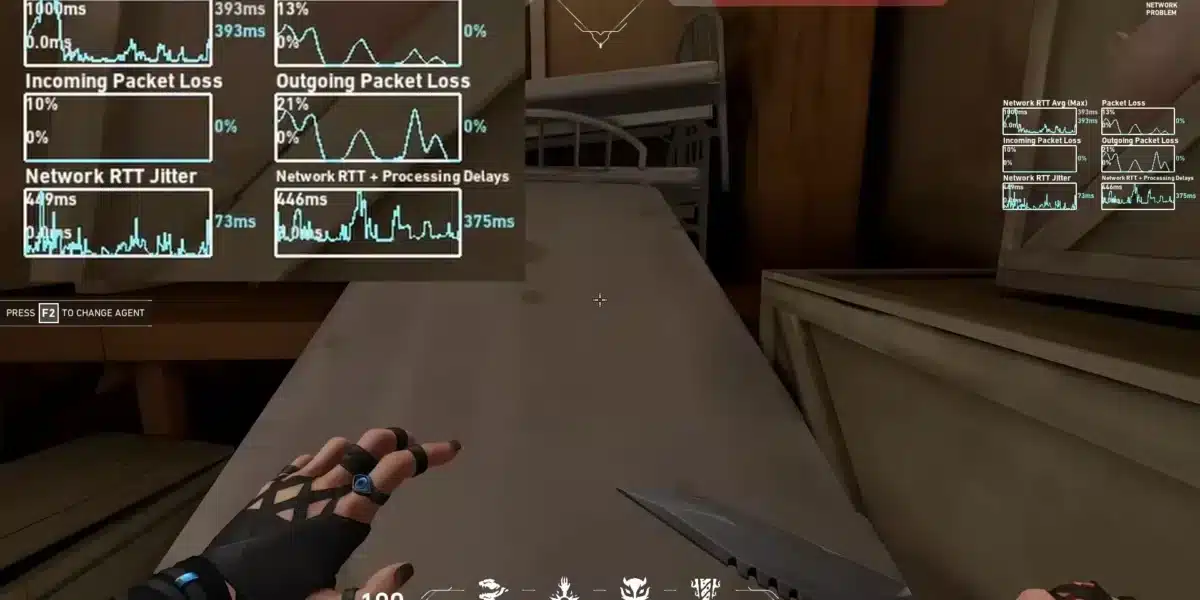
Playing Sunset Valorant competitively requires quick reactions and consistent communication between your game and VALORANT’s online infrastructure. Your strategy and mechanical skill determine how you play the round, while network conditions can influence the responsiveness of the online connection.
These are separate factors, so network optimization should not be confused with improving FPS, aim, or Agent abilities.
What network issues can affect VALORANT?
Depending on your internet connection and network route, online players can encounter:
- High ping;
- Packet loss;
- Latency spikes;
- Routing instability;
- Connection fluctuations.
Not every technical problem comes from network routing.
Low FPS, hardware limitations, game-server issues, and local system problems require different troubleshooting.
Identify the type of problem before choosing a solution.
How can ExitLag help VALORANT players?
ExitLag is designed to optimize network routes for supported online games. It analyzes multiple paths and works to select faster and more stable routes for supported gaming traffic.
ExitLag is not a traditional VPN focused primarily on changing your location or hiding your IP address. Its purpose is gaming connection route optimization.
While you focus on controlling Mid, executing sites, coordinating utility, and improving your sunset comp, ExitLag can work on optimizing the supported network route behind your VALORANT connection.
FAQ
Players learning Sunset Valorant often have questions about its layout, sites, Mid control, Agent composition, and Competitive availability. Here are five quick answers.
How many sites does Sunset have in Valorant?
Sunset has two Spike sites, A and B. Riot designed it as a traditional three-lane map, with Mid playing an important role in connecting attack routes and influencing rotations.
When was Sunset released in Valorant?
Sunset debuted with VALORANT Patch 7.04 in August 2023. It initially entered Unrated before joining the Competitive map rotation in Patch 7.05.
What is the best Sunset comp?
There is no permanent best sunset comp because Agent balance and the competitive meta change. A balanced composition should generally provide smokes, information gathering, entry potential, territory control, and flank or site protection.
Why is Mid important on Sunset?
Controlling Mid creates additional paths toward both sides of the map and forces defenders to respect more possible attack routes. Even when attackers do not finish through Mid, pressure there can influence defensive positioning and rotations.
Is Sunset in the Valorant Competitive map pool?
As of Patch 13.00, Sunset is in the Competitive map pool. Map rotations change regularly, however, so players should check the latest official patch notes when confirming current Competitive availability.
Sunset Valorant: Master the Map With ExitLag
Sunset Valorant rewards teams that understand how A Site, B Site, and Mid interact instead of treating every round as a direct rush toward one entrance.
Learn the major callouts, create pressure across the map, coordinate your utility, adapt your sunset comp, and use information to decide when and where to commit.
Master Sunset, coordinate your team, and optimize your VALORANT connection with ExitLag!
Got questions or want to connect with other players? Join the conversation at the ExitLag Forum!