Plenty of players still type Overwatch SR into a search bar, and it makes sense. For years, that four-digit number was the whole competitive identity of every player. You were a 2,700 Plat support or a 3,400 Diamond tank, and that was the conversation.
The catch is that Overwatch SR doesn't exist on your career profile anymore. Blizzard pulled the number, swapped in tiers and divisions, and later added a visible Rank Progress bar. Underneath all of it there's still a hidden rating doing the actual matchmaking.
So, to answer it straight: Overwatch SR (Skill Rating) was a visible number from 1 to 5,000 that set your rank in the original game. Today it's gone from the screen, replaced by ranks from Bronze to Champion with five divisions each, a Rank Progress bar that moves after every match, and a hidden MMR that picks your lobbies.
Overwatch SR Explained: From A Number To Ranks
Overwatch SR started as a simple deal. Win, the number goes up. Lose, it drops. Simple. The game then mapped that number onto a tier badge.
What Is SR In Overwatch, Historically?
What Is SR In Overwatch was always a two-part answer. SR was the visible score, and the tier was just a label for a range of SR. In the old game, each role had its own SR once role queue arrived, so one account could be Gold on DPS and Master on support.
Here's what the old bands looked like:
| Old Tier | Overwatch SR Range | Rough Spot Today |
|---|---|---|
| Bronze | 1 to 1,499 | Bronze |
| Silver | 1,500 to 1,999 | Silver |
| Gold | 2,000 to 2,499 | Gold |
| Platinum | 2,500 to 2,999 | Platinum / Emerald |
| Diamond | 3,000 to 3,499 | Emerald / Diamond |
| Master | 3,500 to 3,999 | Master |
| Grandmaster | 4,000 to 5,000 | Grandmaster / Champion |
| Top 500 | Leaderboard spot | Challenger leaderboard |
That right column is an estimate, not an official conversion. Ladders have shifted after every reset, and the new Emerald tier broke the old one-to-one mapping in the middle.
Why Blizzard Removed The Number
When the sequel launched, Blizzard wrote in its official Competitive Play update for Overwatch 2 that SR was being replaced by Skill Tier Divisions. The reasoning was simple: watching a number bounce 25 points up and down every game made people feel stuck.
That same post laid out the early rules:
- Each tier got five divisions, from 5 (lowest) to 1 (highest).
- Each division covered roughly a 100 SR range.
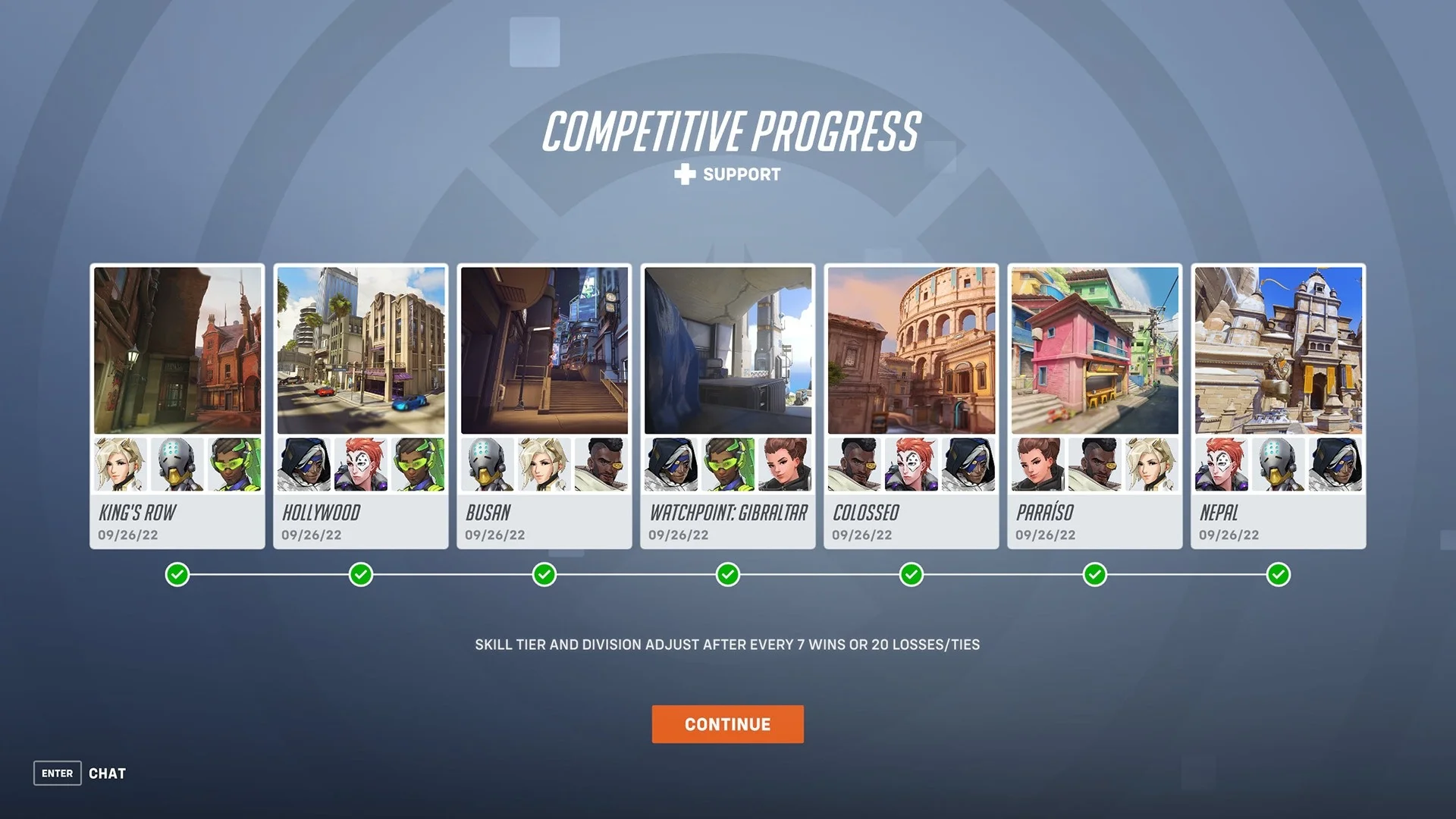
- Your rank only updated after 7 wins or 20 losses.
- Tier and division were never fully aligned with the matchmaking rating.
That last point is the one people forget. Even back then, the badge and the real rating were two separate things.
SR Ranks Overwatch: The Current Ladder
The SR Ranks Overwatch players know have grown since the number went away. There are now nine ranks before the leaderboard, and the order looks like this:
- Bronze
- Silver
- Gold
- Platinum
- Emerald
- Diamond
- Master
- Grandmaster
- Champion
Every rank from Bronze to Grandmaster has five divisions. Champion has none. Above it sits the Challenger Tier, which took over from the old Top 500.
Where Emerald Fits
Emerald landed in Season 4, between Platinum and Diamond, together with a rank reset. Blizzard added it because the bulk of the player base sat in Gold and Platinum, and a single Plat badge covered too many skill levels.
If you remember the old Overwatch SR ladder, think of Emerald as the zone where high Plat and low Diamond players used to blur together. That's also why the table above shows two names for those rows.
How Challenger Replaced Top 500
Challenger works on its own Challenger Score. You earn points from Competitive wins above Diamond 5, and losses take points away. Win value is based on the highest-ranked player in the lobby, so harder matches pay more.
A few things to know about it:
- Separate boards exist for tank, damage, support, a Combined board, Open Queue and Stadium.
- You need Endorsement Level 2 or higher to appear.
- Role boards need 4,000 Challenger Score; Combined and Open Queue need 5,000.
- Challenger Score only decides who makes the 500 spots, while the board itself is now sorted by rank.
In our view, Challenger is the closest thing to a visible Overwatch SR left in the game. It's a running number that rises and falls with every match, just reserved for the top of the ladder.
Rank Progress, MMR And Hidden SR Overwatch Math
So where did the number go? Under the hood. The SR Overwatch veterans remember is now split into two layers: what you see and what the matchmaker sees.
Rank Progress: The Bar You Actually Watch
Since Season 9 of the old numbering, the game shows a Rank Progress bar after every match. It fills toward the next division on a win and drains on a loss. Hit 100% and you go up a division; drop below 0% and you fall one.
The bar also comes with modifiers that explain why a match moved you more or less than usual. You'll see these most:
- Winning Trend, which adds progress during a streak.
- Losing Trend, which costs extra progress during a slump.
- Uphill Battle, when you beat a lobby rated above you.
- Expected, when the result matched what the system predicted.
- Demotion Protection, a one-time shield before you lose a full rank.
- Leaver compensation, which softens a loss when a teammate quits.
Demotion Protection only applies to ranks, not divisions. Dropping from Diamond 3 to Diamond 4 gets no shield at all.
MMR: The Real Rating
Your MMR is the hidden number that sits behind the rank. It's recalculated after every match and decides who you're matched with. When your MMR is higher than your badge, wins give bigger chunks of Rank Progress and losses cost less.
That gap is why two Gold 2 players can see very different gains from the same win. One is "ahead" of their rank. The other isn't.
Practically, it works like this:
- The matchmaker builds your lobby from MMR, not your badge.
- Your match result updates MMR first.
- Rank Progress then moves based on how far MMR sits from your visible rank.
- Over enough games, your rank catches up to your MMR.
We think this is a better system than raw Overwatch SR for most players. The trade-off is transparency: you can't see your MMR, so you have to read it from the size of your gains.
Is There An Overwatch Hero SR?
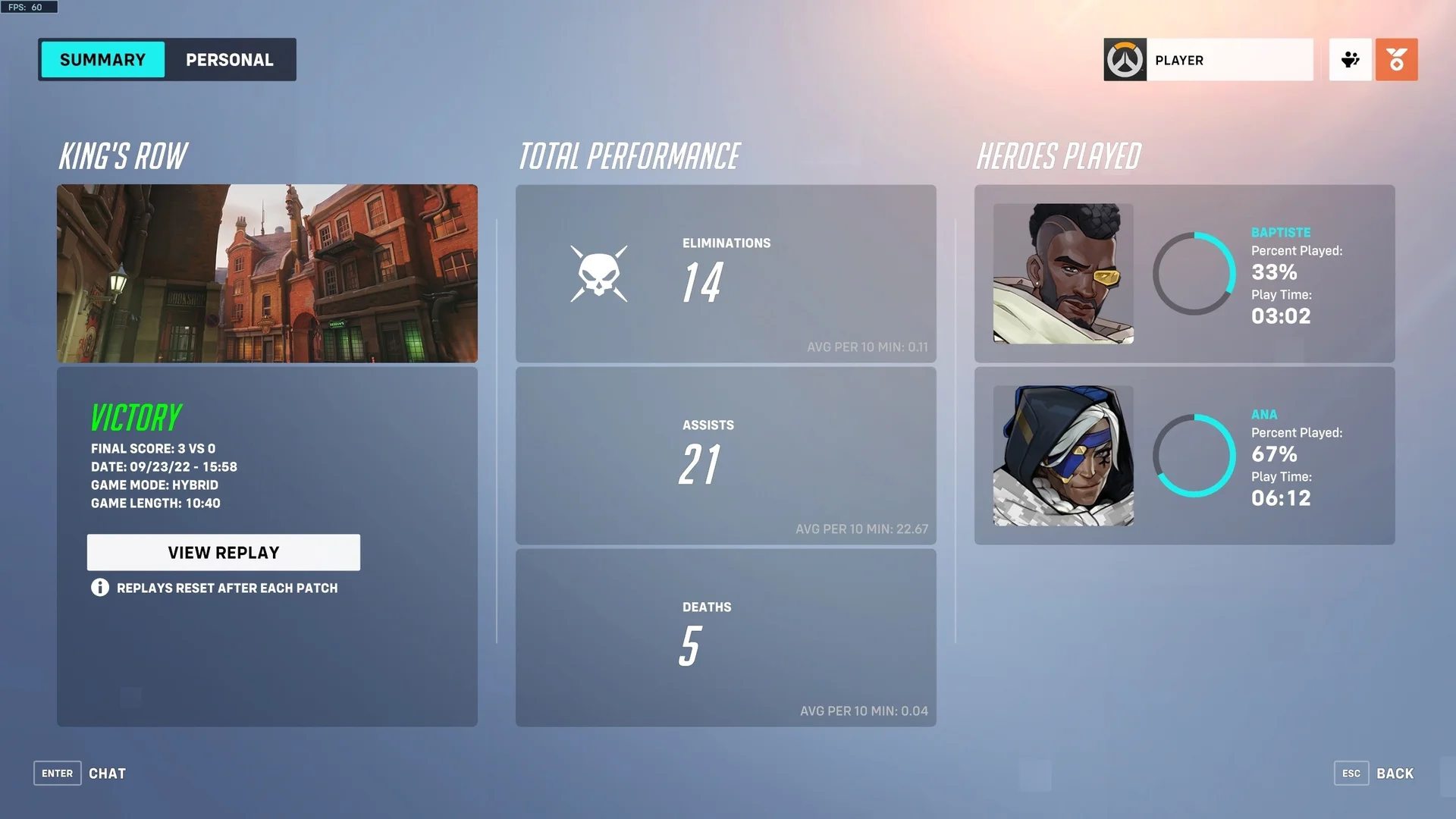
Short answer: no. None. The game has no official Overwatch Hero SR, and there's no per-hero rank in Competitive. Ranks are tracked per role in Role Queue (tank, damage, support), plus one rank for Open Queue.
Where The Hero SR Overwatch 2 Idea Comes From
The phrase "Hero SR Overwatch 2" mostly comes from third-party stat trackers. Those sites estimate how you perform on each hero compared with others at your rank. Helpful for self-review, but none of it touches your actual rank.
The in-game system called Hero Progression is also easy to confuse with a Hero SR. It tracks time and actions on each hero and unlocks borders and badges, but it reflects playtime, not skill.
Does Your Hero Pool Affect Rank?
Indirectly, yes. Your role rank is built from every match on that role, so swapping between your best hero and a new pick in ranked will pull your MMR around.
Things that actually move your role rank:
- Wins and losses on that role.
- How your result compares to the lobby rating.
- Streaks, through the Winning and Losing Trend modifiers.
Things that don't:
- Your hero level or Hero Progression badges.
- Medals, damage numbers or eliminations shown on the scoreboard.
- Quick Play results.
Overwatch Ranked SR Through Resets And Seasons
Every season soft resets your visible rank while your hidden MMR carries over. The Overwatch Ranked SR idea players remember is basically what survives that reset.
Recent Resets And What They Changed
Ranks have reset twice this year. The February relaunch, when the game dropped the "2" and returned to plain Overwatch, set every Role Queue and Open Queue rank back to unranked. Each role went through placement matches again. Season 4 then brought the Emerald tier and another reset.
We're in Season 5, A Grim Doctrine, right now. Season 6 is expected on December 8, and Blizzard confirmed a four-week 6v6 Role Queue Competitive test running alongside standard 5v5 Role Queue and 6v6 Open Queue.
How To Read Placements
After a reset, the game asks for 10 placement matches per role. Most players land a couple of divisions under where they finished, then climb back fast because MMR is still high.
If you finished last season in Diamond 2 and place in Emerald 1, that's normal. Expect large Rank Progress gains for your first wins. That's MMR doing its job.
Pro Tips: Climbing Without Visible SR
- Track gains per win: Write down the Rank Progress percentage after each win. Bigger gains mean your MMR sits above your rank, so you're climbing on schedule even after a loss.
- Stop after two losses in a row: The Losing Trend modifier makes a third loss cost more. Taking a break breaks the streak penalty and usually your tilt with it.
- Pick one main role: Rank is per role, so spreading games across three roles splits your progress. Climbing one role first gets you real feedback faster.
- Ignore the scoreboard numbers: Damage and healing totals don't feed rank. Play for the objective, because the only thing that counts is the win.
- Fix your connection before blaming the ladder: A 90 ms ping spike in a Junkertown final fight costs the same Rank Progress as a misplay. Check your setup with our guide on fixing high ping in Overwatch 2.
Overwatch SR To Rank: Common Questions And Mistakes
People still try to translate Overwatch SR To Rank like it's a currency exchange. It's close in spirit, but the math changed.
How Many Games Per Division?
There's no fixed number. It varies. A typical win moves the bar by a chunk that depends on your MMR, so one player might need four wins for a division and another might need eight.
For a full breakdown of each badge, rewards and the rest of the ladder, check our guide to all Overwatch ranks in order. And if you want the older sequel-era view of placements and divisions, we also have the full Overwatch 2 ranks guide.
Common Mistakes Overwatch SR Players Make
- Treating divisions as exact SR: Assuming Gold 3 equals 2,250 SR and getting angry at matchmaking. Fix: think in MMR terms, since lobbies come from the hidden rating, not the badge.
- Duo queuing with a big rank gap: Playing with a friend far above you drops you into lobbies rated off the higher player. Fix: duo with players inside your skill band or use Quick Play for mixed groups.
- Panicking after placements: Landing two divisions lower and deciding you got worse. Fix: play 10 to 15 more matches; large progress gains will pull you back to your old rank.
- Ignoring connection issues: Losing fights to rubber-banding and blaming teammates. Fix: check for packet loss and stutter with our Overwatch lag fixes, then look at frame drops in our FPS drop in Overwatch 2 guide.
Protect Your Climb With ExitLag
Since rank now moves after every single match, one bad connection game hurts more than it did back when the badge only updated after seven wins. A loss from rubber-banding costs you Rank Progress, and the Losing Trend can make the next one cost more.
ExitLag is a connection optimizer, not a VPN. It checks multiple network paths to the Overwatch servers in real time and sends your traffic down the fastest, most stable route. No game files get touched, and it doesn't interact with anti-cheat.
What actually helps in ranked:
- Multipath Technology sends packets through more than one route, so a single bad hop doesn't freeze you mid-fight.
- Real-time Optimization reduces ping and packet loss, and you feel it most in hitscan duels and Ana sleep darts.
- Multi-Internet supports up to 4 connections at once, so a Wi-Fi drop doesn't turn into a leaver penalty.
- Traffic Shaper keeps downloads and streams from eating your bandwidth during a match.
It won't fix bad aim or a weak hero pool, to be fair. But if your ping jumps from 30 ms to 120 ms at peak hours, routing is often the cause, and it's fixable. Try the ExitLag Download before your Season 6 placements.
Overwatch SR Today: What To Keep In Mind
The number is gone, but the idea behind Overwatch SR lives on in hidden MMR and the Rank Progress bar. Read your gains, stick to one role during a climb, and treat Emerald as the new middle of the ladder.
When people ask about Overwatch SR today, the honest answer is that you're chasing MMR now. Climb that, and the badge follows.
All game images used in this blog post belong to Blizzard Entertainment. They are used for informational and educational purposes only and do not imply endorsement or affiliation with the rights holders.