In Valheim, survival isn’t just about slaying trolls or defeating ancient bosses—it’s about thriving. Farming is the backbone of any efficient Viking homestead, giving you food, materials, and strategic advantages.
Whether you’re planting crops, raising livestock, or crafting honey from bees, this valheim farming guide has everything you need to grow your empire.
Why Farming Matters in Valheim
Farming Valheim offers multiple benefits:
- Provides high-quality food and potions.
- Sustains a long-term base without frequent resource runs.
- Supports taming and breeding of animals.
- Supplies honey, meat, feathers, and rare items.
Once you automate your valheim farm, you’ll spend more time exploring and less time grinding.
How to Farm in Valheim: The Basics
To start a farm Valheim style, you’ll need the following tools:
- Cultivator: Crafted with Core Wood and Bronze, required to prepare soil.
- Seeds: Carrot, turnip, onion, barley, and flax.
- Hoe: For leveling the ground.
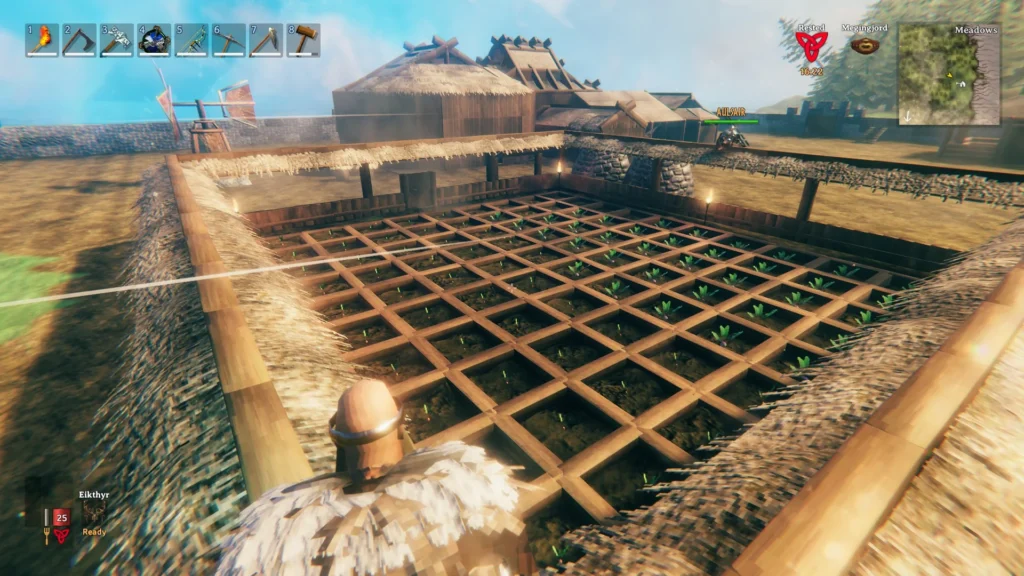
Steps to Set Up a Crop Farm
- Build a safe, fenced area.
- Use the Hoe to level uneven ground.
- Equip the Cultivator and select a crop.
- Plant with space between rows.
- Harvest once mature (in-game days vary).
Rain and sunlight are automatic. No manual watering needed.

Valheim Boar Farm: Taming and Breeding
One of the most common and rewarding animal farms is the valheim boar farm.
How to Tame Boars
- Build a wooden pen.
- Lure boars inside using mushrooms or berries.
- Close the gate and stay hidden.
- After a few in-game days, they’ll become tame.
How to Breed Boars
- Feed two tamed boars regularly.
- Hearts appear = breeding.
- Piglets spawn and grow into full boars.
Boar Farming Tips
- Keep feeding areas stocked.
- Expand pen space as population grows.
- Boars produce meat and leather scraps.
Boar farming Valheim is perfect for early and mid-game progression.
Valheim Chicken Farm: Feathers and Eggs
Introduced in later updates, chickens are the newest livestock addition.
How to Get Chickens
- Purchase Eggs from Haldor the Merchant.
- Place eggs near a fire or in a warm house.
- Wait for them to hatch into chicks.
Chicken Care and Farming
- Feed chickens seeds (barley, flax).
- Keep them indoors for protection.
- Chickens lay eggs and drop feathers.
A well-managed valheim chicken farm provides endless feathers for arrows.
Valheim Bee Farm: Honey Production
Beekeeping is one of the easiest yet most effective farm types in the game.
How to Start a Bee Farm
- Loot beehives from abandoned houses.
- Collect Queen Bees.
- Use 10 wood + 1 Queen Bee to build a new hive.
Hive Placement Tips
- Keep hives spaced 2-3 meters apart.
- Must be outdoors.
- Collect honey every few in-game days.
A thriving valheim bee farm supplies honey for mead and healing.
Valheim Greydwarf Farm: Mob Farming
Want rare drops? Try a valheim greydwarf farm—a passive enemy farming system.
How to Build a Greydwarf Farm
- Place a Greydwarf nest (from Black Forest) in a secure pen.
- Surround with campfires or spike walls.
- Stand nearby to trigger spawn cycles.
Loot Output
- Resin
- Greydwarf eyes
- Wood and stone (less common)
This semi-automated valheim farm is ideal for gathering crafting ingredients.
Advanced Valheim Farms: Crop Management
Crops by Biome:
- Meadows: Carrot, turnip
- Swamp: Turnip (origin)
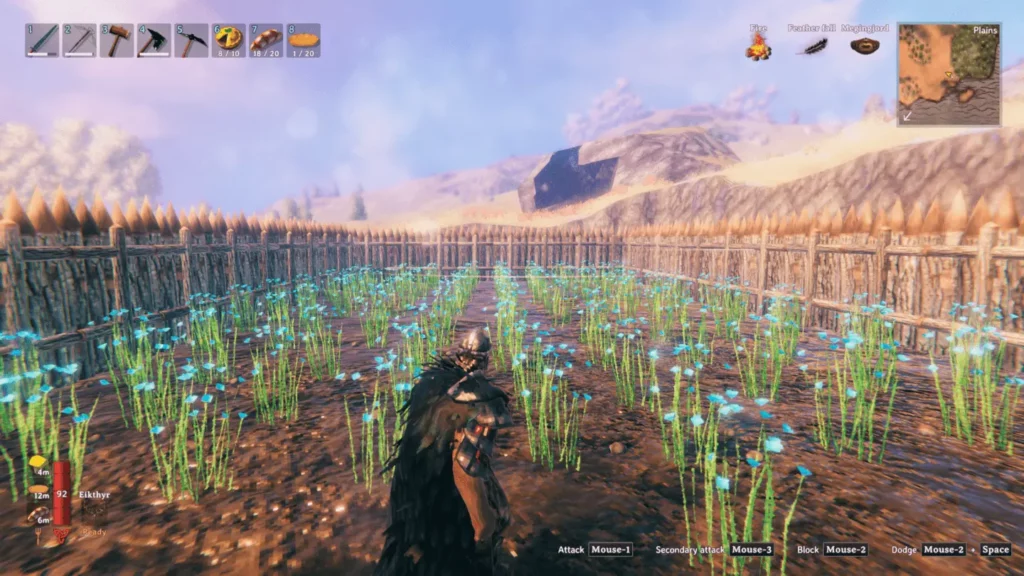
- Plains: Barley, flax
Always rotate crops and replant part of the yield to maintain sustainable harvests.
Pro Farming Tips
- Use signs to label crop sections.
- Combine bees and crops in same enclosure.
- Add lighting for night visibility.
Farm Defenses: Keeping Your Livestock Safe
Don’t let raids wipe your work.
Defensive Measures
- Raise stone walls or palisades.
- Install spike traps near pens.
- Build near a Workbench to prevent enemy spawns.
- Use portals to escape and return during raids.
Why Use ExitLag While Farming?
While farming Valheim isn’t combat-heavy, lags and crashes can still ruin progress. ExitLag helps:
- Prevent stutter in high-density farms
- Keep connection stable during raids
- Protect against packet loss in multiplayer farms
Optimize your farming with ExitLag so your crops grow and your animals thrive without delay.
Start your Exitlag 3 days Trial!
Farming Automation: Make Valheim Work for You
True automation doesn’t exist in Valheim, but with clever design and multiplayer collaboration, you can achieve high-efficiency systems.
Crop Automation Techniques
- Build on leveled platforms to organize crops.
- Use stone borders or wood paths to create clear planting lanes.
- Schedule crop rotations to avoid planting fatigue.
- Assign friends different tasks in co-op: planting, fertilizing (if modded), and harvesting.
Animal Automation Strategies
- Boars auto-breed with regular food supply (berries, mushrooms).
- Chickens need warmth and seeds, but lay eggs automatically once fed.
- Greydwarf nests can be positioned to create an infinite spawn farm.
A disciplined daily routine and creative layouts turn effort into efficiency.
Optimized Hybrid Farm Layouts
Combine animals, crops, and defenses into a single, multi-purpose zone.
Chicken-Boar Combo Pen
- Dual enclosure setup, with partitioned walls.
- Chickens benefit from warmth; use fireplaces in shared zones.
- Place crop fields along outer walls, acting as natural barriers.
Bee-Friendly Crop Integration
- Add flowering crops near beehives (turnips, carrots).
- Rotate beehives between crop rows to boost immersion.
- Combine with windmills nearby for thematic aesthetic and processing.
These hybrid farms simplify space management while increasing productivity.
Fermentation, Cooking, and Storage Systems
Tie your valheim farms into a production chain for potions and food buffs.
Fermenting Station Setup
- 3–4 fermenters for efficiency.
- Cover with thatch roof and ventilate to avoid rain damage.
- Label each fermenter with signs (stamina, healing, resistance).
Integrated Kitchens
- Position storage chests beside cauldrons.
- Use vertical shelves for stacking mead bases and raw foods.
- Keep a feeder line from the crop area using item stands or sorted containers.
This approach turns a static farm into a living production center.
Advanced Greydwarf Farm Tactics
Valheim greydwarf farm upgrades include:
- Trap tunnels using narrow fire corridors.
- Spike walls backed by torches to damage but not destroy loot.
- Centralized collection pit for easy looting.
- Auto-refill traps with stone or firewood from nearby chests.
Add Ballistas if you’re in mid-to-late game for extra defense.
ExitLag: Performance Booster for Farm Management
Larger farms generate lag from:
- Entity count (animals, mobs)
- Dynamic lighting and mist
- Item drop clutter
ExitLag helps by:
- Optimizing your connection route to Valheim servers.
- Reducing desync during raids or portal travel.
- Preventing FPS drops when interacting with large farms.
Use ExitLag even during passive gameplay to preserve performance.
Final Thoughts: Your Viking Legacy Grows Here
Farming Valheim is more than planting—it’s empire building. Advanced layout planning, hybrid systems, fermentation links, and ExitLag-backed performance transform your base into a powerhouse.
Build once, reap forever. Whether you’re preparing for war or just want to enjoy peaceful farming, optimize your tools, network, and systems to ensure long-term success.
FAQ: Valheim Farming Guide
How many boars should I breed?
Start with 3–5 pairs. Expand as resources and space allow.
Can chickens be auto-fed?
Yes, drop seeds into a closed pen. Chickens feed and lay eggs on their own.
What crops grow in the Plains?
Barley and flax. They won’t grow outside this biome.
Why is ExitLag good for farming?
ExitLag stabilizes high-entity environments and prevents input lag during harvesting or defending.
Can you automate harvesting?
Not fully. But planting grids and scheduled tasks make it nearly hands-free.
All game images used in this blog belong to Iron Gate Studio. They are used for informational/educational purposes only and do not imply endorsement or affiliation with the rights holders.
Got questions or want to connect with other players? Join the conversation at the ExitLag Forum!