
Valorant esports has become one of the fastest-growing competitive scenes in gaming, combining sharp tactical shooting with agent abilities, team strategy, and global tournament pressure. Since Riot Games launched Valorant, the game has attracted players who love precise aim, smart utility usage, and high-stakes team play.
Moreover, Valorant esports now stands beside the biggest competitive gaming ecosystems in the world. With international leagues, regional rivalries, and major tournaments like the Valorant Champions Tour, fans have a full calendar of matches to follow throughout the year. And before we continue, know that to know more about all the relevant content about gaming, you just have to check our blog.
What is Valorant esports and why is it growing?
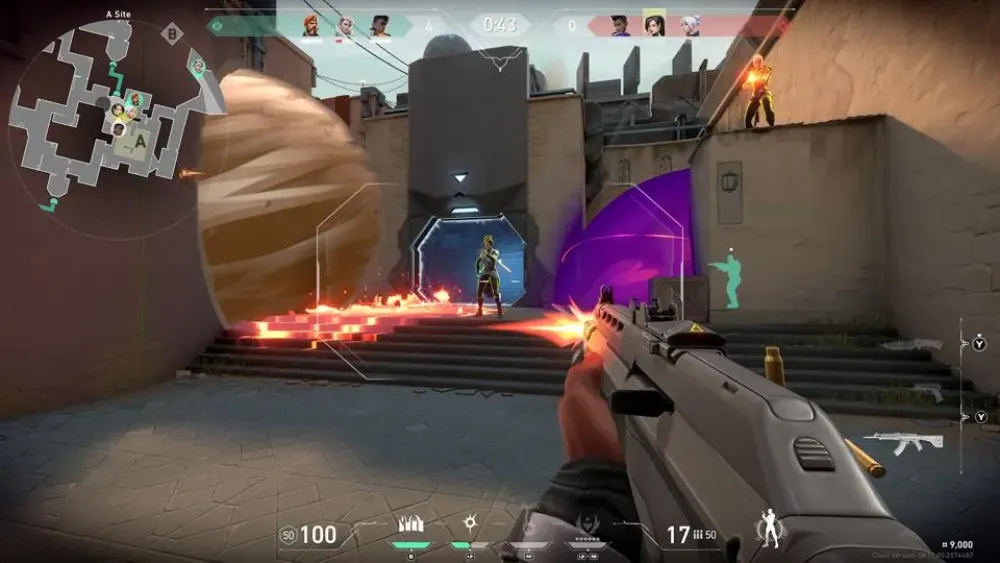
Above all, Valorant esports is the professional competitive structure built around Riot Games’ 5v5 tactical FPS. In other words, it is where top players, elite coaches, major organizations, and passionate fans meet through official events, ranked development, and global championships.
To begin with, the rise of Valorant was not accidental. Riot Games already had deep esports experience through League of Legends, and that foundation helped Valorant build a structured competitive system quickly. As a result, the game entered the professional space with strong production quality, clear regional pathways, and worldwide visibility.
At the same time, Valorant’s gameplay makes it ideal for esports. Every round rewards aim, communication, economy control, map knowledge, and agent synergy. Because of that, matches stay exciting for casual viewers while still offering deep strategic layers for serious players.
Even more, the growth of valorant vct has helped turn regional teams into international brands. Fans now follow rosters from the Americas, EMEA, Pacific, and China, creating storylines that stretch across multiple events and entire seasons.
For players who want smoother matches, better responsiveness, and more stable routing during competitive games, ExitLag can help reduce lag and improve connection stability. In a game where one delayed shot can decide a round, stable performance is essential.
Valorant esports is the official competitive scene for Valorant, where professional teams compete in regional leagues, global tournaments, and championship events. It has grown quickly because the game blends tactical depth with high mechanical skill.
How Valorant became a global tactical FPS
Valorant launched with a clear identity: tactical shooting built around precise gunplay and unique agent abilities. This combination immediately attracted players from games like Counter-Strike, Overwatch, Rainbow Six Siege, and Apex Legends.
However, Valorant also created its own competitive rhythm. Instead of relying only on aim, players must master smokes, flashes, recon tools, walls, traps, and ultimates. Therefore, every match becomes a chess game played at high speed.
The core format is simple to understand:
- Two teams of five players compete
- One side attacks while the other defends
- Attackers plant the spike
- Defenders try to stop or defuse it
- Teams switch sides during the match
- The first team to reach the winning round count takes the map
Because the rules are easy to follow, new viewers can understand the basics quickly. At the same time, advanced strategies keep experienced fans engaged.
Similarly, agent diversity gives the game constant variety. Duelists, initiators, controllers, and sentinels all shape how teams approach each map.
Check also: The Latest Valorant Update: What’s New and What to Expect
Why the Valorant pro scene attracts fans
The valorant pro scene attracts fans because it delivers constant tension. Each round can swing through a clutch, a risky retake, a perfect ultimate, or a surprising lurk.
In addition, professional Valorant has strong personalities. Star duelists create highlight reels, in-game leaders control the pace, and support players win rounds through utility timing.
Fans also follow teams for different reasons, including:
- Regional pride
- Favorite players
- Aggressive playstyles
- Tactical systems
- Underdog stories
- International rivalries
As a result, Valorant tournaments feel bigger than individual matches. They become ongoing narratives filled with roster changes, redemption arcs, and pressure-filled playoffs.
Above all, Riot’s structured ecosystem gives fans reliable events to watch. Instead of random isolated tournaments, the scene moves through a connected season that builds toward Champions.
How Valorant VCT works in 2026
The Valorant Champions Tour, often called VCT, is the main competitive circuit for professional Valorant. It organizes the season into regional and international stages that determine which teams qualify for the biggest events.
Kickoff, regional stages, and Masters events
The 2026 valorant vct season includes major phases such as Kickoff events, regional stages, Masters tournaments, and the final world championship. This structure helps teams earn points, prove consistency, and qualify for global competition.
Generally, the season flows through several key steps:
- Teams begin with regional Kickoff events
- Top teams qualify for international Masters tournaments
- Regional leagues continue through staged competition
- Strong performers collect points and qualification spots
- The best teams advance to Valorant Champions
This format keeps the entire season meaningful. Early wins can open the door to international play, while late-season performances can rescue struggling teams.
For example, Masters events are especially important because they bring elite teams from different regions into direct competition. These tournaments often reveal which region is ahead in the meta and which teams can adapt under pressure.
How teams qualify for Champions
Valorant Champions is the final and most prestigious event of the season. Teams reach it through regional performance, championship points, and results across the VCT calendar.
Because of that, every match matters. A regular-season victory can affect seeding, qualification chances, or playoff momentum.
Teams must show several qualities to reach Champions:
- Consistent map pool strength
- Flexible agent compositions
- Strong mid-round calling
- Reliable clutch potential
- Mental resilience under pressure
- Adaptation after losses
At first, raw aim may win rounds. However, long-term success in Valorant esports depends on preparation, discipline, and teamwork.
Therefore, the best teams are rarely one-dimensional. They can play fast, slow, aggressive, defensive, or utility-heavy depending on the opponent.
You may also like: The Best Valorant skins: How to Get Them and Which Are Worth It
Valorant esports teams to watch
The world of valorant esports teams is constantly changing. Rosters evolve, regions improve, and new contenders emerge every season.
Global powerhouses in VCT
Some organizations have already built powerful reputations in Valorant. These teams often appear deep in international tournaments and attract large fanbases.
Notable names across recent competitive history include:
- Sentinels
- Fnatic
- LOUD
- Paper Rex
- Gen.G
- Team Heretics
- G2 Esports
- DRX
Each team brings a different identity. For example, Paper Rex became famous for explosive aggression, while Fnatic built a reputation around structure and international consistency.
Meanwhile, LOUD helped elevate Brazilian Valorant to the global spotlight. Sentinels created one of the most recognizable brands in the scene, especially among North American fans.
However, the competitive landscape changes quickly. A roster move, new agent meta, or map rotation can completely shift team rankings.
Regional teams shaping the meta
Valorant’s regional structure makes the scene more exciting. The Americas, EMEA, Pacific, and China all develop different styles and strategic priorities.
For example, some regions favor explosive site hits, while others lean toward slower map control and utility-heavy defaults.
This diversity makes international events unpredictable. When teams from different regions meet, their playstyles often clash in fascinating ways.
Common regional strengths include:
- Americas: mechanical talent and explosive confidence
- EMEA: structure, discipline, and utility coordination
- Pacific: fast tempo and creative aggression
- China: rapid development and fearless adaptation
Because of that, fans never know exactly what to expect when global tournaments begin.
Check this: Valorant Schedule: Upcoming Events, Tournaments, Updates & Maintenance
Valorant esports schedule: key events in 2026

Following the valorant esports schedule is essential for fans who want to track every important match. The 2026 season includes regional action, global Masters events, and the road to Champions.
Masters Santiago and Masters London
Masters events are among the most important tournaments in the VCT season. In 2026, Masters Santiago and Masters London stand out as key global stages.
These tournaments matter because they bring top teams together before Champions. As a result, they provide early answers to major questions.
Fans watch Masters events to learn:
- Which teams are leading the meta
- Which regions look strongest
- Which rookies can perform internationally
- Which rosters improved after changes
- Which strategies survive under pressure
At the same time, Masters results influence confidence, rankings, and qualification paths.
Road to Valorant Champions 2026
The biggest destination of the season is valorant champions 2026, scheduled as the final global championship. Champions represents the ultimate test for every professional Valorant team.
To reach that stage, teams must survive months of competition. They need strong results, consistent improvement, and the ability to adapt after every patch or meta shift.
For fans, the road to Champions creates an entire year of storylines. Early-season surprises can become championship contenders, while favorites may collapse before the final stage.
Finally, keeping up with valorant esports results helps fans understand the bigger picture behind every match. Wins, losses, map scores, and regional standings all shape the path toward the world championship.
Valorant esports results and why they matter
Following Valorant esports results is one of the best ways to understand the competitive season. Every match affects confidence, rankings, qualification paths, and how fans evaluate each roster.
However, results are not only about wins and losses. In high-level Valorant, map scores, agent picks, economy decisions, and clutch rounds all reveal how strong a team really is.
How results affect rankings and qualification
In the VCT system, every official match can influence a team’s season. Strong performances help teams earn better seeds, reach playoffs, qualify for Masters, and stay in the race for Champions.
Because of that, valorant esports results matter throughout the entire calendar. A single upset can change regional standings, while one poor stage can force a top roster into a difficult qualification path.
Results usually affect:
- Playoff seeding
- Championship points
- Regional rankings
- Masters qualification
- Champions qualification
- Team confidence
- Roster stability
At the same time, fans use results to compare regions. For example, if Pacific teams perform well internationally, the region gains respect and more attention from global viewers.
Read also: Understanding Valorant Rank Distribution and the Competitive Ladder
Where fans follow competitive standings
Fans usually track standings through official broadcasts, tournament hubs, esports databases, and team social channels. These sources help viewers follow match schedules, scores, brackets, and player statistics.
A complete standings page normally includes:
| Category | Why it matters |
| Match score | Shows who won the series |
| Map score | Reveals how close the matchup was |
| Agent picks | Shows current meta trends |
| Player stats | Highlights impact and consistency |
| Bracket position | Explains tournament progress |
| Qualification status | Shows who can still reach global events |
Therefore, checking results regularly helps fans understand the bigger story behind the season.
Valorant Champions 2026: what to expect
Valorant champions 2026 is expected to be the biggest competitive milestone of the year. As the final global event of the season, it brings together the best teams from around the world.
Above all, Champions is where regional success turns into global legacy.
Shanghai as the final global stage
Shanghai gives the 2026 championship a massive international stage. China’s Valorant scene has grown quickly, and hosting Champions there strengthens the game’s global identity.
The event should attract fans from every major region, including:
- Americas
- EMEA
- Pacific
- China
Additionally, the location adds extra excitement because Chinese teams have become increasingly dangerous in international Valorant.
As a result, Champions 2026 may become one of the most unpredictable tournaments in the game’s history.
Teams, prize pool, and competitive stakes
Champions is not just another tournament. It decides the world champion and defines the strongest team of the season.
Teams reaching this stage must survive a long road of regional events, global Masters tournaments, meta changes, and high-pressure elimination matches.
The stakes are huge because players compete for:
- World champion status
- International recognition
- Major prize money
- Team legacy
- Career-defining moments
Even more, Champions often creates iconic plays that fans remember for years. A single clutch, ace, or overtime win can become part of Valorant history.
How to enter the Valorant pro scene
Breaking into the valorant pro scene takes discipline, patience, and consistent improvement. Talent matters, but professional play requires much more than raw aim.
To begin with, aspiring players must treat Valorant like a structured competitive craft.
Ranked grind and team trials
Ranked is the starting point for most players. Climbing toward Immortal and Radiant helps prove mechanical skill, game sense, and consistency.
However, ranked alone is not enough. Professional teams also look for communication, discipline, flexibility, and teamplay.
A strong path includes:
- Master two or three agents in one role
- Study professional matches and map setups
- Improve crosshair placement and utility timing
- Play scrims with organized teams
- Join amateur tournaments
- Build highlight clips and match VODs
- Apply for trials or academy rosters
In other words, players must show that they can perform in structured environments, not only in ranked chaos.
Tournaments, content, and networking
Community tournaments are extremely important for exposure. They allow players to face organized opponents and learn how real team competition works.
Additionally, creating content can help players build visibility. Clips, VOD reviews, guides, and ranked highlights can attract attention from scouts, coaches, and other competitors.
Networking also matters. Many opportunities come through Discord communities, team tryouts, amateur leagues, and ranked connections.
For example, a strong player who communicates well and shows improvement may receive trial invitations before reaching a major team.
Similarly, coaches, analysts, observers, and casters can also enter Valorant esports through community involvement and consistent work.
Read also: Understanding Valorant Rank Distribution and the Competitive Ladder
How ExitLag improves Valorant esports performance
Valorant is extremely sensitive to latency. Because gunfights happen quickly, unstable ping can turn a perfect shot into a missed opportunity.
Therefore, connection quality is essential for players who care about competitive performance.
Lower ping and better routing
ExitLag helps optimize the route between your PC and Valorant servers. Instead of relying only on default internet paths, it searches for better routes that may reduce delay and improve stability.
This can help players deal with:
- Ping spikes
- Packet loss
- Route instability
- Delayed shots
- Rubberbanding
- Input response issues
At the same time, ExitLag is useful for players who compete across servers or live far from their preferred region.
Smoother gameplay during competitive matches
In ranked matches, scrims, or tournaments, stable performance can make a major difference. A cleaner connection helps players react faster, hold angles more confidently, and avoid frustrating lag spikes.
ExitLag supports smoother gameplay by improving routing consistency during online sessions.
As a result, players can focus on:
- Crosshair placement
- Communication
- Utility usage
- Retakes
- Clutches
- Team coordination
Above all, ExitLag is not a replacement for practice. However, it helps create a better online environment so your skill can show more clearly.
You should check more games compatible with ExitLag at our official games page.
Frequently asked questions (FAQ)
Valorant esports is the professional competitive scene for Riot Games’ tactical FPS Valorant. It includes regional leagues, international tournaments, Masters events, and the annual world championship known as Valorant Champions.
The scene features professional players, coaches, analysts, organizations, and fans from several regions. Because the game rewards aim, tactics, communication, and agent mastery, Valorant has become one of the most exciting esports to watch.
Valorant VCT means Valorant Champions Tour. It is the official Riot Games competitive circuit that structures the professional season.
The valorant vct includes regional competition, international Masters events, and Champions. Teams compete throughout the year to earn qualification spots, championship points, and global recognition.
Valorant Champions 2026 is scheduled as the final major championship of the 2026 VCT season. It is expected to take place in Shanghai and bring together the best teams from every major region.
Because schedules can change, fans should follow official Valorant esports channels for final dates, brackets, and broadcast details.
The best way to follow the valorant esports schedule is through official Valorant esports channels, tournament broadcasts, and trusted competitive databases.
These sources usually show match dates, regional stages, Masters events, playoff brackets, team standings, and global championship information.
Yes. ExitLag can help improve online performance by optimizing routing, reducing packet loss, and improving connection stability during Valorant matches.
This is especially useful for ranked players, competitive teams, and fans who want smoother gameplay while following the same performance standards seen in Valorant esports.
ExitLag can drastically improve your gameplay for an accessible price. To know more, check our pricing page.
In conclusion
Valorant has grown into a major force in competitive gaming because it combines tactical depth, precise shooting, strong regional leagues, and world-class international events. From local ranked players to elite organizations, the ecosystem continues expanding every season.
The VCT structure gives fans a clear path to follow, while Masters tournaments and Champions create unforgettable storylines. At the same time, top valorant esports teams keep pushing the meta forward with new strategies, agent compositions, and bold playstyles.
Finally, if you want to play with smoother routing, lower latency, and stronger connection stability, ExitLag can help improve your online experience. Whether you are grinding ranked, watching the pro scene, or chasing your own competitive goals, Valorant esports proves that every round matters.
Got questions or want to connect with other players? Join the conversation at the ExitLag Forum!